Need to Reform System to Compete Globally: Punjab Governor
By Dr Ansab AliLahore (Pakistan) — Punjab Governor Sardar Saleem Haider Khan has emphasized the urgent need for systemic reforms to enable Pakistan to compete with the rest of the world. Speaking at the inauguration of the three-day “Sahafi Summit 2025” organized by the Department of Media and Development Communication, Punjab University, the Governor said…
By Dr Ansab Ali
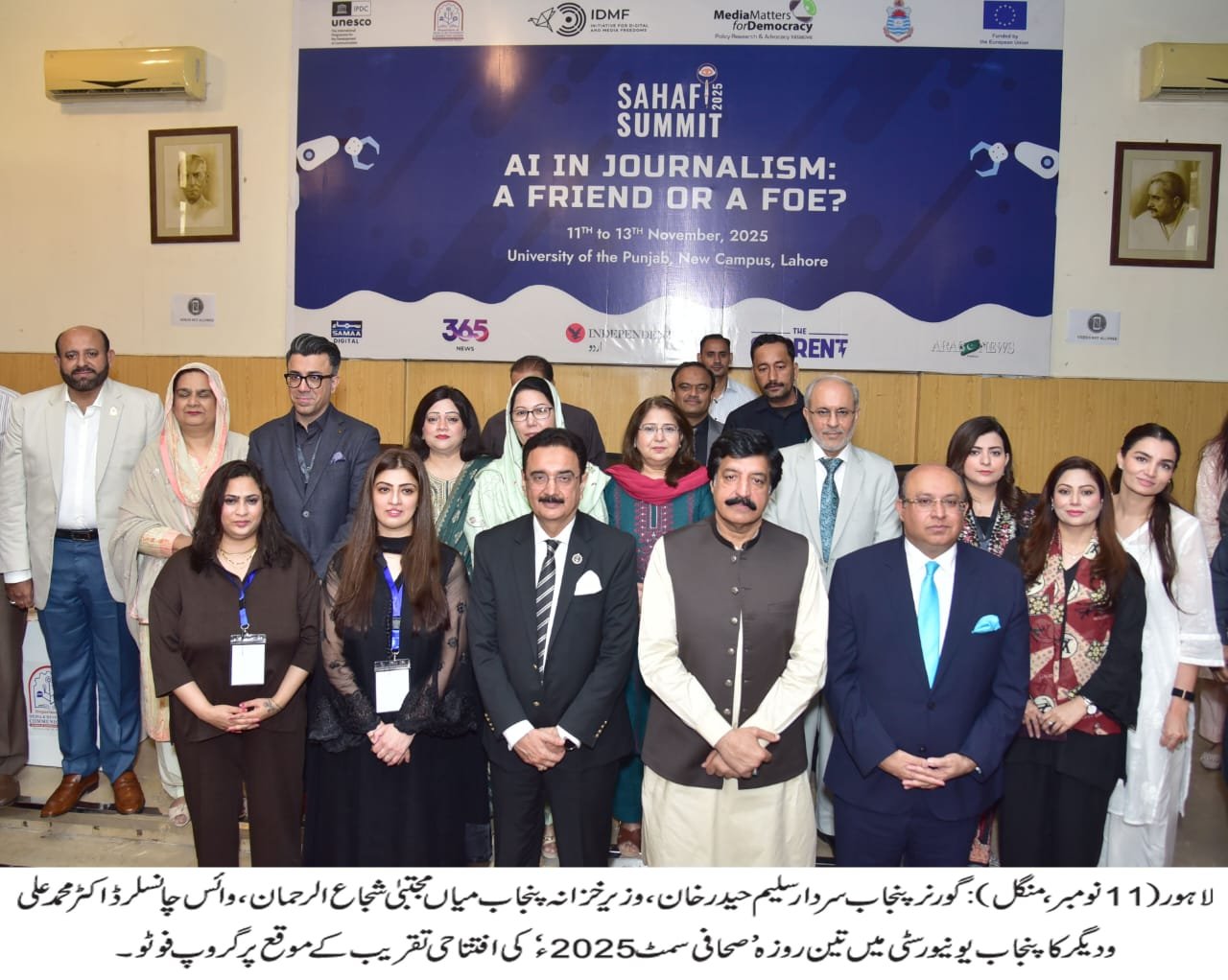
Lahore (Pakistan) — Punjab Governor Sardar Saleem Haider Khan has emphasized the urgent need for systemic reforms to enable Pakistan to compete with the rest of the world. Speaking at the inauguration of the three-day “Sahafi Summit 2025” organized by the Department of Media and Development Communication, Punjab University, the Governor said that universities must take the lead in ensuring the responsible use of Artificial Intelligence (AI).
He noted that AI holds the potential to bring transformative changes across multiple sectors, including journalism. However, he cautioned that it remains unclear whether AI will ultimately serve as a friend or foe to humanity — a matter that requires continued research, dialogue, and ethical reflection. Governor Haider urged students to act responsibly and promote the positive use of AI, stressing that around 60% of the news circulating today is baseless or fabricated.
He praised Punjab University for organizing the summit and commended the faculty and students for fostering critical discussion on the future of media and technology.
Punjab Finance Minister Mian Mujtaba Shuja-ur-Rehman, who also addressed the ceremony, said that AI has introduced efficiency, innovation, and accessibility, but has simultaneously amplified the challenge of misinformation through social media. He emphasized that education and professional training are vital to counter fake news and promote responsible journalism.
The Minister highlighted that under the leadership of Chief Minister Maryam Nawaz, the Punjab government is implementing initiatives for the development of media and the welfare of journalists, reaffirming that “no machine or robot can replace a truthful journalist.”
Punjab University Vice Chancellor Prof Dr Muhammad Ali underlined that AI’s growing role in journalism necessitates a shift in academic thinking. He encouraged students to pursue education with purpose, rather than merely seeking degrees for employment. He said that universities must anticipate future trends and align curricula with emerging global realities.
Senior journalist Mujeeb-ur-Rehman Shami remarked that AI has revolutionized the media landscape, blurring the line between truth and falsehood. He warned that AI, like any powerful tool, “can serve as protection in the hands of a soldier, or destruction in the hands of a robber.”
Dr Ayesha Ashfaq, Chairperson of the Department of Media and Development Communication, said the summit aimed to educate students about the impact of AI on journalism and encourage balanced, ethical media practices. She thanked the university administration and contributors for their support.
Asad Baig, founder of Media Matters for Democracy (MMFD), noted that while AI may displace some traditional jobs, it is simultaneously creating new opportunities within the media industry. He urged journalists and institutions to adapt and innovate to harness AI’s potential for positive transformation.
The Sahafi Summit 2025 will continue for three days, featuring academic discussions, expert panels, and interactive sessions on the future of journalism in the age of artificial intelligence.