Cosmetic Incentives, Policy Chaos Threaten Massive De-Industrialisation in Pakistan, Business Leader Warns
By Dr Ansab Ali — Lahore, Pakistan LAHORE — Pakistan’s industrial sector is heading toward a severe de-industrialisation crisis due to soaring electricity tariffs, inconsistent energy policies, and “cosmetic incentives” that fail to address the root causes of the country’s manufacturing collapse, warned Mian Anjum Nisar, Chairman of the FPCCI’s Businessmen Panel (BMP) and former…
By Dr Ansab Ali — Lahore, Pakistan
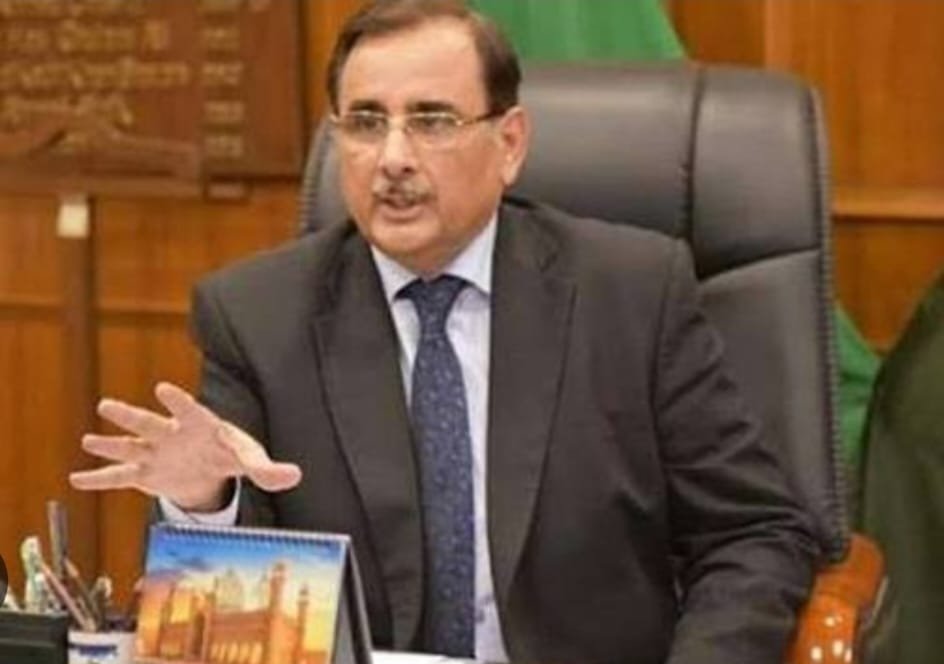
LAHORE — Pakistan’s industrial sector is heading toward a severe de-industrialisation crisis due to soaring electricity tariffs, inconsistent energy policies, and “cosmetic incentives” that fail to address the root causes of the country’s manufacturing collapse, warned Mian Anjum Nisar, Chairman of the FPCCI’s Businessmen Panel (BMP) and former FPCCI President.
Nisar sharply criticised the government’s newly proposed “incremental power consumption” package, calling it inadequate, misleading, and structurally incapable of reviving Pakistan’s industrial base. The Power Division recently requested urgent approval from the National Electric Power Regulatory Authority (NEPRA) for a discounted electricity rate of Rs22.98 per unit on incremental industrial consumption, claiming the measure would stimulate higher energy usage, boost output, and stabilise the national grid.
Nisar rejected the proposal outright, arguing that such a discount is insignificant when industries are already paying Rs34 to Rs38 per unit — some of the highest industrial electricity rates in Asia. “This is not relief; it’s an illusion,” he said. “If the government wants to revive manufacturing and exports, it must reduce the base tariff to single-digit cents.”
Regional Competitiveness at Risk
The business leader warned that Pakistan is losing ground to regional competitors including Bangladesh, Vietnam, and India, where industrial electricity costs range between 4 and 9 cents per unit. “How can Pakistani exporters survive when our costs are nearly four times higher?” he asked, noting that thousands of small and medium enterprises have already shut down or scaled back operations.
High power tariffs, he emphasized, are driving inflation, unemployment, declining exports, and accelerating the flight of industries off the national grid. Many businesses are shifting to solar or captive power generation — not out of preference, but because grid electricity has become unaffordable.
Industrial Electricity Demand in Sharp Decline
Citing the Power Division’s own data, Nisar highlighted that industrial demand has contracted by 14%, while agricultural demand has fallen by 47%, reflecting deep structural distress. “These numbers show that paying consumers are abandoning the grid. This undermines the sustainability of the entire power system,” he said.
When high-paying industries leave the system, the remaining consumers shoulder the entire cost burden, pushing tariffs even higher. “This vicious cycle must end,” he warned.
Policy Chaos and Lack of Coordination
Nisar also condemned the lack of coherence between federal and provincial authorities, noting conflicting solar and renewable energy policies in Punjab and the federal government. This inconsistency, he said, deters investment and confuses industrial consumers.
He criticised the Power Division for rushing regulatory approvals without stakeholder consultation, calling it an attempt to bypass due process. He supported NEPRA’s position that regulatory credibility is undermined when billion-rupee decisions are forced through without proper review.
Cross-Subsidies, Inefficiencies Must End
The BMP Chairman urged the government to eliminate cross-subsidies that force industries to bear the cost of inefficiencies and subsidies in other sectors. He also questioned the lack of accountability for circular debt, transmission losses, and rising capacity payments. “Instead of reforms, we are punishing the productive sectors,” he said.
Call for a Long-Term Energy Strategy
To avert further industrial decline, Nisar proposed establishing a joint task force including the Power Division, NEPRA, FPCCI, and major industrial associations to formulate a long-term energy strategy. This body, he said, must focus on simplifying tariffs, ensuring fair competition, and driving a gradual, affordable transition to renewable energy.
He noted that previous schemes — including the Industrial Support Package (2020–23) and the Bijli Sahulat Package (2024–25) — delivered only short-lived relief, failing to resolve Pakistan’s structural power-sector weaknesses.
A Warning of Looming De-Industrialisation
“The government’s job is not to sell expensive power — it is to create an environment where industries can survive,” Nisar said. “If high tariffs and erratic policies continue, Pakistan will face massive de-industrialisation.”
He urged policymakers to prioritise economic realities over superficial incentives. “The survival of Pakistan’s manufacturing sector depends on bold and rational energy reforms — not optics,” he concluded.