Pakistan’s Stability a Must to Resolve Kashmir Issue: PU VC
Farzana Chaudhry, LahoreLAHORE, Pakistan — Pakistan must strengthen its education sector and technological capabilities to effectively advocate for Kashmir’s disputed status, the country’s leading university vice chancellor said Wednesday.Prof. Dr. Muhammad Ali of Punjab University told a seminar that national stability and development are prerequisites for resolving the decades-old Kashmir dispute with India.“Pakistan’s stability is…
Farzana Chaudhry, Lahore
LAHORE, Pakistan — Pakistan must strengthen its education sector and technological capabilities to effectively advocate for Kashmir’s disputed status, the country’s leading university vice chancellor said Wednesday.
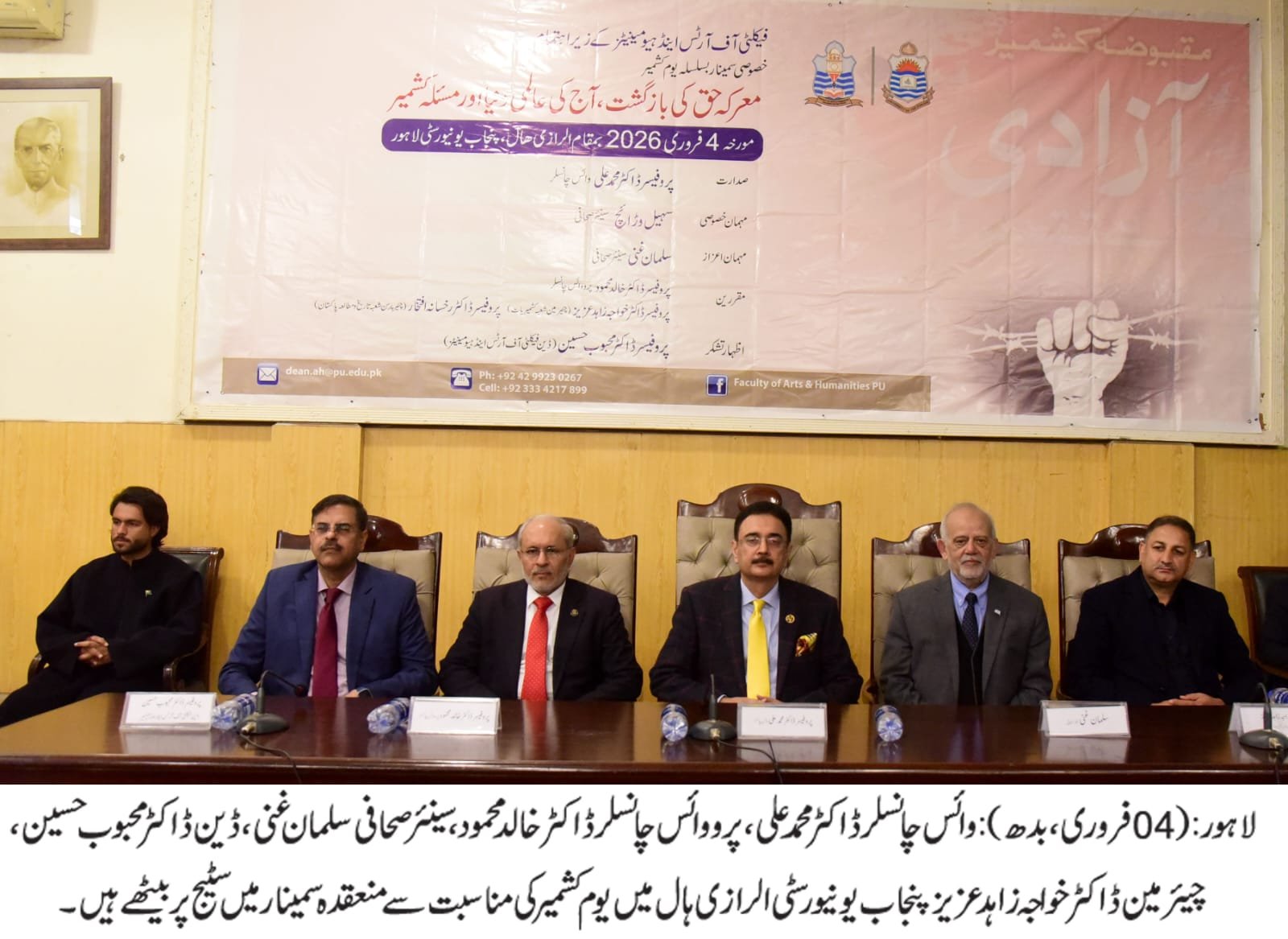
Prof. Dr. Muhammad Ali of Punjab University told a seminar that national stability and development are prerequisites for resolving the decades-old Kashmir dispute with India.
“Pakistan’s stability is a must to resolve the Kashmir Issue, which is not possible without development in the education sector,” Dr. Ali said at the seminar titled “Echoes of the Battle for Truth, the Contemporary Global World and the Kashmir Issue.”
The vice chancellor said Pakistan must strengthen itself in science and technology for the Kashmir cause, just as it used technology to achieve military successes against India in past conflicts.
“This is the best opportunity to become the voice of the Kashmiris, but unity in thought and ideas is essential,” Dr. Ali said, adding that Kashmiris and Palestinians are among the world’s most oppressed people.
Pro-Vice Chancellor Prof. Dr. Khalid Mahmood emphasized that nations gain global influence through educational and technological advancement.
“In the present era, academic and technological progress forms the basis of national dignity and an effective global role,” Mahmood said, reaffirming the university’s solidarity with Kashmiris’ right to self-determination.
Senior journalist Salman Ghani said all Pakistani political leaders from 1990 to present have actively highlighted the Kashmir issue, noting that Kashmiris recognize Pakistan’s strength as essential to ending Indian control.
Ghani referenced recent tensions, saying that when Pakistan stood united with its military, “a power six times stronger was pushed back, resulting in a clear victory.”
He called for national unity to confront what he termed enemies like India and Israel, praising Punjab University as an excellent platform for highlighting national issues.
Dean of the Faculty of Arts and Humanities Prof. Dr. Mehboob Hussain said the Kashmir issue unites all Pakistani political parties and the entire nation without differences.
“National unity on the Kashmir issue is Pakistan’s greatest strength,” Hussain said, adding that Pakistan has emerged on the global stage with a renewed image.
Department of Kashmir Studies Chairman Dr. Khawaja Zahid Aziz highlighted the historical importance of the dispute, noting that Pakistan and India have fought four wars over the territory.
Kashmir has been divided between India and Pakistan since 1947, with both countries claiming the Himalayan region in full. The United Nations has called for a plebiscite to determine the territory’s future, though no such vote has been held.