In a first for China, Neuracles invasive brain-computer interface wins approval
In a landmark development, Neuracle Medical Technology has secured the country’s first-ever approval for an implantable brain-computer interface (BCI) system designed to restore hand motor function in patients with spinal cord injuries, in a regulatory milestone that underscores China’s accelerating push in neurotechnology. China’s BCI start-ups, seen as potential rivals to Elon Musk’s Neuralink, are…
China’s BCI start-ups, seen as potential rivals to Elon Musk’s Neuralink, are gaining momentum as regulatory support and fresh capital fuel growth.
Shares of BCI companies rose on mainland Chinese exchanges on Friday, with Shenzhen-listed Inkon Life Technology surging more than 10 per cent.
The approval awarded to Neuracle, a private firm founded in 2011, marked the first time globally that an invasive BCI could be sold and used on patients as a commercial product, according to China’s National Medical Products Administration.
The company’s founder, Xu Honglai, earned a PhD in biomedical engineering from Tsinghua University.
Last month, Neuracle, which develops and sells scientific research equipment, launched its listing process on the Star Market of the Shanghai Stock Exchange by signing an initial public offering tutoring agreement with Citic Securities.
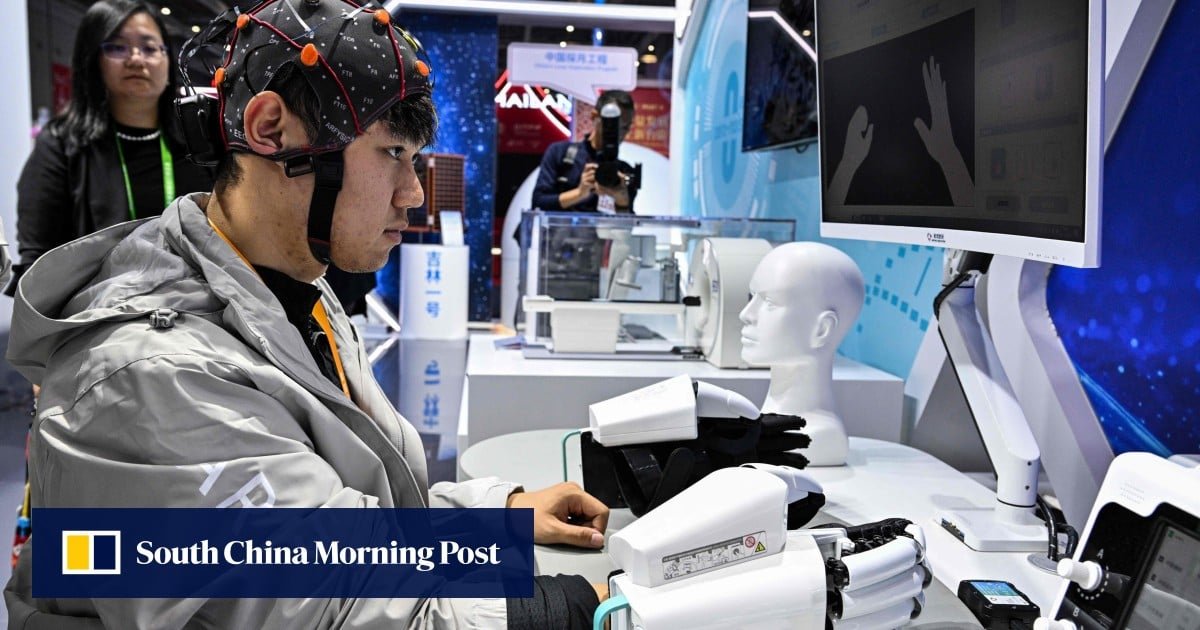
The newly approved implantable BCI hand motor function system was described by the company as a coin-sized wireless device placed on the brain’s outer surface without penetrating tissue, designed to read patients’ neural signals and translate them into hand movements.