Pakistan’s Federal Constitutional Court Rules Nikah of Underage Christian Girl With Muslim Boy Valid
ISLAMABAD — Pakistan’s Federal Constitutional Court (FCC) has issued a landmark ruling stating that Muslim men are legally permitted under Islamic law to marry women from the Ahl-e-Kitab (People of the Book), and that such a marriage cannot be annulled even if it violates the Child Marriage Restraint Act.The case centres on Maria Bibi, a…
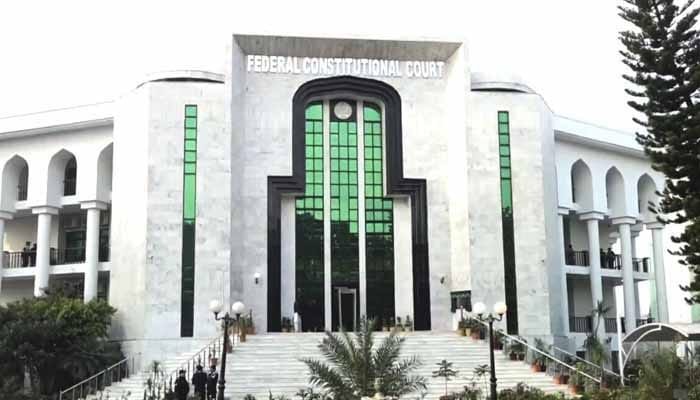
ISLAMABAD — Pakistan’s Federal Constitutional Court (FCC) has issued a landmark ruling stating that Muslim men are legally permitted under Islamic law to marry women from the Ahl-e-Kitab (People of the Book), and that such a marriage cannot be annulled even if it violates the Child Marriage Restraint Act.
The case centres on Maria Bibi, a resident of Lahore, who converted to Islam and married a young man named Shehryar. The court noted that the girl appeared before a magistrate and stated on record that she entered the marriage of her own free will, without any coercion.
The court observed contradictions in statements made by the girl’s father, who listed his daughter’s age as 13 to 14 years in the FIR, but argued she was 12 years and 9 months old during proceedings. The court held that the documents relied upon were not beyond doubt, and that a habeas corpus petition was not the appropriate forum to examine the girl’s age or the authenticity of Dar-ul-Ifta documents.
On the question of constitutional authority, the FCC asserted that it — not the Supreme Court — is the final forum for constitutional interpretation. All courts, including the Supreme Court, are bound by its orders, though the FCC itself is not obligated to follow Supreme Court precedents that conflict with the Constitution or law.
The ruling has drawn significant attention from human rights groups and legal experts, who warn it may weaken protections for underage girls, particularly from religious minority communities, who are already vulnerable to forced conversion and marriage.