CTI proposes major initiative to empower rural women, revive carpet exports
By Muhammad ShahzadLahore, PakistanLAHORE: The Carpet Training Institute has presented a comprehensive and revolutionary proposal to the Punjab government aimed at economically empowering rural women and reviving exports of handmade carpets.The proposal aligns with the vision of Maryam Nawaz Sharif, under which women’s inclusion in the economic mainstream has been declared a key priority.A significant…
By Muhammad Shahzad
Lahore, Pakistan
LAHORE: The Carpet Training Institute has presented a comprehensive and revolutionary proposal to the Punjab government aimed at economically empowering rural women and reviving exports of handmade carpets.
The proposal aligns with the vision of Maryam Nawaz Sharif, under which women’s inclusion in the economic mainstream has been declared a key priority.
A significant meeting of rural women and industry stakeholders was held under the chairmanship of Ijaz-ur-Rehman, where detailed discussions took place on the features of the proposed plan and its expected economic and social benefits.
Addressing the meeting, Ijaz-ur-Rehman said the initiative was fully in line with the chief minister’s vision for women’s empowerment, which prioritizes equal opportunities for economic development, social inclusion and employment.
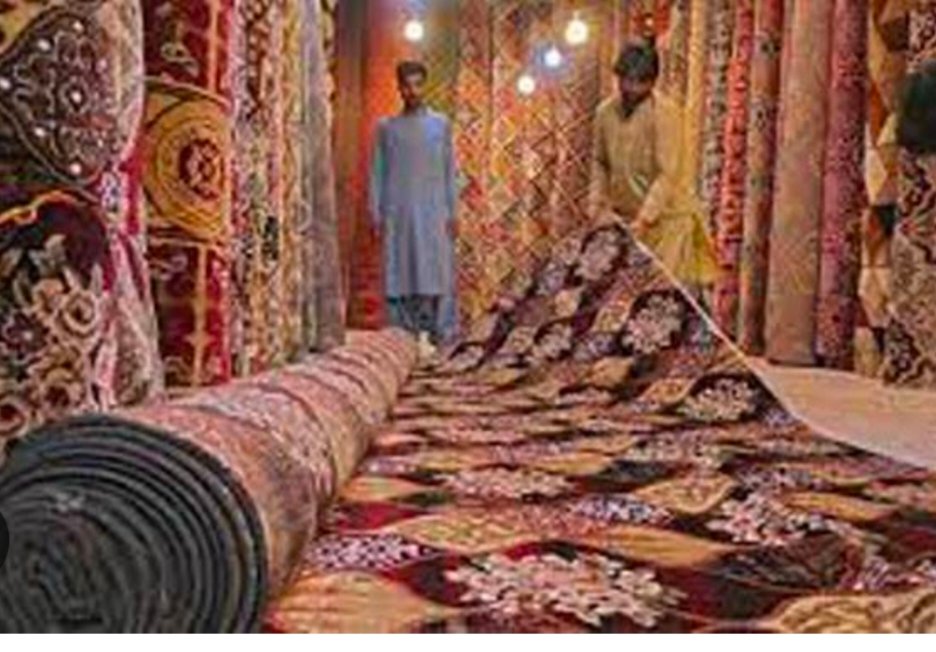
He stated that handmade carpet production has traditionally remained a successful cottage industry operated by rural women. Under the proposed plan, he suggested that the government provide free looms of various sizes to women across all districts and tehsils of Punjab.
He further proposed that women be given practical training in carpet weaving along with instruction in designing and finishing techniques. Women completing the training should also receive working capital to start small-scale home-based production units, enabling them to establish carpet-making enterprises at the household level.
Ijaz-ur-Rehman added that the Pakistan Carpet Manufacturers and Exporters Association would support the marketing of products manufactured by trained women at fair prices. He emphasized that women would retain full rights to sell their products freely in the open market without restrictions.
According to him, women completing the three-month training course would receive certificates, while CTI Lahore and PCMEA would maintain continuous coordination with them to provide technical guidance and assistance in carpet production, designing and finishing.
He noted that the handmade carpet industry is among Pakistan’s major export sectors but has suffered decline due to changing global market conditions, rising production costs and a shortage of skilled labor, resulting in a substantial drop in production and exports.
Ijaz-ur-Rehman recalled that during the 1970s and 1980s, the Punjab Small Industries Corporation established 83 training and production centers across the province, helping develop skilled manpower and boosting carpet exports to nearly $250 million.
However, after the closure of these centers, the industry experienced a sharp decline, with annual exports now reduced to nearly $60 million.
He urged the Punjab government to immediately implement the proposed plan in collaboration with institutions including the Punjab Small Industries Corporation, Technical Education and Vocational Training Authority, the Punjab Skills Development Fund and the Department of Women Development.
He concluded that the initiative would not only help revive Punjab’s carpet industry but also generate large-scale employment opportunities, increase rural household incomes, reduce poverty and earn valuable foreign exchange for the country.