Starmer’s Exit: Not Policy Failure, But Political Pressure From Three Fronts
Epstein files fallout, local election losses, and the Reform UK surge combined to force Labour’s handLondon — British Prime Minister Keir Starmer has resigned — not because of economic failure, but because of mounting political pressure that made his continued leadership a liability for the Labour Party ahead of the next general election.An Economy That…
Epstein files fallout, local election losses, and the Reform UK surge combined to force Labour’s hand
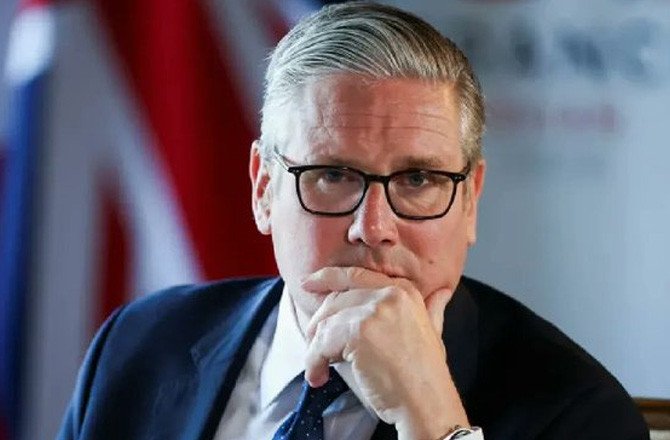
London — British Prime Minister Keir Starmer has resigned — not because of economic failure, but because of mounting political pressure that made his continued leadership a liability for the Labour Party ahead of the next general election.
An Economy That Underperformed Expectations, Not Reality
By conventional benchmarks, Starmer’s record was not dismal. Inflation, which had risen from 2.2% to 3.8% in his first year, held at 2.8% despite the Iran conflict and its economic ripple effects — above the 2% target, but far below feared peaks. His pledge to lead the fastest-growing G7 economy could not be fulfilled amid Trump’s tariffs and global instability, but Britain ranked second among G7 nations over the past twelve months — a notable outcome under difficult circumstances.
Three Factors That Sealed His Fate
The Epstein files proved corrosive, even in their absence of Starmer’s name. His appointment of Peter Mandelson as UK Ambassador to the United States became a political liability after Mandelson’s name appeared in the files. Public protests followed, and both Chief of Staff Morgan McSweeney and Communications Director Tim Allan were forced to resign — a significant blow to Starmer’s inner circle.
Local election results delivered a further shock. Labour lost 1,496 council seats and 14 councils — figures that sent an unmistakable warning to the party’s leadership about its electoral prospects.
The rise of Reform UK, led by Nigel Farage, added urgency to the situation. Labour strategists concluded that without a change of leadership, the party risked serious losses in the next parliamentary election to a right-wing populist wave it has so far struggled to counter.
Who Comes Next?
Andy Burnham, Mayor of Greater Manchester, who won a parliamentary by-election last week, is widely regarded as the frontrunner for the Labour leadership. He could be sworn in as early as September.
Starmer consulted Labour MPs before making his decision, informed the King, and made a formal announcement — a reminder that British democratic norms, though tested, remain intact.