Expansion of Tax Net, Rs124 Billion Revenue Target Set for Current FY: Secretary
By Muhammad Shahzad | Lahore, Pakistan LAHORE: Punjab’s Excise, Taxation & Narcotics Control Department is focusing on expanding the tax net, modernising revenue collection, improving transparency and providing maximum online services to citizens, Secretary ET&NC Masood Mukhtar has said. In an exclusive interview with Daily The Business, Masood Mukhtar said the department collected Rs75 billion…
By Muhammad Shahzad | Lahore, Pakistan
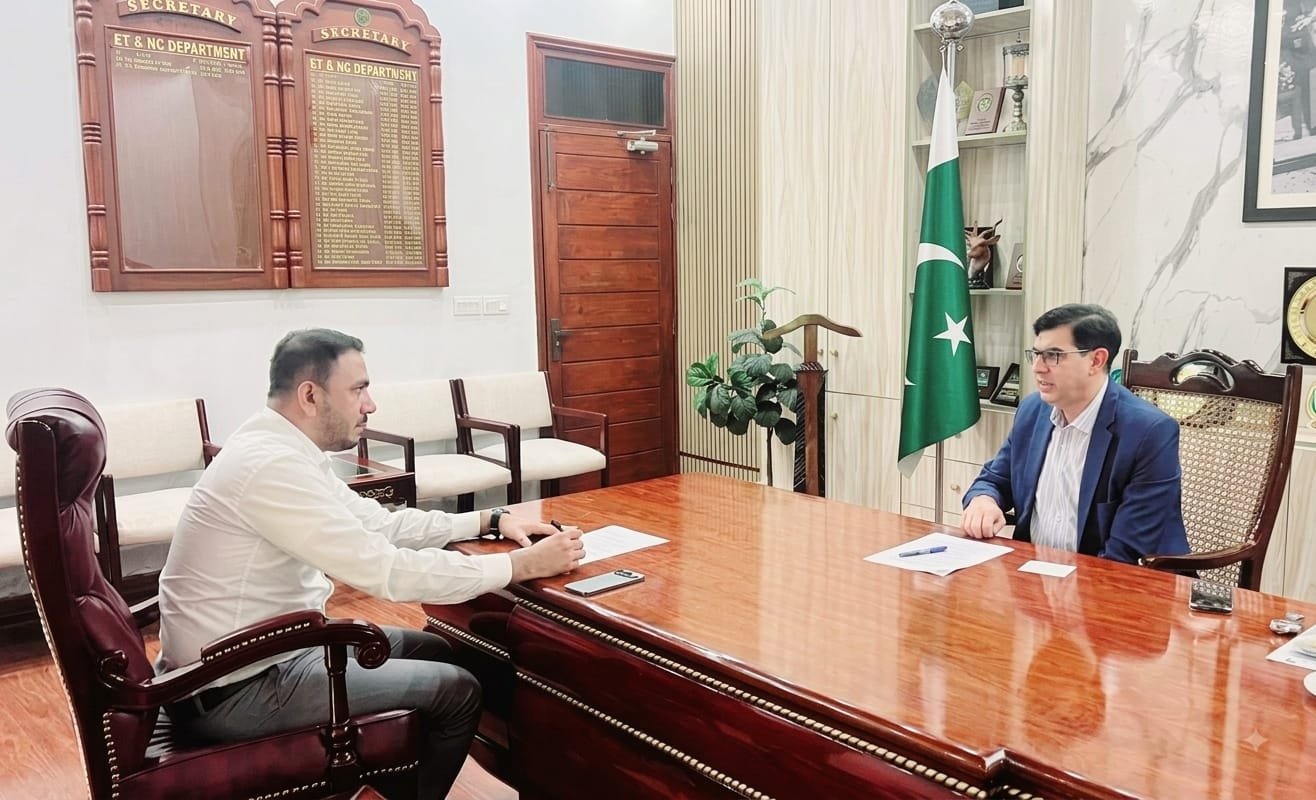
LAHORE: Punjab’s Excise, Taxation & Narcotics Control Department is focusing on expanding the tax net, modernising revenue collection, improving transparency and providing maximum online services to citizens, Secretary ET&NC Masood Mukhtar has said.
In an exclusive interview with Daily The Business, Masood Mukhtar said the department collected Rs75 billion against a target of Rs77 billion during the financial year 2025-26, achieving 98 percent of the target.
He said motor vehicle tax collection increased by 46 percent, property tax by 26 percent and professional tax by 17 percent, while overall tax collection rose by around 35 percent compared with the previous financial year.
According to the secretary, improved collection mechanisms, expansion of digital services, modernisation of records and the availability of facilities to taxpayers from home contributed significantly to the increase in revenue.
Property Tax Reforms
Masood Mukhtar said digital surveys of properties and modernisation of records were underway using modern technology. Citizens were being provided access to property details and self-assessment facilities through an online portal, while the assessment process was also being conducted through the PT-5 form.
A GIS-based pilot survey has been launched in Zone 13 of Lahore to compile accurate property data, identify properties outside the tax net and make revenue collection more effective.
He said efforts were also underway to connect properties across Punjab with the Excise Department’s tax system through data sharing with government institutions, including the Punjab Land Records Authority (PLRA).
Around 300,000 properties were surveyed last year, while additional properties were being identified through records covering the previous 10 to 11 years. This process is expected to generate additional revenue.
The secretary clarified that expansion of the tax net was not aimed at placing an additional burden on existing taxpayers but at bringing individuals and properties currently outside the tax system into the tax net.
He said online tax payments and digital services would reduce human intervention and improve transparency.
Motor Vehicle Tax and Electric Vehicles
Regarding vehicle registration and motor vehicle taxation, Masood Mukhtar said revenue collection had increased significantly and steps were being taken to simplify the registration process further.
Action was also being taken against tax defaulters to ensure timely recovery of dues and curb tax evasion.
He said registration of motorcycles and vehicles, particularly electric vehicles, had increased considerably during the last financial year. The Punjab government was considering further incentives to promote electric vehicles.
He noted that a 95 percent concession had been provided on token tax and registration of electric vehicles during the previous financial year, while the concession had been increased to 99 percent in the FY 2026-27 budget.
Rs124 Billion Revenue Target
The overall revenue target of the Excise Department for FY 2026-27 has been set at around Rs124 billion. The property tax target has been increased by 62 percent, while the motor vehicle tax target has been raised by 70 percent.
Masood Mukhtar said online payments, self-assessment, GIS surveys and digital records were among the measures being implemented to improve transparency and reduce unnecessary direct interaction between taxpayers and officials.
He said maximum departmental services were being shifted to digital platforms so citizens would not have to visit government offices for routine matters.
The department has also introduced helplines 08008786 and 1035, available 24 hours a day, through which citizens can register complaints and obtain information regarding taxes and departmental services.
Recruitment and Manpower
Regarding manpower shortages, Masood Mukhtar said officers and employees were performing their duties despite limited resources. However, additional charges and other issues existed in some areas because of vacancies against sanctioned posts.
He said development matters were being handled according to rules through Departmental Promotion Committee (DPC) meetings, while efforts were also underway for better distribution and rationalisation of manpower and filling vacant posts.
After the recruitment ban was lifted, 124 constables were recruited last year and 145 this year on merit, he said.
Recruitment of Excise and Taxation Inspectors and Excise and Taxation Officers is carried out through the Punjab Public Service Commission, while the department is gradually addressing its manpower shortage.
The secretary said employees’ legitimate issues were being resolved according to rules and regulations, while promotion, posting and other administrative matters were being considered at the relevant forums.
He said several measures had been taken in recent years, including recruitment of Grade-IV employees, amendments to promotion rules, timely examinations, annual awards and DPC meetings. Training programmes were also being organised in collaboration with MPDD to facilitate the promotion of inspectors to the rank of Excise Officer.
No Proposal for Administrative Merger
Regarding a possible administrative merger, Masood Mukhtar clarified that there was currently no proposal under consideration to merge the Motor Branch or Property Tax Branch with any other organisation.
He said the department was instead focusing on improving efficiency within its existing administrative structure.
Hotel and Entertainment Taxes
Regarding Hotel Tax and Entertainment Tax, the secretary said Hotel Tax had been abolished under Section 5 of the Punjab Finance Act 2014, while Sales Tax on Services in the sector was being collected by the Punjab Revenue Authority.
He said that during FY 2012-13, Rs403.157 million was collected against a Hotel Tax target of Rs375.844 million, achieving 107 percent of the target.
Similarly, under Section 2 of the Punjab Finance Act 2021, the Punjab Entertainment Duty Act 1958 was abolished. During FY 2020-21, Rs33.7 million was collected against an Entertainment Duty target of Rs70 million, representing 48 percent.
Masood Mukhtar said the abolition or transfer of these taxes to other departments had not negatively affected Excise Department revenue, which had continued to grow.
Anti-Narcotics Operations
Regarding the Narcotics Control Wing, the secretary said anti-narcotics operations were continuing across the province, with significant quantities of drugs recovered and suspects arrested in various operations.
He said the department’s anti-narcotics strategy was not limited to arrests and registration of cases, but also focused on preventing drug supply, raising awareness among young people and supporting the treatment and rehabilitation of addicts.
He stressed the importance of coordination among the health department, police, educational institutions, parents and civil society.
Preparations were also underway to organise a Drug Burning Ceremony for the destruction of seized narcotics.
Masood Mukhtar said the CNF was established at the end of 2024, while Narcotics Control Stations had been established and made operational in 39 of Punjab’s 41 districts.
Under the revised Drug Act of 2011, coordination was being maintained with the health department and police regarding the registration, treatment and rehabilitation of drug addicts.
He said preventing drug trafficking and drug use, rehabilitating addicts and maintaining accurate statistics remained major challenges requiring coordinated efforts.
Digitalisation Remains a Priority
Masood Mukhtar said modernisation and digitalisation of the tax collection system remained among the department’s top priorities.
Work was underway to expand the tax net and close gaps through online services, digital records, GIS mapping, online registration and data sharing among government institutions.
He said departmental performance should not be measured solely by revenue collection but also by the quality of services provided to citizens and the level of transparency in the system.
Achieving 98 percent of the revenue target in FY 2025-26 was the result of collective efforts by the department’s team, he said, adding that the Rs124 billion target for FY 2026-27 would be a major challenge.
The department, he added, was committed to achieving the target through expansion of the tax net, improved monitoring, action against defaulters and wider digital services. Disciplinary action was also being taken against officers and officials who failed to achieve assigned targets.