Iran Foreign Ministry Spokesman: Americans Should Not Let Their Children Become Mercenaries for Israel
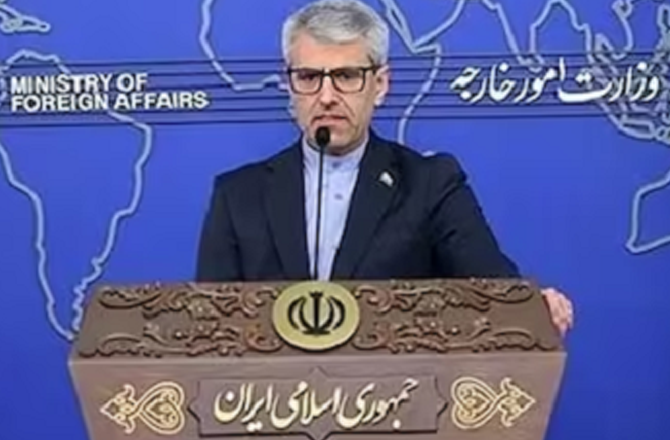
Baghaei responds to Jerusalem Post opinion piece proposing debt forgiveness to recruit over 1 million young Americans for ground invasion of Iran; columnist AJ Jaff argues current US military insufficient for operationIranian Foreign Ministry spokesman Ismail Baghaei has called on American citizens not to let their children become “mercenaries” who will die for Israel, responding…
Baghaei responds to Jerusalem Post opinion piece proposing debt forgiveness to recruit over 1 million young Americans for ground invasion of Iran; columnist AJ Jaff argues current US military insufficient for operation
Iranian Foreign Ministry spokesman Ismail Baghaei has called on American citizens not to let their children become “mercenaries” who will die for Israel, responding to a Jerusalem Post opinion column that suggested the US should use student debt forgiveness to recruit young Americans for a potential ground invasion of Iran.�
Baghaei’s remarks came after the Jerusalem Post published a column by retired Canadian Armed Forces officer AJ Jaff, who proposed that the US government could exploit the debts of millions of young Americans, using loan forgiveness as leverage to push them into fighting Iran.�
“Americans! Ask yourselves one question: Why should your sons and daughters be relieved of debt in exchange for fighting and dying in a war that Israel wants to continue and expand?” Baghaei wrote in a post on X (formerly Twitter) on Friday.�
He referenced Jaff’s column, which suggested forgiving student loans and credit card debt to recruit millions of Americans for a potential ground invasion of Iran. “A Jerusalem Post opinion writer is openly presenting exactly this idea: student loans and credit card debt should be used to recruit Americans for war with Iran. Your lives, your taxes, someone else’s war. Don’t let anyone turn you into cannon fodder and make you pay for a war you never chose,” Baghaei wrote.�
“Don’t let anyone turn your children into mercenaries for their illegal Israeli-desired war,” he added.�
The Iranian government’s response came after the column argued that the current US military manpower is insufficient for operations against Iran. Jaff proposed a recruitment program through debt relief, similar to historical incentive programs like the GI Bill, to boost voluntary enlistment.�
Jaff argued that despite months of US attacks, Iran’s military capabilities have not been eliminated and the war has not ended, and a ground invasion would require far more troops than the current US military has available. The columnist emphasized that recruitment numbers are below the level needed for a ground invasion of Iran.�
A successful ground campaign against Iran’s 31 provincial commands and its Mosaic Defense Doctrine is estimated to require between 750,000 and 1.5 million American troops, while the current active US military is approximately 452,000, according to the column.�
Jaff wrote that the average American aged 18 to 34 carries more than $40,000 in non-mortgage debt, including student loans, credit card balances, auto loans and personal loans, with some estimates reaching up to $100,000. Approximately 77 percent of Americans are in debt in some form, meaning roughly 250 to 260 million individuals face various financial obligations, bringing US household debt to a record $18.8 trillion, with average debt per American adult at $63,500.�
“A federally administered debt-forgiveness enlistment programme that fully discharges student loan, credit card, and loan balances after 24 or 36 months of service, and extends the GI Bill, would produce voluntary enlistment at scale,” the columnist argues.�
Baghaei later shared a satirical meme with his post referencing the television series “Squid Game,” characterizing the proposed military mobilization as a war driven by Israel that ordinary Americans should not fund with their lives and taxes.�
The US, along with Israel, attacked Iran on February 28, in strikes that killed hundreds of civilians in addition to Supreme Leader Ali Khamenei and most senior commanders, according to Iranian accounts.�
Iran immediately responded by establishing control over the Strait of Hormuz, through which one-fifth of global oil passes, and launched missiles and drones at US-allied Gulf Arab states, damaging the reputation of these oil-rich countries.
Washington and Tehran later signed a memorandum of understanding on June 18 regarding free maritime passage in the Strait of Hormuz, mediated by Pakistan, but implementation has stalled due to disagreements over security arrangements in the strait.