Freedom Flotilla Coalition launches new Gaza-bound mission for October
The Freedom Flotilla Coalition (FFC) announced on Wednesday a new international maritime mission aimed at reaching the Gaza Strip in October 2026, with vessels making stops at European ports to build public pressure against Israel’s blockade of the enclave.�In a statement, the coalition said the mission seeks to “challenge Israel’s illegal and deadly blockade of…
The Freedom Flotilla Coalition (FFC) announced on Wednesday a new international maritime mission aimed at reaching the Gaza Strip in October 2026, with vessels making stops at European ports to build public pressure against Israel’s blockade of the enclave.�
In a statement, the coalition said the mission seeks to “challenge Israel’s illegal and deadly blockade of Gaza” and ensure access for food, water and medicine, despite a history of interceptions, detentions and alleged abuse of activists by Israeli forces.�
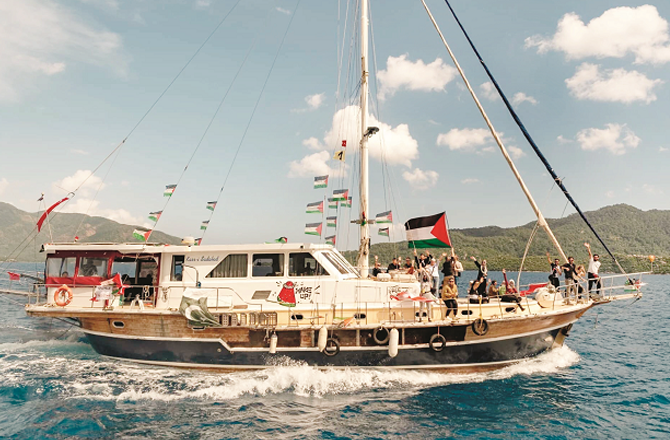
Two vessels have already set sail as part of the campaign: Handala II sailed around Scandinavia in June and July, calling at ports in Norway, Sweden and Denmark, while Kate departed from Bristol, UK, earlier this month and has since stopped in Ireland, Germany and France.�
The flotilla is scheduled to visit ports in Spain, Portugal and Italy before continuing toward Gaza, with organizers planning to arrive at the Palestinian coast in October.�
The coalition said Israeli forces intercepted the Global Sumud Flotilla twice in the past year: in October 2025, more than 450 participants were detained, including South African author Zukiswa Wanner and Nelson Mandela’s grandson, Mandla Mandela, and in April 2026, about 175 more activists were taken into custody.�
Amnesty International and other rights groups have reported that detained activists were subjected to sleep deprivation, denial of water and medical care, and other ill-treatment, while a New York Times investigation found consistent accounts of beatings, electric shocks and abuse among 24 detainees.�
The FFC is calling on governments to guarantee safe passage for the flotilla, pressure Israel to end restrictions on aid access to Gaza, commit to diplomatic consequences for any attack on or seizure of the vessels, and use diplomatic and economic tools to lift the blockade.�
“Freedom Flotilla is sailing again because our governments continue to fail in their responsibilities,” said Zohar Chamberlain Regio, a member of the FFC steering committee.�
Edward DeGilio, an engineer from Maryland participating in the mission, added: “We know traveling to Gaza carries serious risks, but silence and inaction cost the Palestinians and the world far more.”�
The coalition traces its roots to 2010, when Israeli forces killed 10 activists on the flotilla ship Mavi Marmara, and to the Free Gaza Movement’s first sea missions in 2008.�