Turkey: 500-Year Quran Recitation Tradition Lives On at Topkapi Palace
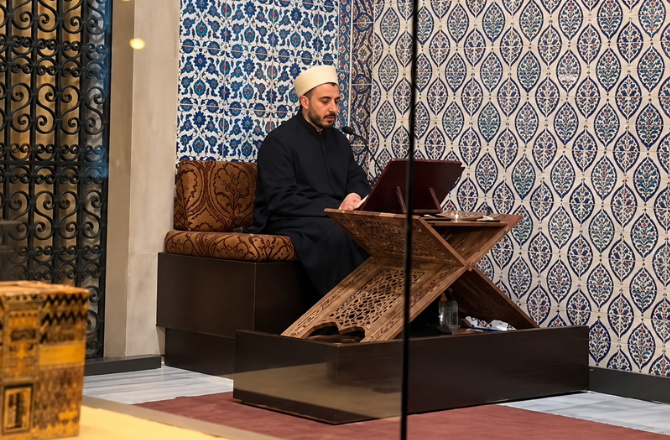
ISTANBUL — In the Sacred Trusts Chamber of Istanbul’s Topkapi Palace, an unbroken chain of round-the-clock Quran recitation has continued for five centuries. The tradition began under Ottoman Sultan Selim I, who personally started it after bringing sacred relics to Istanbul following his 1517 Egyptian campaign, ordering his court to find 39 hafiz (Quran memorizers)…
ISTANBUL — In the Sacred Trusts Chamber of Istanbul’s Topkapi Palace, an unbroken chain of round-the-clock Quran recitation has continued for five centuries. The tradition began under Ottoman Sultan Selim I, who personally started it after bringing sacred relics to Istanbul following his 1517 Egyptian campaign, ordering his court to find 39 hafiz (Quran memorizers) so he could serve as the fortieth himself. According to Ilhan Kocaman, head of the Topkapi Palace department, the practice has continued uninterrupted ever since.
Today, 28 hafiz take turns reciting in 45-minute to one-hour shifts, completing one full Quran daily and 365 annually. Prayers for the year’s recitations are held during Ramadan’s Destimal Ceremony, a tradition dating to Ottoman times.
The same chamber, in the palace’s Enderun Courtyard, houses relics including the Prophet Muhammad’s mantle (Khirka-i Sharif), his sword and letters, a fragment believed to be from a tooth lost at the Battle of Uhud, a hair relic, a footprint relic, the swords of the four Rightly-Guided Caliphs, and the keys to the Kaaba. Kocaman noted that even dust collected while cleaning the mantle’s room was ceremonially buried in a specially dug well, reflecting the depth of reverence passed down through generations. Visitors, he said, often mistake the recitation for a recording — until they step inside and see the hafiz reciting in person.
Khalil Ibrahim Akgun, one of the current reciters, described the duty as a living expression of devotion passed through generations: “We are a bridge between the past and the future,” he said, calling it a divine blessing to take part in a practice that has outlasted empires, rulers, and the transformation of Istanbul itself — yet has never fallen silent in five hundred years.