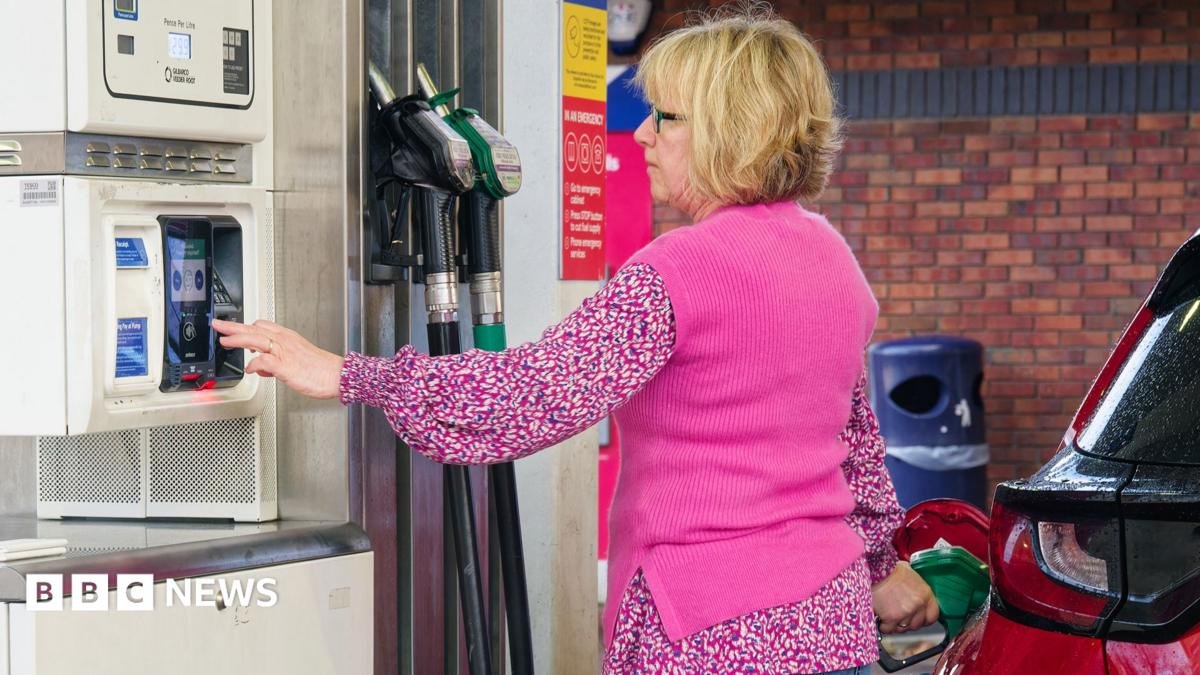
UK inflation pushed up by petrol and diesel price rises
The rise in inflation means it has moved further away from the Bank of England’s 2% target. The bank uses interest rates to control inflation. The rate currently stands at 3.75% and the Bank of England is meeting on Thursday to decide whether to change it. Prime Minister Andy Burnham said on Wednesday inflation is…
The rise in inflation means it has moved further away from the Bank of England’s 2% target.
The bank uses interest rates to control inflation.
The rate currently stands at 3.75% and the Bank of England is meeting on Thursday to decide whether to change it.
Prime Minister Andy Burnham said on Wednesday inflation is “a concern” but the underlying UK economy was resilient.
“The extent to which we’ve got inflationary pressure it’s driven by the situation in the Middle East,” he said.
The most recent figures showed that the UK economy expanded by 0.4% in July, boosted by investment in artificial intelligence.
But, for the second quarter between April and June, Britain’s economic growth slowed to 0.4% from 0.6% in January to March.
Looking ahead to his first Budget, which will be delivered by Chancellor John Healey on 28 October, Burnham said: “We will take difficult decisions to make sure the economy remains on track.”
Commenting on inflation, shadow chancellor Andrew Griffith said the government’s “jobs tax and employment red tape are being passed on to consumers in the weekly shop and their mad energy policies are pushing up costs and leaving Brits exposed”.
A Tory spokesperson said the energy policies Griffith is referring to include a commitment to reaching net zero carbon emissions by 2050 and a “refusal to drill in the North Sea”.
The government is cutting VAT on household electricity bills from 5% to zero on 1 October, saving a typical household about £45 a year.
At the same time, the price cap on both electricity and gas bills will rise by 4%.
It means a home using a typical amount of gas and electricity will pay £60 a year more.
Yael Selfin, chief economist at KPMG, said the VAT cut will only partially offset the impact of higher gas prices, which have been rising because of the Iran war and disruption to global supplies, including liquefied natural gas.
“If gas prices remain around current levels, household energy bills could rise by a further double-digit amount from January, with an even larger increase possible if wholesale prices climb further,” she said.