UN Security Council Reform: 12-Nation Bloc Opposes New Permanent Seats
NEW YORK, Divisions among UN member states over Security Council reform resurfaced this week, as the 12-member “Uniting for Consensus” (UfC) group rejected proposals to add new permanent seats, instead backing an expansion of elected members and the introduction of longer-term rotating seats.The position was outlined in a joint statement issued during the high-level week…
NEW YORK, Divisions among UN member states over Security Council reform resurfaced this week, as the 12-member “Uniting for Consensus” (UfC) group rejected proposals to add new permanent seats, instead backing an expansion of elected members and the introduction of longer-term rotating seats.
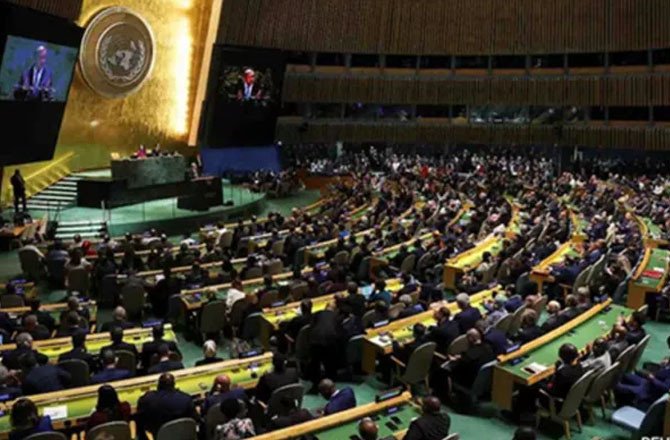
The position was outlined in a joint statement issued during the high-level week of the UN General Assembly’s 81st session. UfC members include Argentina, Canada, Colombia, Costa Rica, Italy, Malta, Mexico, Pakistan, South Korea, San Marino, Spain and Turkey.
In contrast, the G4 group — India, Brazil, Germany and Japan — reaffirmed its support for expanding both permanent and non-permanent categories of membership, in a joint statement following their September 22 meeting in New York. The G4 argued the Council’s current structure, nearly eight decades old, no longer reflects today’s global realities, and voiced support for greater African representation, including permanent seats.
The UfC also called for limiting veto use in cases of mass atrocities and war crimes, while stopping short of demanding its abolition outright.
The Security Council currently has 15 members, including five permanent, veto-wielding members: the US, Russia, China, the UK and France. Intergovernmental negotiations on reform have continued since 2008 without a breakthrough on the Council’s future structure.