
Why Indie Film Can’t Afford the Risk of Not Taking Risks
The independent film industry can’t afford the risk of not taking risks. That is one of the key conclusions of the StepIn 2025Report published Thursday by Locarno Pro, the Locarno Film Festival‘s industry program. Titled “Embracing the Risk(s), but How?,” the reportconcludes that “cinema’s future depends on its ability to reframe risk acrossthe ecosystem —…
The independent film industry can’t afford the risk of not taking risks. That is one of the key conclusions of the StepIn 2025Report published Thursday by Locarno Pro, the Locarno Film Festival‘s industry program.
Titled “Embracing the Risk(s), but How?,” the reportconcludes that “cinema’s future depends on its ability to reframe risk acrossthe ecosystem — not as a liability, but as the driving force behind originality, impact, andaudience growth,” adding: “Overall, the participants agreed that the independent film industry cannotafford the risk of not taking risks. Risk lies at the core of cinema and should be embraced inthe best possible way.”
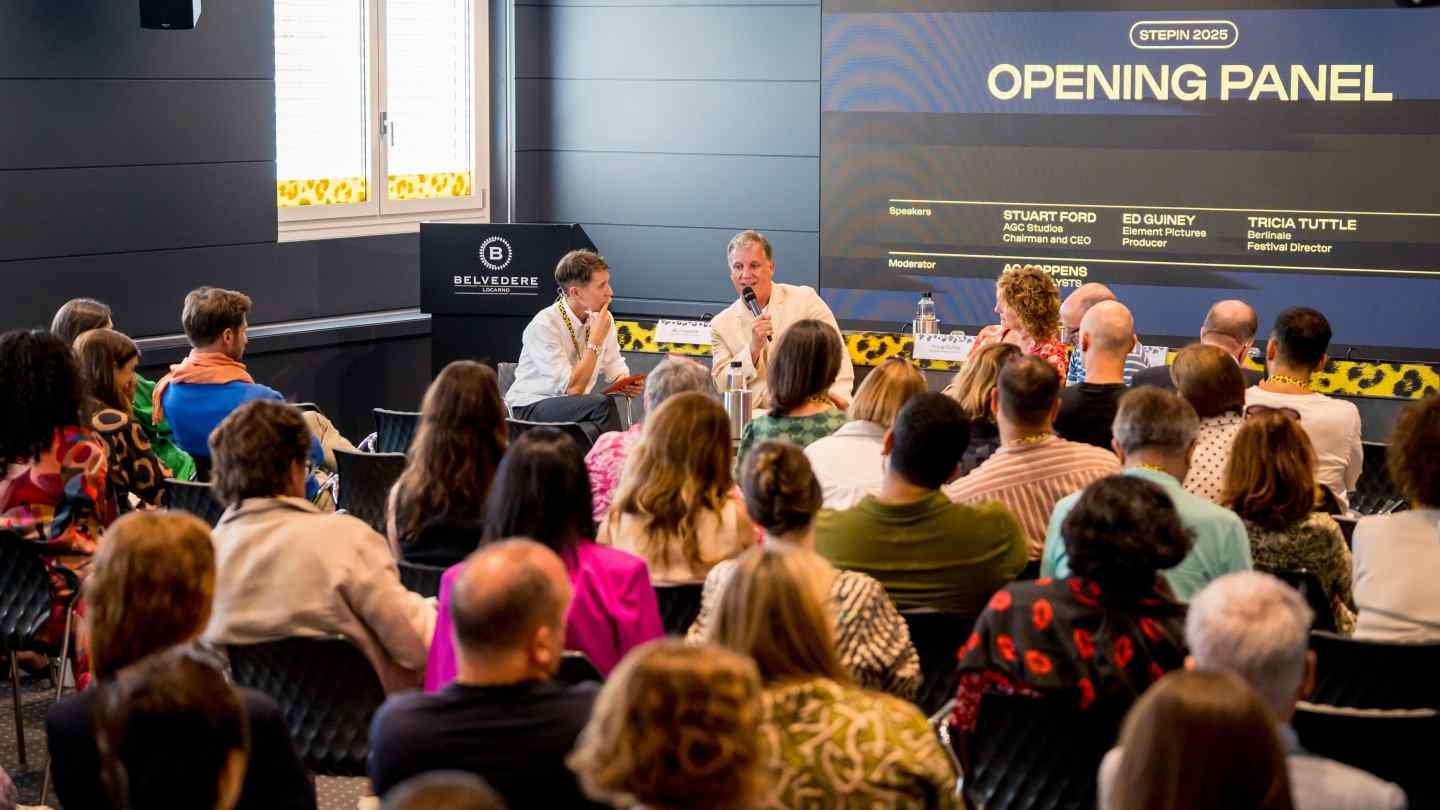
StepIn is conceived as an interdisciplinary and international think tank that allows distributors, exhibitors,producers, sales agents, film institutions, financiers, streaming platforms, broadcasters andrepresentatives of film festivals and markets to discuss, in closed working sessions,the state of the film industry. Marcello Paolillo served as project manager of the 14th edition this August, with ACCoppens of The Catalystsmoderating the event.
The four topics at the center of this year’s StepIn program were: independent production between public and private financing; independent distribution today: “The art of taking risks and how to handle it”;
festivals and the press; and building a truly inclusive audiovisual industry.
The sections also compiled various recommendations, including: create public–private partnerships to strengthen production companies and enable “higher-budget projects without losing talent to other markets”; recognize entertainment as an asset class by educating investors in Europe; “the industry should consider streamer investment obligations to reinvest a share of locally generated revenue into national eco-systems”; expand revenue channels by using AVOD, PVOD and self-distribution; push for transparent streaming data; “reframe ticket pricing to attract younger audiences, using flexible models, memberships, and reduced-price days”; and “DEI needs a reframe in the narrative — as a revenue-generating/audience-growing versus a box-ticking exercise for businesses.”
The StepIn report concluded with a list of “bold requirements,” including “stop fetishizing ‘safe’ choices — they rarely are”; “embrace the changes”; “financing and distribution are two sides of the same coin: if one collapses, the other follows”; “transparency is oxygen”; and “collaboration beats competition in audience-building.”
AI also got a recommendation, namely “AI should not be taboo.” Explains the Stepin report: “Used wisely, it’s a powerful tool for segment-oriented, data-driven strategies. The mix of algorithmic insight and human emotional intelligence is a winning combination for reducing risk and achieving success in production and distribution strategies.”
Among the high-profile film industry veterans appearing at Locarno Pro this summer werePoor Things,Pillion andMy Father’s ShadowproducerEd Guineyof Element Pictures,Yorgos Lanthimos’longtime producer; Berlin Film Festivaldirector Tricia Tuttle; andAGC Studioschairman and CEOStuart Ford. A conversation between free-spirited Romanian auteur Radu Jude and Guiney about the relationship between director and producer took people behind the scenes of the magic of movies. And comedian and disability advocate Maysoon Zayid (You Don’t Mess With the Zohan,General Hospital) inspired dialogue in a session dubbed “Somewhere Over the Rainbow: Making Movies That Save Lives.”


