Free and Open Indo-Pacific 4.0 under Prime Minister Takaichi?
This article, originally published by Pacific Forum, is republished with permission. When Sanae Takaichi was confirmed as the new leader of the Liberal Democratic Party (LDP), it was – as is typically the pattern in Japanese politics – virtually certain that she would succeed outgoing Prime Minister Shigeru Ishiba. Her ascension did face some political…
This article, originally published by Pacific Forum, is republished with permission.
When Sanae Takaichi was confirmed as the new leader of the Liberal Democratic Party (LDP), it was – as is typically the pattern in Japanese politics – virtually certain that she would succeed outgoing Prime Minister Shigeru Ishiba.
Her ascension did face some political uncertainty after long-time coalition partner Komeito broke with the LDP, raising questions about who would ultimately become prime minister. However, with a breakthrough in negotiations between the LDP and the Japanese Innovation Party (Ishin no Kai), the potential for an anti-LDP opposition coalition quickly evaporated.
The new administration has a window of opportunity to present itself as a visionary one with the injection of a new prime minister and the new political partnership. It has brought the LDP a chance to rebrand itself following former Prime Minister Shinzo Abe’s handover of party leadership to his successors. Takaichi has ideological similarities with the late Abe on foreign policy and her economic views resonate with the more proactive stance advocated by the JIP on domestic economic reform.
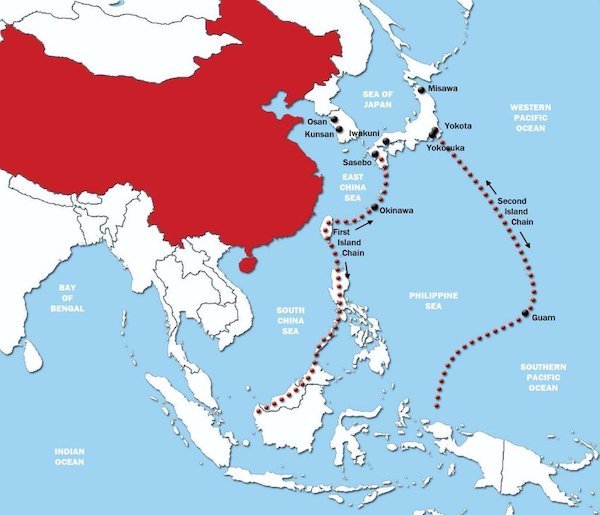
This policy convergence may allow Takaichi to act boldly, and the Free and Open Indo-Pacific (FOIP) vision, which has served as Japan’s central diplomatic vision since its inception in 2016, is the most obvious vehicle for doing so.
Innovating the FOIP
The new Takaichi administration has three distinct choices in its approach to the FOIP.
The most unlikely one would be to scrap it and replace it with something else. Given the longevity and international traction through what political scientists term norm diffusion that the FOIP has shown, this would be counterproductive, hampering any potential for political momentum in the realm of foreign policy.
The second option is to keep the status quo, opting for continuity, as the FOIP already offers a comprehensive approach to Japan’s interests in the Indo-Pacific. It would also present the least amount of effort – the administration would need only to take on the current formulation and run with it. Given that this formula has been a proven success, this would be a low-risk but low-reward scenario
The third – and preferable – route would be an evolution of the FOIP, building upon the previous formulations by incorporating Takaichi’s own comparative advantages and vision, such as her economic security acumen, to keep it relevant in the context of current regional dynamics in the Indo-Pacific.
This third route might start with expanding the scope of the FOIP to include the promotion of Taiwan as a global public good. The critical role that Taiwan plays has recently topped the headlines as Takaichi faces her first diplomatic challenge after her comments in the Diet on Japan’s involvement in the event of a so-called Taiwan contingency, comments that sparked strong reactions by Chinese officials.
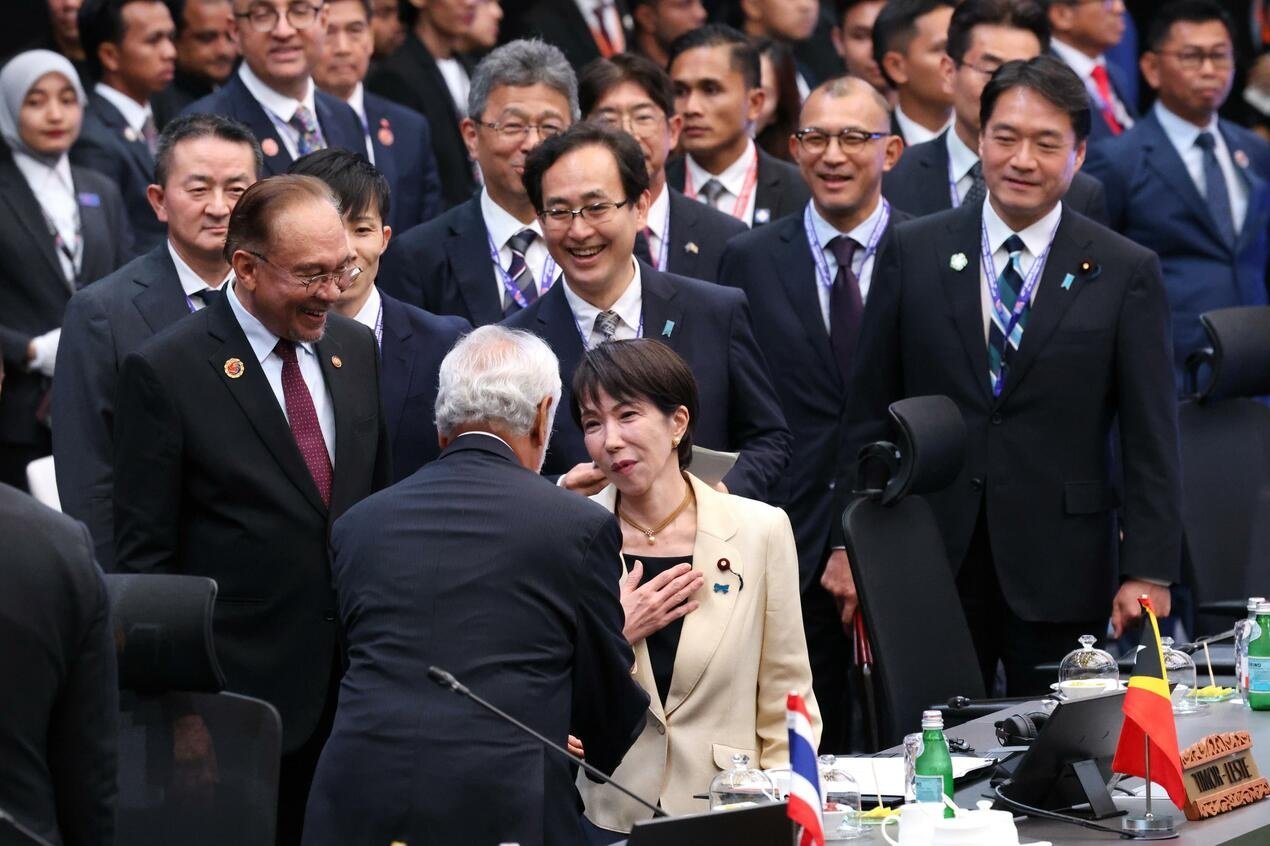
Another promising and critical avenue involves deepening cooperation with Southeast Asian countries – which, notably, were Takaichi’s chosen destination for her first official visit as prime minister. While ASEAN has adopted its own “Outlook on the Indo-Pacific,” incorporating FOIP vocabulary, its approach remains notably more cautious and ambivalent.
Given that Japan’s ally the United States and strategic partners Australia, New Zealand, and European stakeholders have already embraced Japan’s FOIP vision, Tokyo should prioritize engaging regional players who remain uncommitted. This engagement could materialize through security initiatives, including expanded official security assistance (OSA) programs and capacity-building efforts with selected countries, alongside enhanced cybersecurity cooperation.
Additionally, Japan shares significant interests with ASEAN members in disaster prevention, combating illegal fishing, and strengthening maritime domain awareness – areas that offer practical entry points for deeper collaboration beyond traditional security frameworks.
FOIP as a foreign policy tool
US President Donald Trump, in keeping with the expectations that the LDP presidency would translate into the prime ministership, congratulated Takaichi on Truth Social as soon as she became the new party leader. Takaichi, writing on X, thanked Trump for his words and continued by wishing for continued cooperation in upholding a free and open Indo-Pacific – thus highlighting the ubiquitousness of the framework.
Although the conceptual underpinnings of the FOIP can be traced at least all the way back to 2007, during Abe’s first stint as prime minister, Yoichi Hosoya labels this loose conceptual constellation FOIP 1.0. It would not become a declared policy until almost 10 years later, in 2016, which can be seen as FOIP 2.0. In 2018, it was rebranded as a vision rather than a strategy, to make it more appealing in light of accusations of it being anti-China.
Stephen Nagy and Nanae Baldauff argue that FOIP 3.0 emerged in 2023 under then Prime Minister Fumio Kishida, who framed it through four conceptual pillars that capture Japan’s core interests in the region. These are
- sovereignty, rules, transparency and dialogue;
- collaborative solutions to regional issues such as disaster prevention and environmental resilience;
- connectivity and infrastructure; and
- expanded maritime security and capacity building.
FOIP 4.0?
As a legacy of the second Abe administration, FOIP has been sustained and developed by later government. But, to remain relevant, it must be kept up to date as realities of economics, security and politics in the region change. As Japan sees a new prime minister for the fourth time in five years, a revamped FOIP 4.0 stressing the points above may prove one of the ingredients for a stable government, offering a clear vision of Japan and its role, something the previous administration struggled with.
Given Takaichi’s claim as successor to the late Abe in terms of foreign policy, this is a no-brainer – an opportunity to present a convincing vision for a future of Japan as a key player in the Indo-Pacific region.
As Kazuto Suzuki notes, however, the conditions that Japan is faced with are substantially different from those of 2012, when Abe returned to power. Japan faces an increasingly dire demographic situation and the economy has remained stagnant despite efforts by Takaihchi’s predecessors.
The new coalition with the JIP may, however, open up new windows as the LDP no longer has to adhere to the pacifist inclinations of its former coalition partner Komeito.
Despite a more challenging environment, both domestically and internationally, a “Takaichification” of the FOIP may inject well needed energy into a fresh administration that needs all the momentum it can get.
William Winberg (g269706k@icu.ac.jp) is a PhD candidate, Japanese government research scholar and teaching assistant at the International Christian University, Tokyo. He is also the Indo-Pacific Policy Dialogue event coordinator for the Yokosuka Council on Asia-Pacific Studies, a member of Pacific Forum’s Young Leaders Program and regional research associate at the Indo-Pacific Studies Center.