Japanese tattoo artists still face stigma despite landmark legal victory
Walk into any public bath in Japan, and you are liable to see a sign banning any visible tattoos. Even as Japan opens up to more international tourists and residents, body art remains taboo, not only at baths but gyms, swimming pools and other businesses. The strong stigma, which also extends to tattoo artists and…
The strong stigma, which also extends to tattoo artists and can result in difficulties finding jobs, comes from its historical link with the yakuza and other criminal elements of Japanese society, dating back to the Edo period (1603-1868).
The taboo persists despite the fact that tattooing itself is no longer seen as a potential crime.
A decade ago, the industry faced a crisis when tattoo artist Taiki Masuda, 37, faced a fine and possible imprisonment for not holding a medical license. He challenged the law in court, arguing for artistic expression, and was acquitted.
During his battle, a group was formed to establish new hygiene management guidelines and other efforts to foster public trust in tattooing.
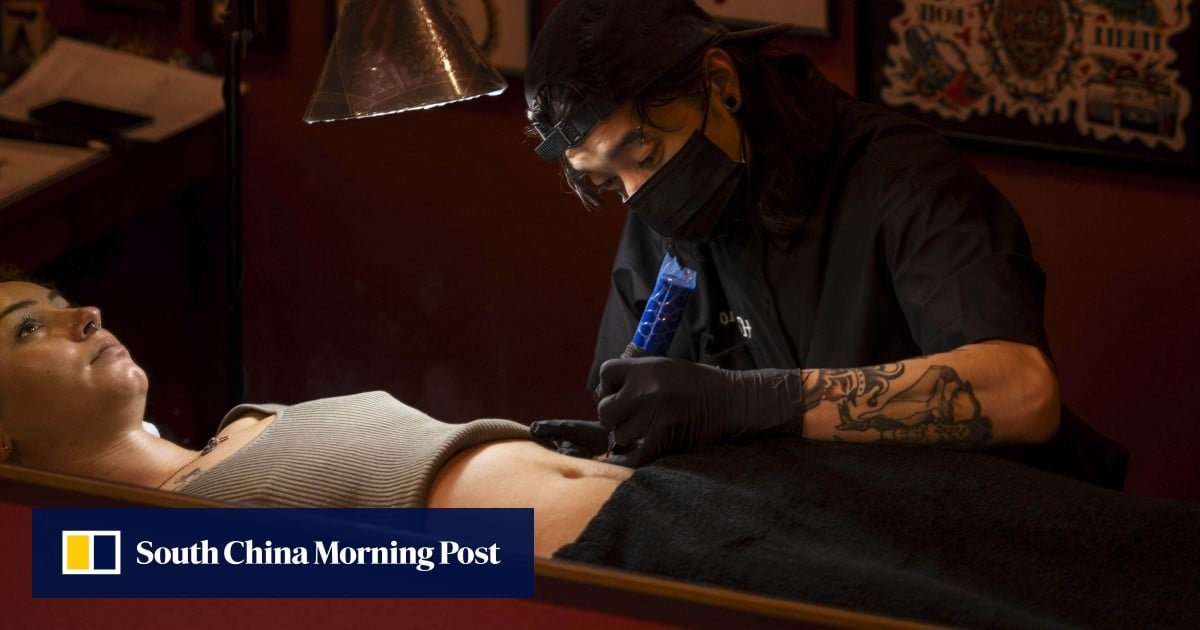
“This next part might hurt. Please bear it,” Masuda says while using a needle to trace an outline on the skin of a male customer at his tattoo studio in Suita, Osaka prefecture, western Japan, in early September.