Chaos in Iran would open the door to the worst IS terrorists
Suspicion is building that the United States could soon launch another round of strikes on Iran, this time with the intention of toppling the Ayatollah and the country’s repressive theocratic regime. This comes as US President Donald Trump continues to use his social media accounts to threaten war. In two separate posts, Trump warned Iran…
Suspicion is building that the United States could soon launch another round of strikes on Iran, this time with the intention of toppling the Ayatollah and the country’s repressive theocratic regime.
This comes as US President Donald Trump continues to use his social media accounts to threaten war. In two separate posts, Trump warned Iran that unless it makes a deal on its nuclear program, the “next attack will be far worse”, and that the US military was “ready, willing and able to rapidly fulfil its mission, with speed and violence, if necessary.”
This has been matched by an unprecedented buildup of US military assets in the Middle East, including moving the nuclear-powered aircraft carrier USS Abraham Lincoln into the Arabian Sea, and deploying guided-missile destroyers to the Eastern Mediterranean and Red Sea. There are also reports the US has deployed missile defense systems throughout the region in the likelihood of a strong Iranian response.
The Iranian government has responded, saying it was ready to “immediately and powerfully” counter any attack, and that any US aggression would start a “regional war.”
Talks continue between the US, Iran and interlocutor Turkey, but the Iranians appear resigned to conflict with the US and its allies. This would not just tear the region apart, but it could have serious unforeseen consequences.
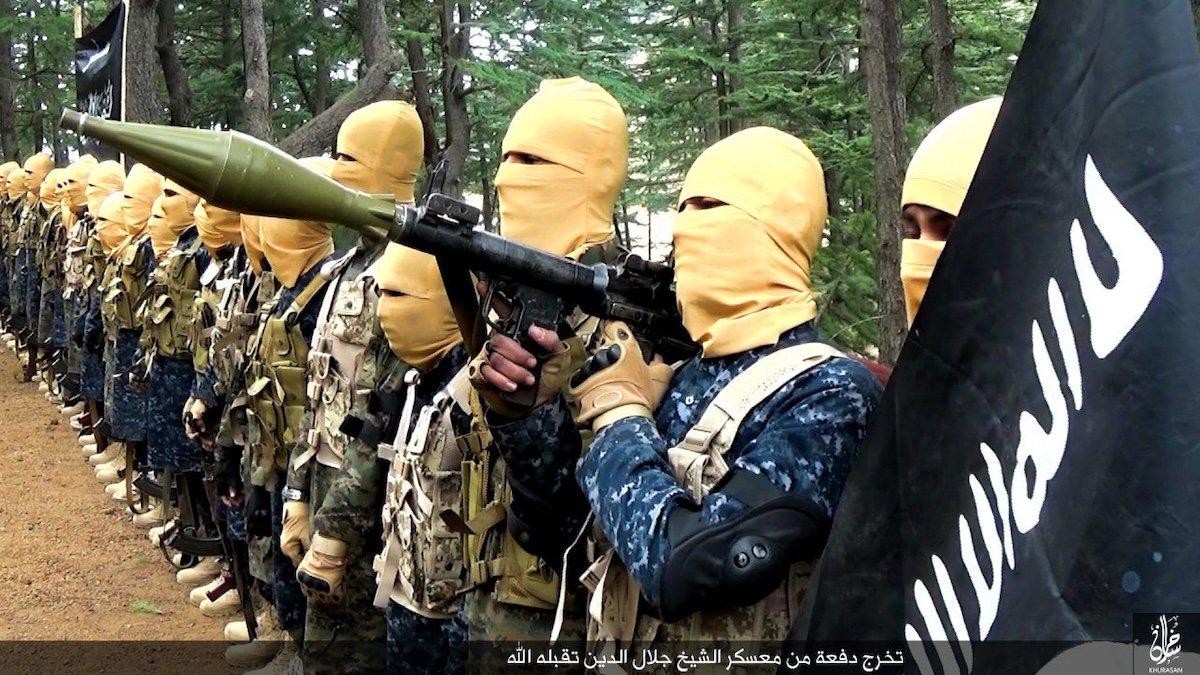
Next door, Taliban-ruled Afghanistan is again a haven for terrorists, most notably Islamic State in Khorasan (or ISK), an affiliate of the better-known Islamic State, or ISIS. The United Nations warns ISK is now a significant regional threat, that it is growing in numbers and strength and increasingly able to operate outside of Afghanistan.
The Taliban has failed to defeat ISK since returning to power in 2021. There are reports that the regime has been infiltrated by the terror group and that increasing numbers of Taliban members are joining ISK, attracted to an even more extreme interpretation of Islam. Just over a year ago, politician and powerbroker Khalil Haqqani was assassinated in broad daylight by ISK, showing how serious the situation has become for the Taliban.
Iran may be a rival of the US, but it is certainly no friend of ISK. A Shia Muslim-majority country, Iran is ideologically opposed to the Sunni terror group and has been a bulwark in stopping its spread beyond Afghanistan.
The Iranian military has prevented militants from crossing the border into Iran and works closely with partners Russia, China and Pakistan on counterterrorism operations to tackle ISK and other terror groups.
There are legitimate concerns regarding Iran’s abysmal human rights record, including the recent killing of protesters, and its support for Hezbollah in Lebanon and Hamas in Gaza. But destroying Iran’s military capabilities through airstrikes or even overthrowing the regime through a land invasion risks throwing the country into chaos and weakening a key ally against terrorism in the Middle East.
This could see Islamic State spill across Afghanistan’s borders into Iran and link up with its affiliates in Iraq and Syria, something the Iranian military has so far prevented. There is also a real risk that, like Afghanistan, Iran itself could be used as a base of operations because of the country’s sheer size and despite its Shia majority. These scenarios would see a more powerful Islamic State, one that would not just destabilise the Middle East, but have the reach to target the West.
We have seen this before. The invasion of Iraq and overthrow of Saddam Hussein by US-led forces in 2003 saw the country descend into sectarian strife, and tens of thousands flocked to the banner of the Islamic State, which established a caliphate in 2014 across swathes of Iraq and Syria, governed by a radical interpretation of Sharia law.
The rise of Islamic State upended the Middle East and had global implications. The group was guilty of countless atrocities against civilians, and it attracted thousands of men and women to join its cause through a sophisticated online network and propaganda campaign. The group also carried out a wave of terror attacks across Europe, most infamously the killing of 132 people at the Stade de France and Bataclan concert hall in Paris in November 2015.
Defeating Islamic State took years and cost lives. Even today, US forces are still fighting Islamic State militants in Syria and Iraq, and the group continues to carry out terror attacks, such as the bombing of a church in Türkiye and the murder of 149 people at Moscow’s Crocus City Hall in 2024.
Despite its inflammatory rhetoric, Iran is not a direct military threat to the US, and it is an important source of stability in an already fragile Middle East. Islamic State is a different matter. It relies on instability to survive and thrive, just like in Syria, Iraq and now Afghanistan, and it will almost certainly carry out attacks against US interests if it is allowed to expand in size and strength.
These are the risks Trump needs to consider before ordering an attack on Iran, because overthrowing the Ayatollah and fatally weakening Iran could simply see one rival replaced with another, deadlier opponent in the Islamic State.
Nature abhors a vacuum, and Trump could be about to create one for the Islamic State.