

The Vocational Training Council poised to develop skilled talent equipped for Hong Kongs economic transformation, says the new Chairman
[The content of this article has been produced by our advertising partner.] Hong Kong’s economy is undergoing a profound transformation into a multifaceted international hub, strengthening the city’s role across the “Eight Centres” set out in the 14th National Five-Year Plan and further accelerated under the 15th Five-Year Plan. The shift, reinforced by the Northern…
[The content of this article has been produced by our advertising partner.]
Hong Kong’s economy is undergoing a profound transformation into a multifaceted international hub, strengthening the city’s role across the “Eight Centres” set out in the 14th National Five-Year Plan and further accelerated under the 15th Five-Year Plan. The shift, reinforced by the Northern Metropolis initiative and deeper integration with the Greater Bay Area (GBA), signals a new era of spatial–economic synergy and diversified, innovation-led growth.
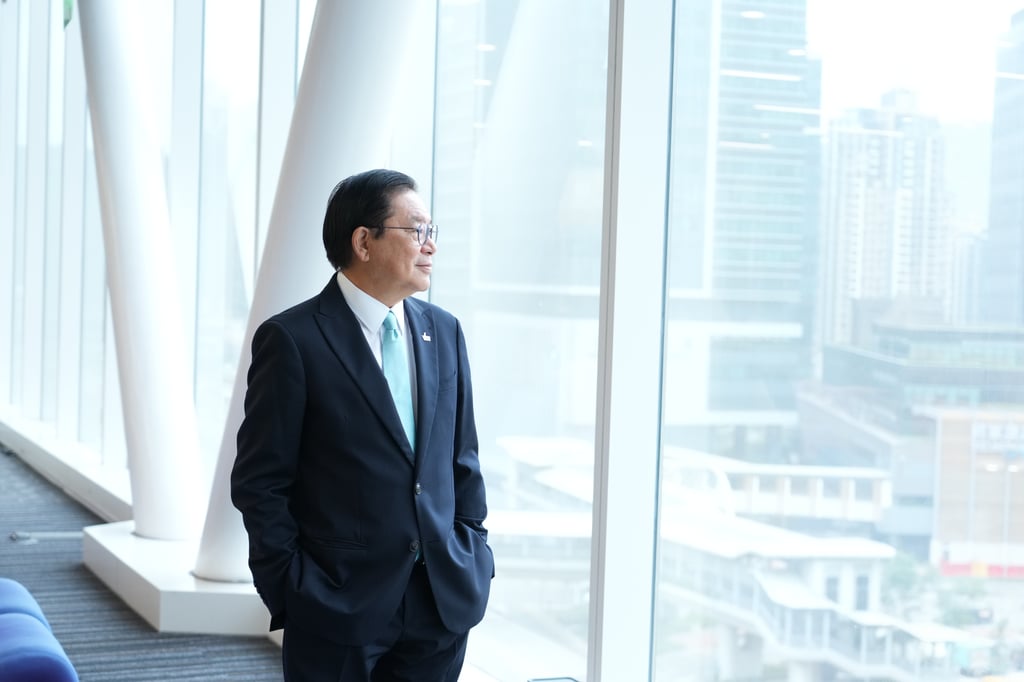
Supporting this evolution, the Vocational Training Council (VTC) — through its core focus on Vocational and Professional Education and Training (VPET) — is committed to nurturing talent equipped with the expertise and innovative mindset essential for Hong Kong’s economic transformation. This is the vision of Jeffrey Lam Kin-fung, who assumed the chairmanship on January 1, 2026.
“While we continue fostering skilled and knowledgeable manpower, we aim to further enhance the image and recognition of VPET,” says Lam, a seasoned industrialist with a longstanding commitment to promoting trade and industry in Hong Kong. He has played leading roles in many of the city’s most prominent industrial and trade organisations.
Lam frames Hong Kong’s next chapter as one of consolidation and ambition. He emphasises that the 14th and 15th National Five-Year Plans present a clear mandate: consolidate and enhance Hong Kong’s status as an international financial centre. Beyond finance, he highlights the city’s designated roles as an international hub for aviation, trade, innovation and technology, and “East meets West” centre for cultural exchange. To achieve this, Hong Kong must become “a leading place that nurtures as well as attracts top talent from beyond Hong Kong,” he says.
“The VTC has a central responsibility in that mission: to train the professionals who will sustain Hong Kong’s competitive edge across these priorities,” adds Lam.
VPET talent as the core driving force
At the heart of Lam’s vision is a fundamental premise: talent is the core driving force of sustainable development. “The infrastructure and cutting-edge sector development across Hong Kong and Chinese Mainland is guided by a long-term vision, directly linked to priority industries such as artificial intelligence, new energy, new-quality productive forces, and the Internet of Things (IoT),” he notes. “This transformation underscores the need for a workforce equipped not only with technical skills but also with an innovative mindset. In this context, VTC’s VPET becomes a key base for talent development — a practical pathway that I hope more young people, parents, and teachers will recognise and support.”
Lam outlines concrete approaches for how VTC can advance Hong Kong’s transformation, beginning with deepening collaboration between government and industry. “We need to carefully assess industry’s needs so that the talent we train has strong momentum and is equipped with a mindset for innovation,” he notes. Drawing on his industrial background, he stresses the importance of aligning training with real-world demands so graduates can immediately contribute to competitiveness and growth.

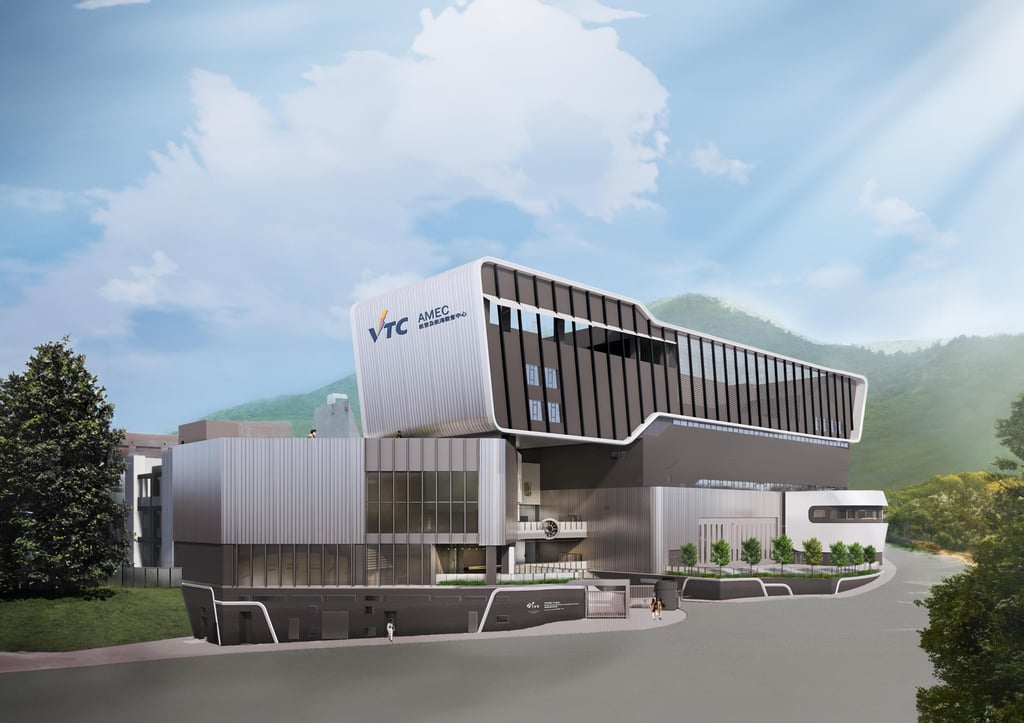
Another key focus is regional integration and institutional upgrading. Lam wants VTC to actively integrate into the GBA framework and support the development of the Northern Metropolis and the “University Town”. Lam expects the development projects in various VTC campuses, including the Aviation and Maritime Education Centre (AMEC), the hydrogen energy training facilities and the Lift and Escalator Technology Centre will help industries enrich their talent pools. Lam also looks forward to the development of the Technological and Higher Education Institute of Hong Kong (THEi) into a University of Applied Sciences, supporting Hong Kong to develop into an international hub for higher education.
Lam returns to a broader cultural appeal: the need for society to value vocational pathways as engines of transformation. His vision is both strategic and practical — aligning curricula with national plans and regional development while equipping students with hands-on experience and an innovation mindset. When realised, this combination of policy alignment, industry partnership, and applied training could make vocational education a cornerstone of Hong Kong’s next era of growth.
Reskilling and upskilling for a fast-changing economy
Technological progress, he observes, requires VTC to help industries better cope with digitalisation. The Council runs programmes to support sector-wide digital transformation and to strengthen professionals’ technical competencies, including cybersecurity for critical infrastructure.
He stresses that courses must be tailored to real company needs, as each organisation operates differently and practical application is paramount. As an example of this market-aligned approach, the Hong Kong Institute of Information Technology (HKIIT) has launched cybersecurity programmes specifically designed for public-sector organisations.
A practical pathway
Under Lam’s leadership, and with strong support from the Government and industry, VTC is poised to expand its efforts to achieve its priorities. “VPET is a practical, strategic lever for Hong Kong’s economic renewal,” he says.
By aligning curricula with industry needs, combining theory with hands-on practice, and offering lifelong reskilling and upskilling, VTC positions vocational education as a cornerstone of Hong Kong’s future workforce — flexible, technically capable, and ready to drive the next phase of the city’s growth and economic transformation.


