China is the bright spot in Trumps foreign policy
After one year in office, the Trump administration’s foreign policy has drawnmostly negative reviews. Major efforts to bring peace to both Eastern Europe and the Middle East—both admittedly tall orders—have resulted inmeagerprogress. That is to say nothing of the intensenervousnessneighbors and allies feel over Washington’s unique new vision for hemispheric defense. Amid that bleak overall…
After one year in office, the Trump administration’s foreign policy has drawnmostly negative reviews.
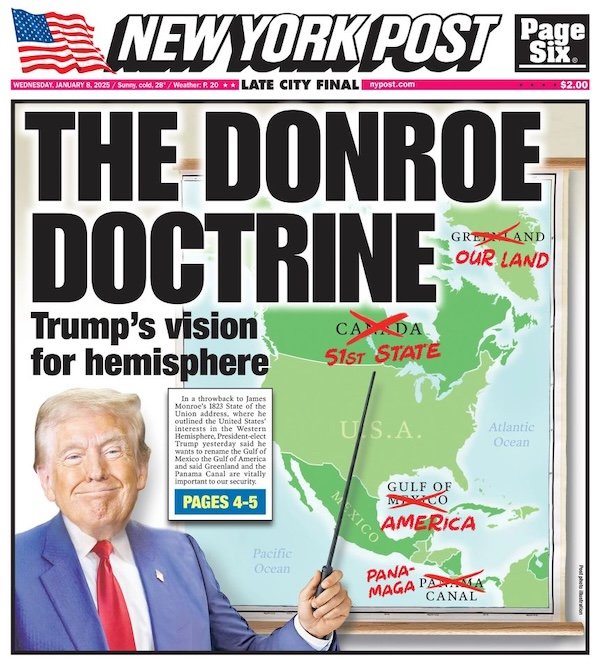
Major efforts to bring peace to both Eastern Europe and the Middle East—both admittedly tall orders—have resulted inmeagerprogress. That is to say nothing of the intensenervousnessneighbors and allies feel over Washington’s unique new vision for hemispheric defense.
Amid that bleak overall picture, China stands out as a possible bright spot. While many pundits have forecast an intensifying great-power rivalry in the Asia-Pacific, it has not yet meaningfully materialized.
The second Trump administration hasrejectedthe ideologically charged anti-China position that hawkish figures like Mike Pompeo and John Bolton brought to Trump’s first term. Trump’s new approach in the Asia-Pacific considers deterring China as a secondary priority to the primary objective of securing the homeland.
Another major theme is the necessity for allies in the region, whether Japan, South Korea or Australia, to do more to defend themselves.
Trump has also retreated from his most hardline policies regarding economic competition with China. He’s acknowledged that Beijing has major leverage and that many Americanbusinesseshave come to rely on either Chinese products or Chinese consumers.
His 2025 National Security Strategycalled for“maintaining a genuinely mutually advantageous economic relationship with Beijing,” albeit one that is rebalanced.
That document likely reflects a timely intervention by Treasury Secretary Scott Bessent to soften the language on Beijing – another sign that Trump is not letting the Pentagon set the overall tone of China policy.
Indeed, the president’s controversial decisions on the sales of bothTikTokandNvidiachips further show he is more interested in doing business than satisfying Washington’s myriad China hawks.
Another shoe dropped in January 2026, when the US National Defense Strategy (NDS) waspublishedand made no mention of Taiwan whatsoever, a clear indication that the self-governing island, which China considers a renegade province that must be reincorporated, does not constitute a vital US national interest.
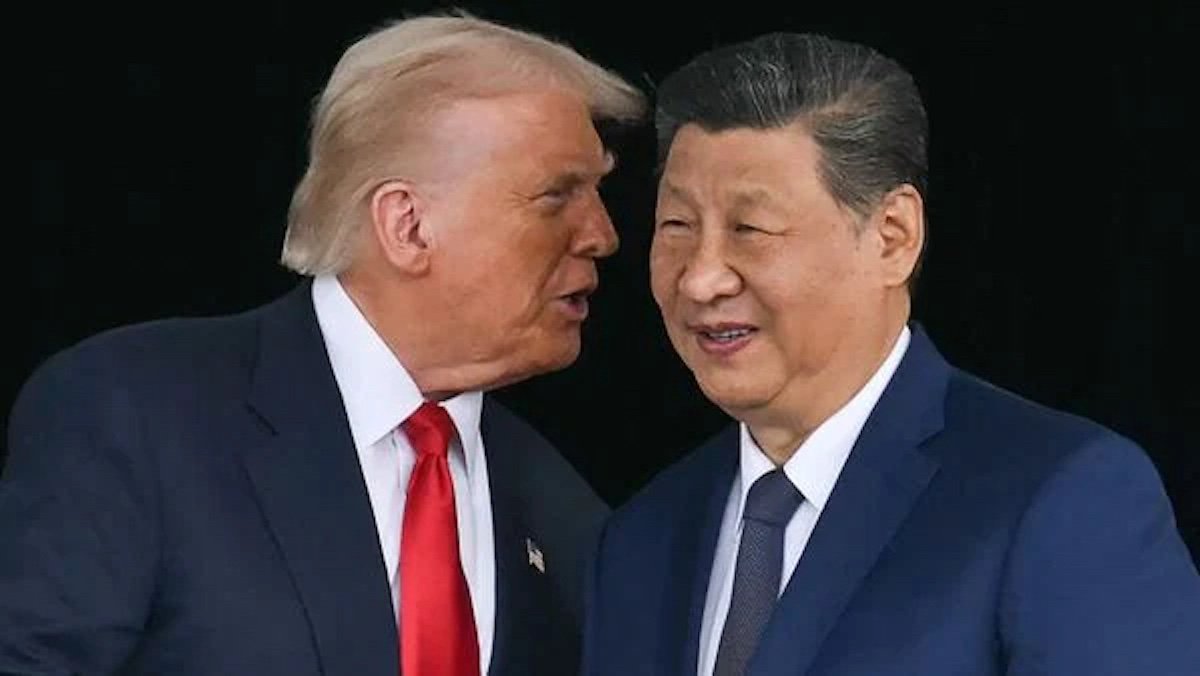
The US is quite willing to send arms to Taiwan, but defending the island with American forces may no longer be in the cards. Such a realistic conclusion, moreover, seems to comport with Trump’sstatementthat Xi Jinping “considers [Taiwan] to be part of China. And that’s up to him what he’s going to be doing.”
Trump’s rather decisive move back to “strategic ambiguity” over whether the US would defend Taiwan marks a major change from the Biden administration’s dangerous flirtation with “strategic clarity.” According to the new NDS, Washingtonis now“clear-eyed and realistic about the speed, scale and quality of China’s historic military buildup.”
This is reassuring. A Chinese military parade in September 2025revealedfour new Chinese hypersonic anti-ship missile designs. By contrast, the US currently has no operational hypersonic anti-ship missiles. The Trump administration is thus wise to adopt a much more prudent position on Taiwan.
Many of Washington’s hawks are uneasy about the present course, to say the least. Former Deputy Secretary of State Kurt Campbellopinedthat “There is anxiety now… that strategic ambiguity applied in the larger US-China context might lead to accommodation, even appeasement, of an increasingly ambitious China.”
Campbell, a chief architect of the “pivot to Asia” policy initially articulated during Obama’s first administration, argues that Trump should “align with American’s traditional opposition to adversaries seeking to dominate the Indo-Pacific.”
Beijing is certainly a rival, but is it right to label China as an “adversary” in these days of complex economic interdependence?
Moreover, Campbell provides no evidence that Beijing aims to “dominate” the Asia-Pacific. That worry seems far-fetched given that the US has strong allies in the region, including Japan, South Korea and Australia, as well as capable partners like India and Vietnam.
Yun Sun of the Stimson Centerobservesthat a “perfect storm” may be brewing in the Taiwan Strait as Xi’s current term winds down and Chinese leaders see a fleeting “window of opportunity.”
She underlines as evidence the apparent weakness of the leadership in Taipei, the evolving situation in Ukraine and Chinese leaders’ perception of Trump. Even if she’s right, a judicious approach need not overly fear such an outcome.
Taiwan is neither a US treaty allynor crucialto America’s military position in the Asia-Pacific region. Even if the US cannot realistically “rescue” Taiwan in an invasion scenario, it can develop an effective balance to Chinese power more broadly.
Such a more feasible and less dangerous approach would allow “all of us to enjoy a decent peace” in the Pacific, as called for in the 2026 defense strategy.
Trump’s foreign policy has been characterized by missteps to date, but thus far, the more moderate and careful China policy is a welcome exception. The US has the opportunity to build a stronger foundation for stable US-China relations going forward. It’s an objective that arguably should be the highest priority for US national security policy.
Lyle Goldstein is director of the Asia Program at Defense Priorities.