
Japan explores German silent cargo gliders to resupply remote islands
A German defence company has successfully tested an uncrewed cargo glider designed to support frontline military units, a technology that Tokyo is also exploring as it looks to bolster its capabilities in islands to the far southwest of the Japanese archipelago. Munich-based Hensoldt said on February 5 that it had marked a milestone in the…
Munich-based Hensoldt said on February 5 that it had marked a milestone in the development of its High-Altitude Drop Infiltrating System, or HADIS, after releasing a scale version of the uncrewed vehicle from a transport aircraft during trials last autumn.
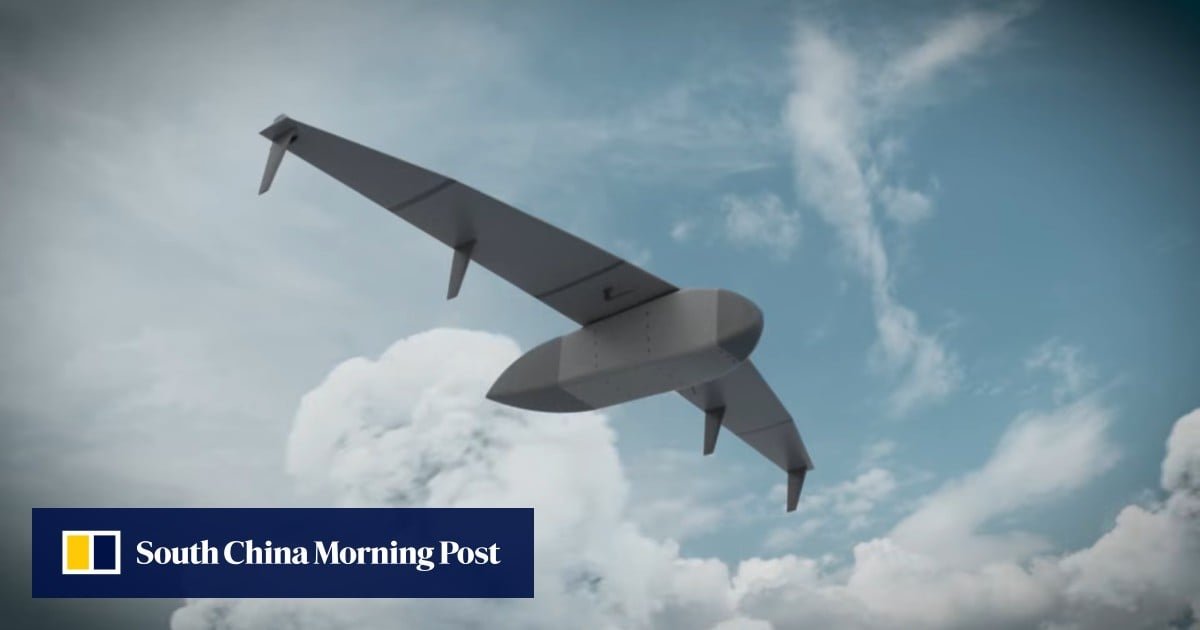
HADIS is an uncrewed, autonomous, disposable, remotely operated carrier system designed to be released from a transport aircraft to deliver cargo – everything that a military unit would require, from medical equipment to munitions – to troops on the ground.
The glider can be steered remotely, is silent and therefore difficult to detect because it has no engine and can more accurately deliver cargoes over further distances.
Tests have shown that while a conventional parachute drop can typically deliver supplies to a distance of 50km (30 miles) from the point of release and cannot be guided, the HADIS system can accurately transport cargo of up to 500kg (1,100lbs) over a range of 120km.
The ability to launch HADIS a long way behind the front line also helps protect the relatively slow and less well-defended cargo aircraft that are tasked with carrying out resupply operations.


