Asias travel sector rattled by Iran attacks, fears of domino effect slowdown
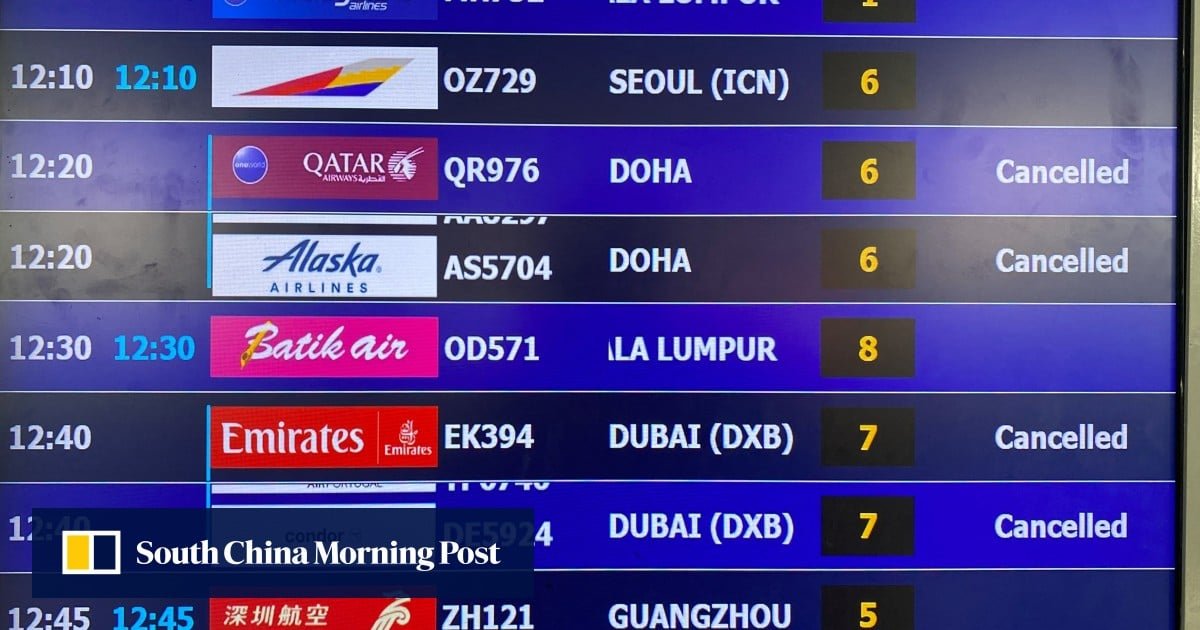
Airspace closures across the Middle East have left tens of thousands of travellers stranded and forced airlines to divert routes, threatening to derail the fragile recovery in Asia’s tourism and aviation sectors, as the conflict involving the US and Israel against Iran continues to escalate. Major transit hubs, including Dubai and Doha, remain shut or…
Major transit hubs, including Dubai and Doha, remain shut or are operating at reduced capacity for a third straight day, upending Europe–Asia connections that depend heavily on Gulf airspace.
“With key hubs and corridors closed, available capacity on alternative long-haul routes has tightened sharply while demand remains strong,” said Mayur Patel, regional commercial and industry affairs leader for Asia-Pacific, Middle East and Africa at OAG, a travel data provider and aviation analytics firm.
“Airlines have to absorb higher operating costs from longer flight times and overcrowded alternate routes. Many will recoup this through higher fares and surcharges, especially on transcontinental sectors,” he said.
Shares of Asian carriers, including Japan’s ANA Holdings, Air China, China Southern Airlines, China Eastern Airlines, Malaysia’s Air Asia X and Taiwan’s China Airlines and EVA Airways, all fell heavily on Monday, Bloomberg reported.