
Two fronts: Taliban courts India while strategically blasting Pakistan
In the rugged terrain along the Durand Line, the contested border between Afghanistan and Pakistan, a fresh wave of violence has erupted, pitting Pakistani forces against the Taliban government in Kabul. What began as Pakistani airstrikes on February 21 targeting alleged militant camps in eastern Afghanistan has spiraled into a wider ongoing conflict, with retaliatory…
In the rugged terrain along the Durand Line, the contested border between Afghanistan and Pakistan, a fresh wave of violence has erupted, pitting Pakistani forces against the Taliban government in Kabul.
What began as Pakistani airstrikes on February 21 targeting alleged militant camps in eastern Afghanistan has spiraled into a wider ongoing conflict, with retaliatory drone strikes, border skirmishes and artillery exchanges claiming dozens of lives on both sides.
As of early March, residents in border areas report heavy shelling and explosions, forcing many to flee their homes amid fears of further escalation.
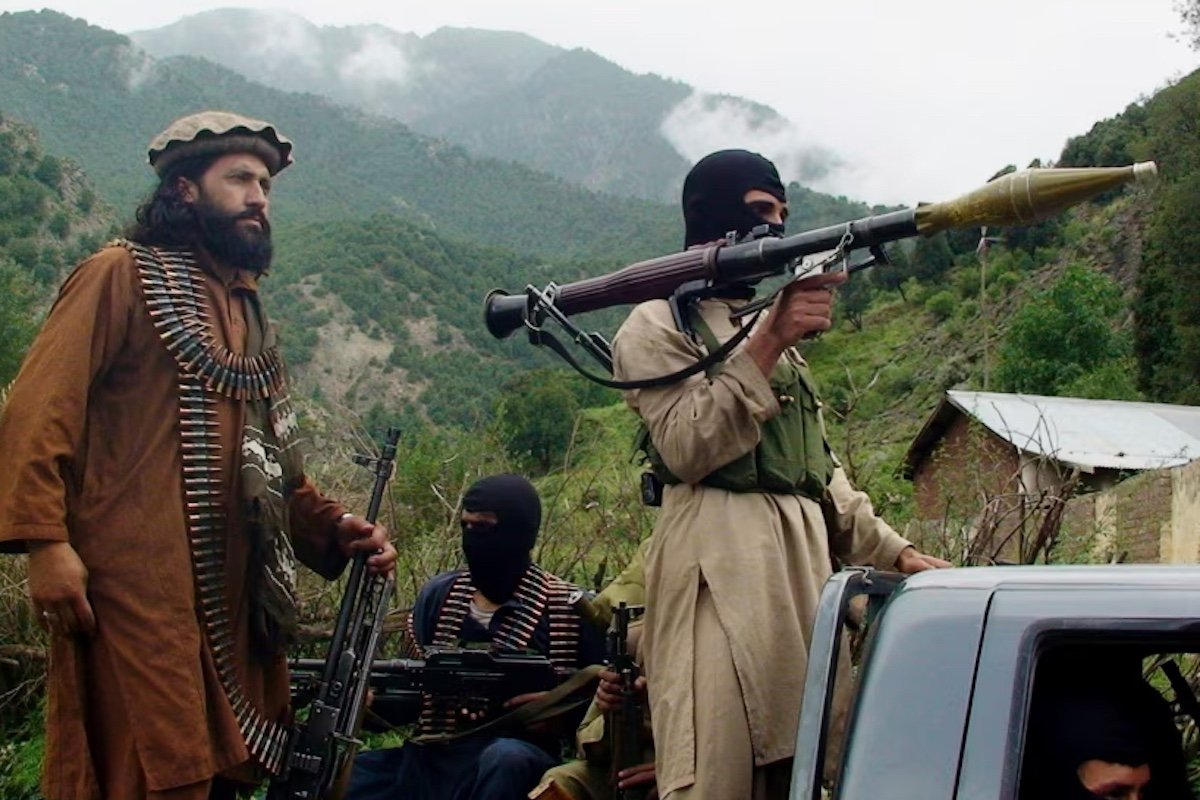
This is not merely a border dispute, but a calculated maneuver by the Taliban to divert attention from their continued harboring of anti-Pakistan militant networks while sending pointed signals to regional powers, particularly India.
For Pakistan, long positioned as a frontline state against extremism spilling over from Afghanistan, the clashes underscore a persistent security dilemma: how to confront a government that shelters groups like the Tehrik-e-Taliban Pakistan (TTP) without igniting a full-scale war.
Pakistan has framed itself as a bulwark against terrorism emanating from Afghan soil since the Taliban seized power in 2021. Despite repeated diplomatic overtures — including cease-fires and talks brokered by regional players — Islamabad accuses Kabul of providing safe haven for groups like the TTP, al-Qaeda and the Islamic State Khorasan Province.
United Nations monitoring reports have documented these sanctuaries, contrasting sharply with the Taliban’s denials and highlighting a structural problem that is fueling cross-border instability.
Established by Pakistani militants in 2007, TTP seeks stricter enforcement of Islamic laws, the release of its members in Pakistani government custody and a reduction in Pakistani military presence in parts of Khyber Pakhtunkhwa, the province bordering Afghanistan that it has long used as a base.
The latest flare-up followed a series of terrorist attacks in Pakistan, including bombings in Islamabad, Bajaur and Bannu, which Pakistani officials attributed to militants based in Afghanistan. In response, the Pakistan Air Force struck targets in Nangarhar, Paktika and Khost provinces.
The Taliban retaliated on February 26, launching drone attacks and ground offensives along the border, prompting Pakistan to launch Operation Ghazab Lil Haq — a campaign that has included strikes on Kabul and Kandahar, the Taliban’s political and spiritual heartlands. Afghan officials claimed 55 Pakistani soldiers killed and 19 posts seized, while Pakistan reported neutralizing Taliban movements and destroying security outposts.
“This is not random escalation,” said a senior Pakistani military official, speaking on condition of anonymity. “It’s strategic cover for the Taliban’s permissive environment toward TTP and affiliated groups.”
Complicating the picture is the Taliban’s simultaneous projection of hostility toward Pakistan and warming ties with India. Just days before the February clashes intensified, the Taliban appointed Noor Ahmad Noor as their first chargé d’affaires in New Delhi — a diplomatic milestone nearly five years after their return to power.
This followed India’s decision to reopen its embassy in Kabul in October 2025, after high-level meetings between Afghan Foreign Minister Amir Khan Muttaqi and his Indian counterparts.
New Delhi’s engagement, driven by pragmatism amid its own tensions with Pakistan and China, has condemned Pakistani airstrikes and affirmed Afghanistan’s sovereignty during the recent hostilities.
For the Taliban, this outreach reinforces a perception of a hostile regional posture toward Islamabad, suggesting that two-front pressure on Pakistan — from Afghanistan in the west and India in the east — is coalescing.
Analysts see this as part of a broader Taliban strategy. “The pattern suggests political signaling and operational facilitation intersect at the border,” said Husain Haqqani, a former Pakistani ambassador to the United States and director for South and Central Asia at the Hudson Institute. “By escalating with Pakistan while courting India, the Taliban mask their support for proxies and deepen regional polarization.”
This dynamic echoes historical rivalries. India, which supported the anti-Taliban Northern Alliance in the 1990s and provided aid to the ousted Afghan republic, has shifted toward engagement to counter Pakistani influence and secure its economic interests, including access to Central Asia via Afghanistan, thus bypassing Pakistan. The Taliban, isolated internationally, now view India as a counterweight to Pakistani pressure.
The Afghanistan-Pakistan clashes have erupted amid a cascade of ongoing conflicts in South Asia, a region already strained by nuclear rivalries, insurgencies and border disputes.
In 2025, India and Pakistan engaged in their most serious confrontation in decades, triggered by a deadly terrorist attack in Indian-administered Kashmir that killed 26 people. Retaliatory missile strikes and drone attacks escalated tensions, pushing the nuclear-armed neighbors to the brink.
Further afield, Myanmar’s civil war continues to spill over into India’s northeast, disrupting supply chains and complicating economic integration efforts. The Line of Actual Control between India and China sees intermittent confrontations, while insurgencies in Pakistan’s Balochistan and Khyber Pakhtunkhwa provinces add layers of internal volatility.
“Regional stability cannot coexist with simultaneous sanctuary, signaling and selective diplomatic alignment,” the Pakistani official said. This sentiment reflects broader warnings from conflict analysts: South Asia’s interconnected flashpoints — from Kashmir to the Durand Line — risk a domino effect, exacerbated by great-power rivalries involving the United States, China and Russia.
Pakistan has vowed to defend its territorial integrity, responding proportionately to provocations and taking calibrated defensive measures against terrorist infiltration disguised as border engagement.
Yet as the Taliban signal willingness for talks amid the fighting — with spokesmen calling for dialogue to resolve differences — the path to peace remains uncertain. Rather than dismantling cross-border militant infrastructure, the Taliban would likely rather sustain the cycle of volatility that benefits the extremists they harbor.
In a region where old grievances is fueling new battles, the Durand Line skirmishes serve as a stark reminder: without addressing the root causes of sanctuary and cross-border militancy, South Asia’s stability will be tested as the conflict risks spilling over and igniting new flashpoints.


