
Pakistan rejects Indian claim of downing fighter jets – nation.com.pk
Pakistan rejects Indian claim of downing fighter jets nation.com.pk

Two siblings were killed and their father injured in a road accident involving a dumper on Karachi’s Rashid Minhas Road near Lucky One Mall early Sunday, sparking mob violence and protests that disrupted traffic on key city routes, officials said.
In recent months, Karachi has witnessed a rise in traffic accidents, especially involving heavy vehicles, including dumpers and water tankers, which killed nearly 500 people and injured 4,879 in 2024, according to hospital data.
According to Central Senior Superintendent of Police (SSP) Zeeshan Shafiq Siddiqi said that around 3:15am, a dumper truck hit a motorcycle carrying a family, killing Mahnoor, 22, and her 14-year-old brother Ahmed Raza, and injuring their 48-year-old father, Shakir.
Following the incident, transporters staged a protest by blocking Rashid Minhas Road and the Superhighway near Sohrab Goth, causing traffic jams.
“A mob gathered and set fire to a total of seven dumpers on both sides of the road within the limits of Yusuf Plaza and Federal B Area police stations,” the SSP told Dawn.com.
“The police reached the spot to apprehended the driver and took the dumper in custody.”
The police cordoned off the area, set up diversions, and called fire tenders to put off the fire, Siddiqi said.
“Furthermore, police have arrested 14 suspects on charges of torching the dumpers, and more arrests are being made with the help of videos and technical evidence.”
Police Surgeon Dr Summaiya Syed told Dawn.com the siblings were brought dead to Abbasi Shaheed Hospital, while their father was injured. Quoting relatives, she said the deceased girl was to get married soon.
Dr Summaiya said police brought in two drivers with critical injuries after they were beaten by the mob. She said the alleged errant driver was critically injured but stable, while a driver of another burnt dumper was also in critical condition with head injuries.
Earlier this month, a high-speed trailer truck crashed in Karachi’s Defence Housing Authority (DHA), injuring two people.
In July, a 59-year-old milk supplier was killed when a dumper ran over his motorcycle in Karachi’s Saudabad.



On a breezy Dubai February evening in 2016, in the sixth over of the first innings of a match between the Karachi Kings and Peshawar Zalmi, a young kid from Gujranwala ran in, gave it all and got his first-ever wicket in the Pakistan Super League (PSL).
Over that inaugural PSL season, Hasan Ali — now a household name — was the new kid on the block that barely anyone knew. However, that all changed once millions of eyeballs watched him give it his best in those opening encounters of the newly set-up premier T20 tournament.
Fast bowler Hasan Ali’s cricketing career coincides with the journey of the PSL as a league. He made his domestic debut in 2015, but it was the PSL which helped him hone his craft and, at the time of his international debut, he was more than ready for it.
Becoming the fastest to take 50 wickets for the Green Shirts in the ODI format — just a year into his international career — he was already the bowler of the tournament for an ICC event and had helped Pakistan win their first trophy in nearly eight years in the form of the Champions Trophy 2017.
From Hasan Ali in the first season to newcomer Fawad Ali this year, the Pakistan Super League continues to provide a much-needed springboard and safety net for young cricketers. Will it continue to do so going into its second decade?
Hasan credits a lot of those performances to the springboard that the PSL provided for him at the very start of his career.
“PSL was like a turning point for my career. If this league weren’t there, there is a possibility that I might have been limited to domestic cricket and would have made my international debut much later,” he tells Eos.
Throughout the years, as the fast bowler’s career went through ups and downs with injuries, PSL was a platform he used to return to the national fold.
This past 10th season, he made a comeback after an injury and went on to become the overall leading wicket-taker of the league.
FROM HASAN TO FAWAD
If Hasan was the fast bowler who made the most of the opportunity as an emerging player in the inaugural season of the PSL, Karachi’s Fawad Ali is the pacer who made waves in the recently concluded 10th season.
Hailing from the serene valleys of Swat, the right-arm pacer grew up playing tape ball cricket, like most young children do in the country. Like many blue-collar workers from that region do, he also went to Saudi Arabia and played cricket during his stay there.
Speaking about his journey to the PSL, Fawad relates how his mentors helped him bring him into the foray at the Kings. “Annu Bhai [Anwar Ali] has been pivotal to my journey, even guiding me on my diet plans and the latest fashion trends for haircuts!” Fawad says.
Those hard yards on the part of Fawad and his coaches culminated with him bowling the fastest ball of this season, clocked in at a brisk 150kph.
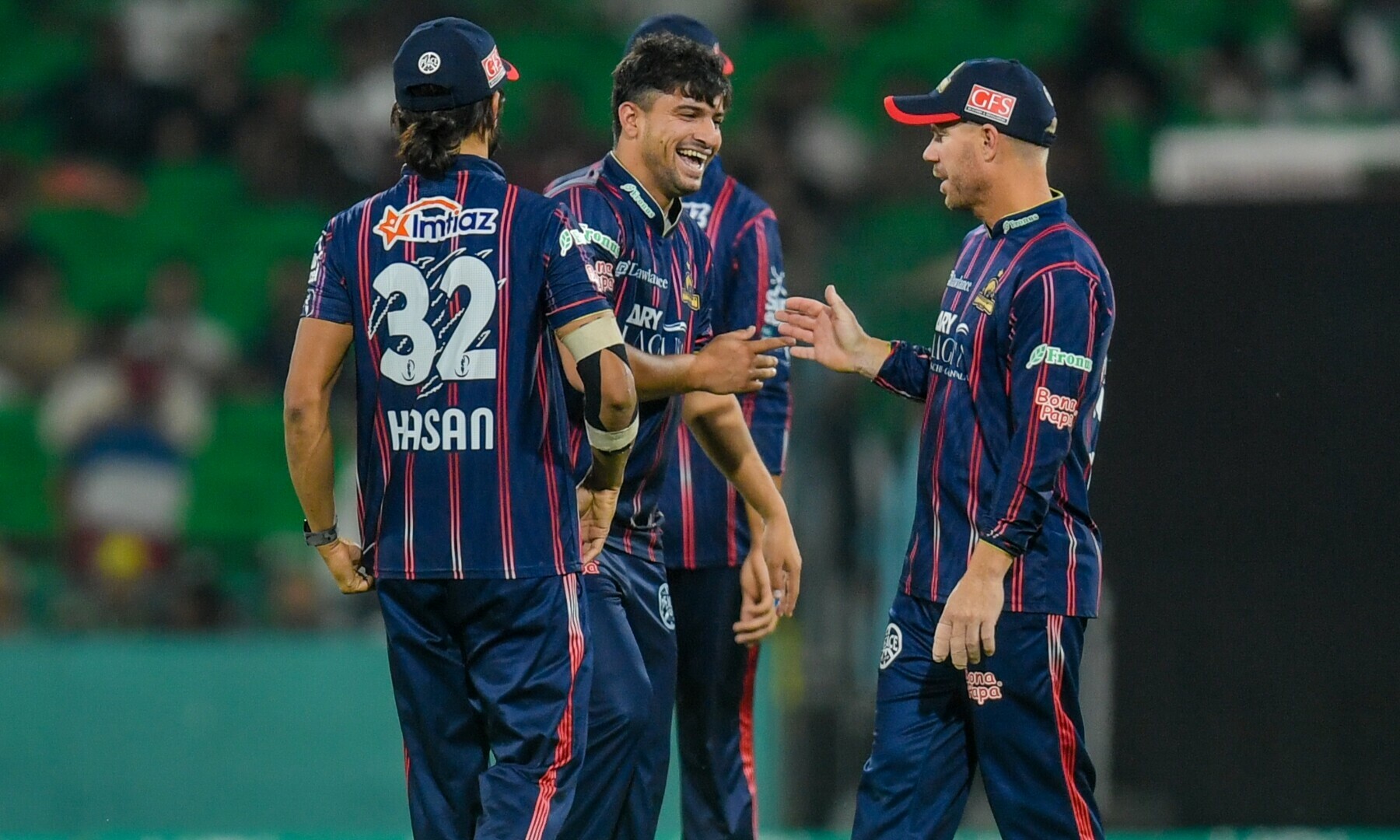
He also got to meet the cricketer he idolised growing up, Australian pacer Shaun Tait. “When I got to know that he would be coaching Karachi, I was really excited to get to learn first-hand from him. Now I’m on such friendly terms with him, that I pick his brains all the time for bowling tips.”
Fawad’s journey also brings to the fore one of the most important aspects of the PSL — the financial freedom that the league provides in a country where athletes struggle to make a living, having to rely on the benevolence of donors and sponsors in order to pursue their careers.
Being the eldest in his household, Fawad hopes to build a house for his family, adding, “I would feel really proud if I could provide some relief to my father and brother by contributing towards my household.”
The league is also a springboard for greater cricketing endeavours. “PSL has given me an opportunity to experience the pressures that are associated with international cricket,” says Fawad, “and I hope that I will be able to fulfil my dream of playing for Pakistan.”
THE FRANCHISE CONUNDRUM
The PSL turned 10 this year, and this year could bring about monumental changes in the league going into the second decade of its existence.
PSL X was nothing less than the extravaganza it was expected to be — although interrupted by a four-day conflict between Pakistan and India, before the season completed with its usual furore. However, in terms of significance, the year is essentially just starting to take shape.
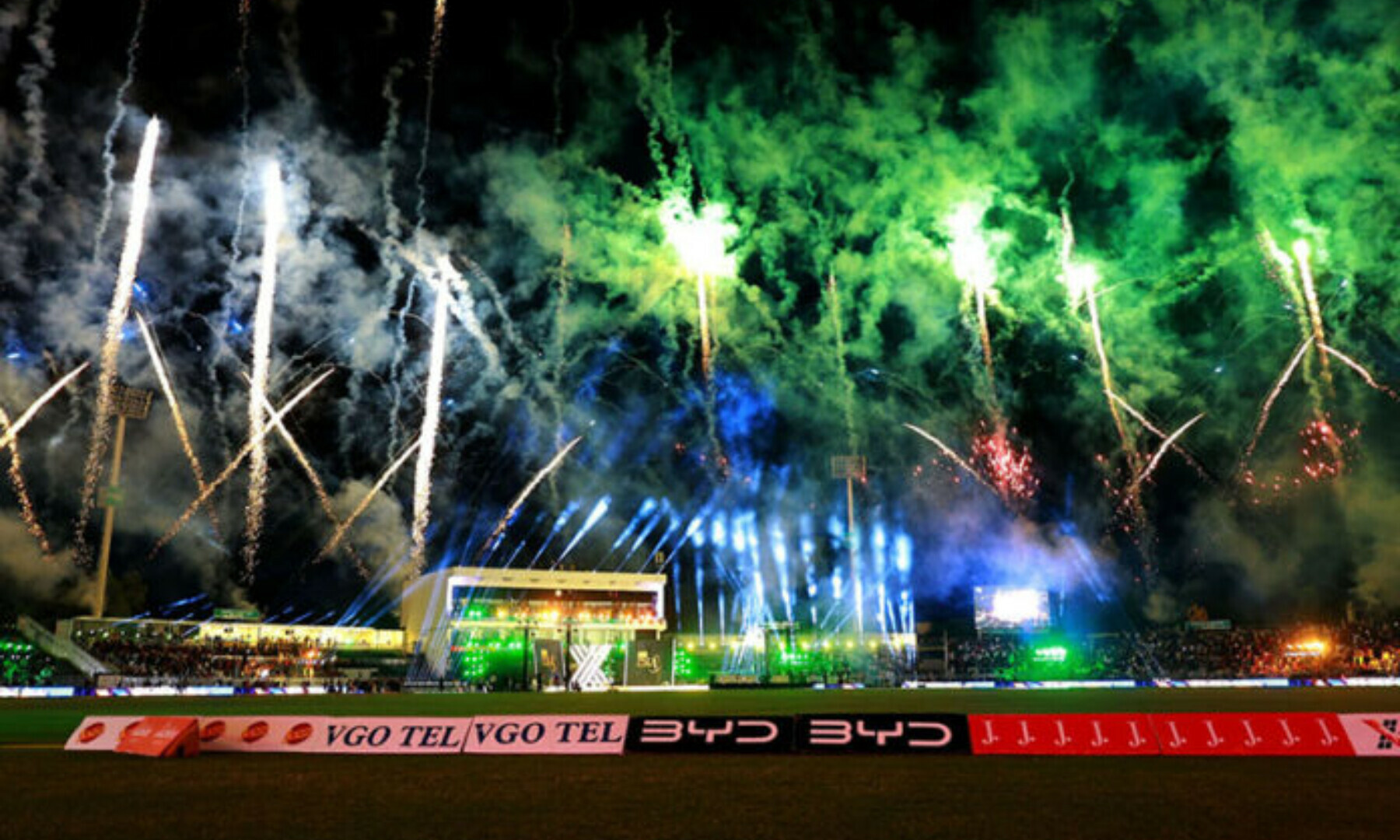
When the PCB sold the franchises for a whopping $93 million back in 2015, the ownership was not in perpetuity but for a 10-year term. These contracts are up for renewal this year and, while it is entirely possible that the teams might not end up changing ownership, according to franchise officials, the renewal is dependent on the following conditions:
If the present market value is less than what the franchises are paying currently, there is an automatic 25 per cent increase in the annual fee of these franchises in order to renew their contracts. However, if the new value is more than the existing amount the franchises are paying, the new amount would be the difference in aggregate plus the already determined 25pc bump.
Karachi Kings Team Director Haider Azhar has been involved in the league in various capacities since its inception. He was with Multan Sultans in various capacities as well, winning the championship with Multan in 2021.
Speaking to Eos on the changes expected for this year, Haider says, “This year is a crucial year for the PSL and has to be handled by the board with the sensitivity it deserves.”
Haider explains that current terms create a conundrum. If a franchise is successful in creating a strong brand with a good market value, come the time of renewal, this actually requires franchises to pay more to continue with ownership of their team.
“The overall model of the league needs to be looked at, as it penalises you for developing the brand,” he says.
Speaking on the inclusion of new teams, Haider says: “I’m not at all against new teams coming in. But even in that, you’ll have to see what models are there, because when ownership changes hands multiple times, it damages your product as well as confidence.”
UNDERSTANDING PSL’S RAISON D’ETRE
An example of the type of innovation that the board could turn to, to help expand the league further was the extra fund in this year’s edition that helped with the inclusion of marquee players like David Warner.
As discussions continue between the stakeholders, what must not be lost sight of is how PSL continues to provide a springboard for young cricketers and the opportunity for a stable income in the sport to its participants.
From Hasan Ali in the first season to newcomer Fawad Ali this year, the league continues to be an oasis for cricketers in a country where social mobility is a pipe dream for most and athletes in other sports suffer due to an absolute dearth of monetary support systems.
In light of international developments too, PSL acts like a haven for Pakistani cricketers. As more and more leagues have increased participation from Indian Premier League franchise owners, the number of Pakistani players getting picked for these leagues has shrunk.
As the PSL steps into the second decade of its existence, one thing is for certain — all the decision-makers have to ponder over what route the league will take going forward. There are plenty of external and internal challenges going forward.
The writer is a member of staff
Published in Dawn, EOS, August 10th, 2025
Header image: Lahore Qalandars Batter Sikandar Raza celebrates with his teammates after winning the PSL X final in Lahore on May 25. — X/PSL

Leaders of six European nations and the EU call for more pressure on Russia before Trump-Putin summit in Alaska.

Apparently, the long winning streak of the Pakistan Peoples Party (PPP) in Sindh is not due to the party’s popularity in the province, but because there is no other force effective enough to challenge the party’s electoral hold here. But Imran Khan’s Pakistan Tehreek-i-Insaf (PTI) “is still very popular.”
This is what most political analysts — especially from Punjab and those stationed in Sindh’s multi-ethnic capital Karachi — often posit. I’ll try to address both the perceptions.
First of all, I find their view (regarding Sindh) rather imbecilic. For every election since 2008, multiple alliances of strange bedfellows have formed in the province to become that ‘effective electoral force’, but none of them have been able to break the PPP’s spell in the province. Why?
The fact is, popularity alone is never enough to guarantee long winning streaks in elections. Functionality is more important. The PPP is now one of the most functional parties in Sindh, which attracts both the popular vote as well as the pragmatic vote. But, of course, then comes that rhetorical question about Karachi. Why is it so ‘mismanaged’ and ‘ignored’?
There is no doubt that Karachi faces some major issues. But to suggest that this is so because the PPP does not have a large enough vote-bank in the city is now an outdated view. Karachi’s issues aren’t recent. The roots of its many social, political and economic problems actually lie in the 1980s.
The PPP’s hold over Sindh, despite what some may argue, isn’t because of weak opposition — it is the result of electoral functionality. So why is media analysis often based on perceptions without evidence?
Due to waves of migrations from other provinces of the country (and from Afghanistan) in the 1980s, Karachi’s population began to balloon. This put the city’s resources under tremendous pressure, triggering vicious ethnic violence and corruption.
From 1977 till 1988, Sindh was governed by Gen Ziaul Haq’s military dictatorship, and then by pro-Zia parties. The 1980s’ ethnic violence in Karachi and the rollback of the city’s economy crossed into the 1990s. For the next decade — from 1988 till 1999 — Sindh was governed twice by the PPP and twice by coalitions of anti-PPP outfits.
Karachi eventually fell into the hands of the Mohajir (later Muttahida) Qaumi Movement (MQM). MQM had enough votes and street power to stall any economic manoeuvres planned for the city, if these were seen by the party as not being in its interest. Also, by the 1990s, cities such as Lahore in Punjab began to compete with Karachi in terms of industrial output, largely due to the security challenges in Karachi.
From 2002 till 2008, Sindh was in the hands of a military regime (Gen Pervez Musharraf) supported by a coalition of pro-Musharraf parties. Apparently, Karachi during this period was ‘getting back on its feet again.’ This was hogwash, really. On May 12, 2007, this farcical perception cracked and many tensions of the past that never went away came screaming to the surface again.
Fifty-eight people died in a single day of violence between ethnic groups, armed gangs, political parties and the security forces. What’s more, the city began to also see the influx of militant Islamists from the northern parts of the country, looking to get their share of the pie in Karachi’s notorious ‘underworld’ universe, which also never went away.
It is true that, in 2008, when the PPP finally returned to power in Sindh, it was slow to address the city’s many issues, focusing more on the rest of the province. But it is also true that, after 2018, the party began giving the city more attention — especially after MQM broke into factions and the ‘popularity’ of PTI in the city started to erode because it had no clue how to do ‘constituency politics.’ Constituency politics is a vital function in Karachi’s many multi-ethnic constituencies.
Mammoth cities such as Karachi have mammoth problems. But it would be naive (and maybe even somewhat dishonest) to suggest that the PPP ‘is doing nothing for the city.’ In the last few years, it has been quite active in initiating various developmental projects here, especially after it won the city’s mayorship in 2023.
Now, something about the PTI’s ‘popularity’ that one is constantly reminded of by analysts and vloggers. Those on PTI’s side doing this, is understandable. But more interesting is the way the so-called ‘neutral’ and even anti-PTI analysts and vloggers do it.
For example, often at the end of a critical tirade against the PTI, one can actually predict that the tirade will end with these words: “Behar haal, iss mein koi shak nahin, PTI aik bohat maqbool jamaat hai [Anyway, there is no doubt that PTI is a very popular party].” I always find this amusing. It is as if, during their tirade, the analysts/vloggers begin to feel guilty. Of what, though?
Indeed, the PTI did well during the February 2024 elections (under trying circumstances). It received 31.17 percent of the total vote. But this also means over 65 percent of the votes were cast for other parties. Nevertheless, things have moved in such a manner in the last one year that there is every likelihood that PTI’s vote-bank may have lost its shape a bit.
PTI was always more of a movement than a functional party. And, today, it is not even a functional movement. Also, there has been no recent survey to ‘scientifically’ gauge its ‘popularity’. February 2024 now looks far away in the past.
It is also possible that the perception of PTI’s ‘continuous popularity’ is the result of ‘feedback loops.’
A 2013 study in the Journal of Social and Political Psychology and a 2023 study in the journal Party Politics describe this as an intense focus on a political figure or movement that can create a feedback loop where media coverage, academic analysis and political discourse all contribute to a heightened sense of the importance of the political figures and movements. This can lead to an over-simplistic and homogenised picture of a political trend.
Imran Khan and his PTI are in shambles today. But the thing that is keeping them afloat is a ‘popularity’ constructed by feedback loops, in which even those who oppose PTI have become stuck. In the current reality, the party’s electoral pull might actually be loosening.
Anyway, so, should I too end this column with, ‘Behar haal, iss mein koi shak nahin, PTI aik bohat maqbool jamaat hai’?
Published in Dawn, EOS, August 10th, 2025