What Happens to Warner Bros. Games Under Netflix?
As Netflix and Paramount throw Hadokens at each other in their (Wall) street fight over Warner Bros., we’re sitting here wondering why no one is talking about the video games piece. Sure, Warner Bros. Games, the home to TT Games (the LEGO game makers), Rocksteady Studios (the Batman: Arkham series) and NetherRealm Studios (Mortal Kombat),…
As Netflix and Paramount throw Hadokens at each other in their (Wall) street fight over Warner Bros., we’re sitting here wondering why no one is talking about the video games piece.
Sure, Warner Bros. Games, the home to TT Games (the LEGO game makers), Rocksteady Studios (the Batman: Arkham series) and NetherRealm Studios (Mortal Kombat), among others, is not among the top two or three assets soon headed Netflix’s way — unless Paramount Skydance gets its way — but video games are a growing moneymaker and IP generator for Hollywood.
Joost van Dreunen, a video games professor at the NYU Stern School of Business and the author of One Up: Creativity, Competition, and the Global Business of Video Games, tells The Hollywood Reporter he’s “not super whelmed” about the prospect of Warner Bros. Games being managed by Netflix executives — but he too thinks it should be more of a topic of conversation.
Netflix moved into games in 2021, except for the part where it really didn’t. Though there was once hope for (and talk of) everything from couch co-ops to AAA games, Netflix Games has become little more than “just a referral engine,” van Dreunen says. It has made good on some cozy, casual mobile originals based on in-house IP, which van Dreunen acknowledges “can be very profitable,” but the grander plan never scaled into the big future pitched to investors.
“They had this grand ambition…this was going to be transformative,” van Dreunen said.
Instead, there’s been “a deceleration of a gaming effort” at Netflix that “feels like the result of the initial efforts not quite turning around,” van Dreunen said. “It’s not for lack of talent or lack of IP or lack of effort — [it’s] just not a natural fit.”
But in the media business, especially the big-tech media business, it ain’t over ’til its shuttered.
“While I still believe that they’re going to come up with something reasonable, they have kind of pushed the little games posts to the back of the stove,” van Dreunen said.
Warner Bros. Games could be the shot in the arm Netflix Games needs — it just doesn’t sound like co-CEOs Greg Peters and Ted Sarandos are putting the division on a pedestal.
“I read the (acquisition) pitch deck, and they mentioned the word ‘games’ exactly twice,” van Dreunen said, “and [the plan] is never described.” NetflixWB Games (our moniker for the future department) is nothing more than “a side dish” in the larger Netflix-eats-Warner Bros. meal.
Perhaps the portion size is defensible. Though still a “capable” game-maker, Warner Bros. Games has gotten “smaller and smaller each year,” van Dreunen said. The division has been up for sale for a while now, van Dreunen’s internal contacts tell him, and even after a price reduction there were no takers.
There’s also a hide-saving reason for the highest higher-ups to (mostly) ignore video games.
“Every media executive from a traditional legacy vertical looks at games and goes, ‘No, thanks,’ right?” Van Dreunen said. “This is Disney 101. They look at it and say, ‘We know it’s important and we are terrified,’ because nobody is willing to risk their career on making a billion-dollar play on games. So it always sits on the fringe…. What it needs is a champion.”

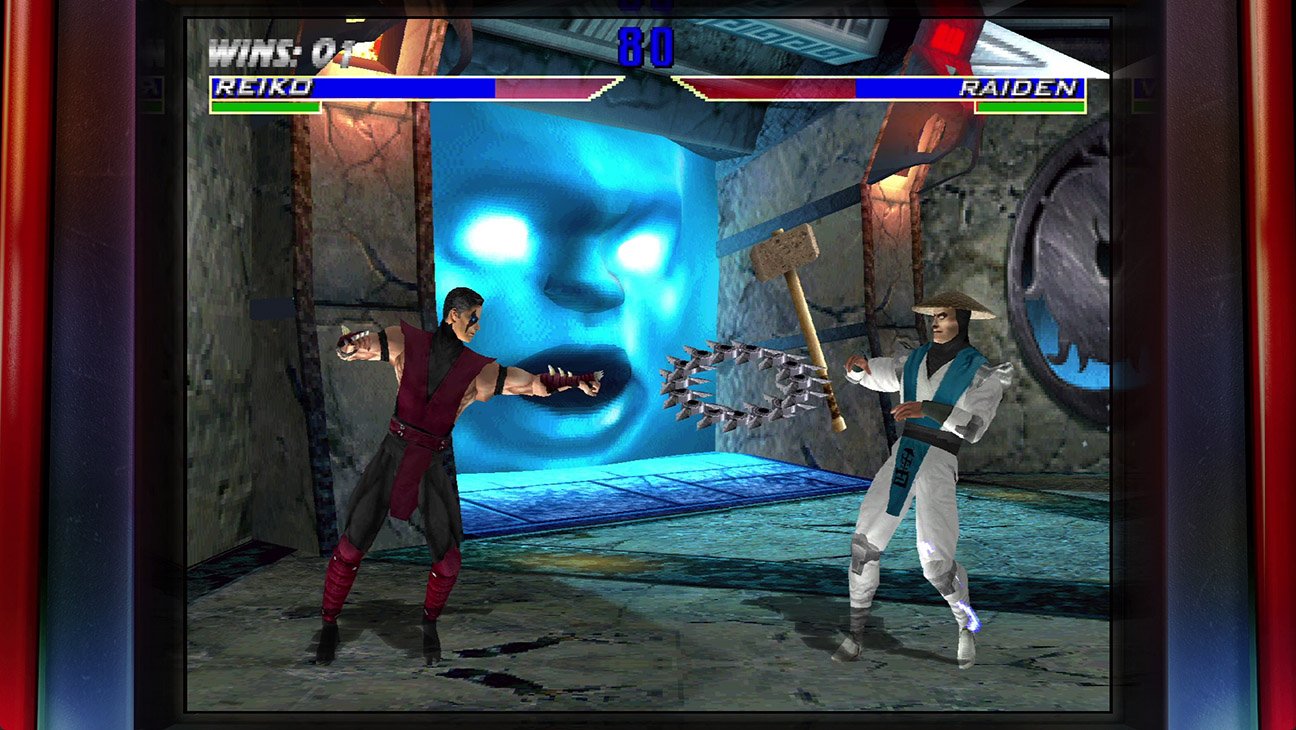
WB’s Mortal Kombat: Legacy Kollection
Courtesy of Warner Bros.
However, Warner Bros. did just make a billion-dollar play on a game. Hogwarts Legacy (2023 on most consoles/PC), based on Warner’s Harry Potter IP, developed by its Avalanche Games studio and published by its Portkey Games label, sold more than 12 million copies globally to the tune of $850 million in just its first two weeks. To date, sales are 34 million and revenue has crossed the $1 billion mark — and that’s for a game with mixed critical reviews.
The success of Hogwart’s Legacy both makes the case for Hollywood players to play in the AAA games sandbox and speaks to the value of Warner Bros. overall IP, which is a key component of the Netflix deal. There is definitely a version of this where NetflixWB Games just licenses out its IP for third-party game development and publishing. A Game of Thrones video game made by someone else is low risk, low-ish reward.
This story is much about what Warner Bros. Games could bring to Netflix Games, but there is most definitely one way in which the tech company can bring the legacy media giant up to speed — van Dreunen says Warner Bros. Games has not modernized enough its approach to monetization.
“The game industry has switched from a product-based model to a service-based model,” van Dreunen said, citing Roblox and Fortnite. “Because there’s so many free-to-play titles, the market is switching more to a games-as-media universe, where you have these flywheel approaches of, you can play the game, you can watch the game, you can build things inside the game, etc.”
“Warner Bros. has never set itself up for that,” he continued, “they’ve just been building a game around an IP and selling copies or maybe making some money. But it has never really been appropriately adapted to the consumer practices.”
Microtransactions within a game, free or otherwise, can be the bane of gamers’ existences, but they’ve become so popular because they serve the maker’s bottom line. But it’s not free money. Beyond the original build cost, games like Roblox and Fortnite need constant moderation and updates, an ongoing cost and burden. Legacy Hollywood is used to paying once for a series or a film and windowing it as they wish — if managed well, this relatively new genre of games comes with unknown overhead.

Red Dead Redemption is available on Netflix Games.
Courtesy of Netflix
Paramount Skydance chairman David Ellison is currently mounting a hostile-takeover offense that makes Call of Duty look like Splatoon. A theoretical Paramount Skydance Warner Bros. Discovery (they want the whole thing) is an interesting thought exercise for the gaming space, though not a better outcome.
Skydance Interactive is basically solely focused on VR experiences, which can be cool, but they’re also sort of their own thing. Paramount Game Studios exists, but it doesn’t really…make anything. The most recent Teenage Mutant Ninja Turtles games have been made by outside studios. Teenage Mutant Ninja Turtles: Mutants Unleashed, for example, is published by Outright Games, as are the recent Paw Patrol video games. Paramount, primarily through Nickelodeon, has great IP — it just doesn’t really want to be bothered with the game adaptations.
In recent years, Paramount has mainly looked to video games for the purpose of creating TV adaptations. That’s cool, but it’s sort of the opposite of what we’re looking for here. It would be ”an uphill-type of environment” there, van Dreunen said.