Meanwhile, is there a governing theory to the president’s trade policy?
Editor’s Note: Washington Week With The Atlantic is a partnership between NewsHour Productions, WETA, and The Atlantic airing every Friday on PBS stations nationwide. Check your local listings, watch full episodes here, or listen to the weekly podcast here. Donald Trump imposed additional global tariffs this week—but is there a governing theory to how the president is carrying out his trade policy? Panelists on Washington Week With The Atlantic joined to discuss Trump’s latest trade announcements and how they may affect the U.S. economy.Meanwhile, Trump has said he will meet with Vladimir Putin next week in Alaska to talk about ending Russia’s war in Ukraine. “The Biden-era mantra of ‘Nothing about Ukraine without Ukraine’ is now ancient history under the Trump administration,” Vivian Salama, a staff writer at The Atlantic, said last night. Although this once meant that “you cannot negotiate the future of Ukraine without Ukraine at the table,” she continued, “that’s out of the question.”“Obviously, it puts the Ukrainians in a very difficult position because they basically have lost, first, their sovereignty to the war, and then again to the Trump administration essentially twisting their arm,” Salama said.Joining the editor in chief of The Atlantic, Jeffrey Goldberg, to discuss this and more: Jonathan Karl, the chief Washington correspondent at ABC News; Tyler Pager, a White House correspondent at The New York Times; Jonathan Lemire, a staff writer at The Atlantic and a co-host of Morning Joe on MSNBC; and Vivian Salama, a staff writer at The Atlantic.Watch the full episode here.
On a breezy Dubai February evening in 2016, in the sixth over of the first innings of a match between the Karachi Kings and Peshawar Zalmi, a young kid from Gujranwala ran in, gave it all and got his first-ever wicket in the Pakistan Super League (PSL).
Over that inaugural PSL season, Hasan Ali — now a household name — was the new kid on the block that barely anyone knew. However, that all changed once millions of eyeballs watched him give it his best in those opening encounters of the newly set-up premier T20 tournament.
Fast bowler Hasan Ali’s cricketing career coincides with the journey of the PSL as a league. He made his domestic debut in 2015, but it was the PSL which helped him hone his craft and, at the time of his international debut, he was more than ready for it.
Becoming the fastest to take 50 wickets for the Green Shirts in the ODI format — just a year into his international career — he was already the bowler of the tournament for an ICC event and had helped Pakistan win their first trophy in nearly eight years in the form of the Champions Trophy 2017.
From Hasan Ali in the first season to newcomer Fawad Ali this year, the Pakistan Super League continues to provide a much-needed springboard and safety net for young cricketers. Will it continue to do so going into its second decade?
Hasan credits a lot of those performances to the springboard that the PSL provided for him at the very start of his career.
“PSL was like a turning point for my career. If this league weren’t there, there is a possibility that I might have been limited to domestic cricket and would have made my international debut much later,” he tells Eos.
Throughout the years, as the fast bowler’s career went through ups and downs with injuries, PSL was a platform he used to return to the national fold.
This past 10th season, he made a comeback after an injury and went on to become the overall leading wicket-taker of the league.
FROM HASAN TO FAWAD
If Hasan was the fast bowler who made the most of the opportunity as an emerging player in the inaugural season of the PSL, Karachi’s Fawad Ali is the pacer who made waves in the recently concluded 10th season.
Hailing from the serene valleys of Swat, the right-arm pacer grew up playing tape ball cricket, like most young children do in the country. Like many blue-collar workers from that region do, he also went to Saudi Arabia and played cricket during his stay there.
Speaking about his journey to the PSL, Fawad relates how his mentors helped him bring him into the foray at the Kings. “Annu Bhai [Anwar Ali] has been pivotal to my journey, even guiding me on my diet plans and the latest fashion trends for haircuts!” Fawad says.
Those hard yards on the part of Fawad and his coaches culminated with him bowling the fastest ball of this season, clocked in at a brisk 150kph.
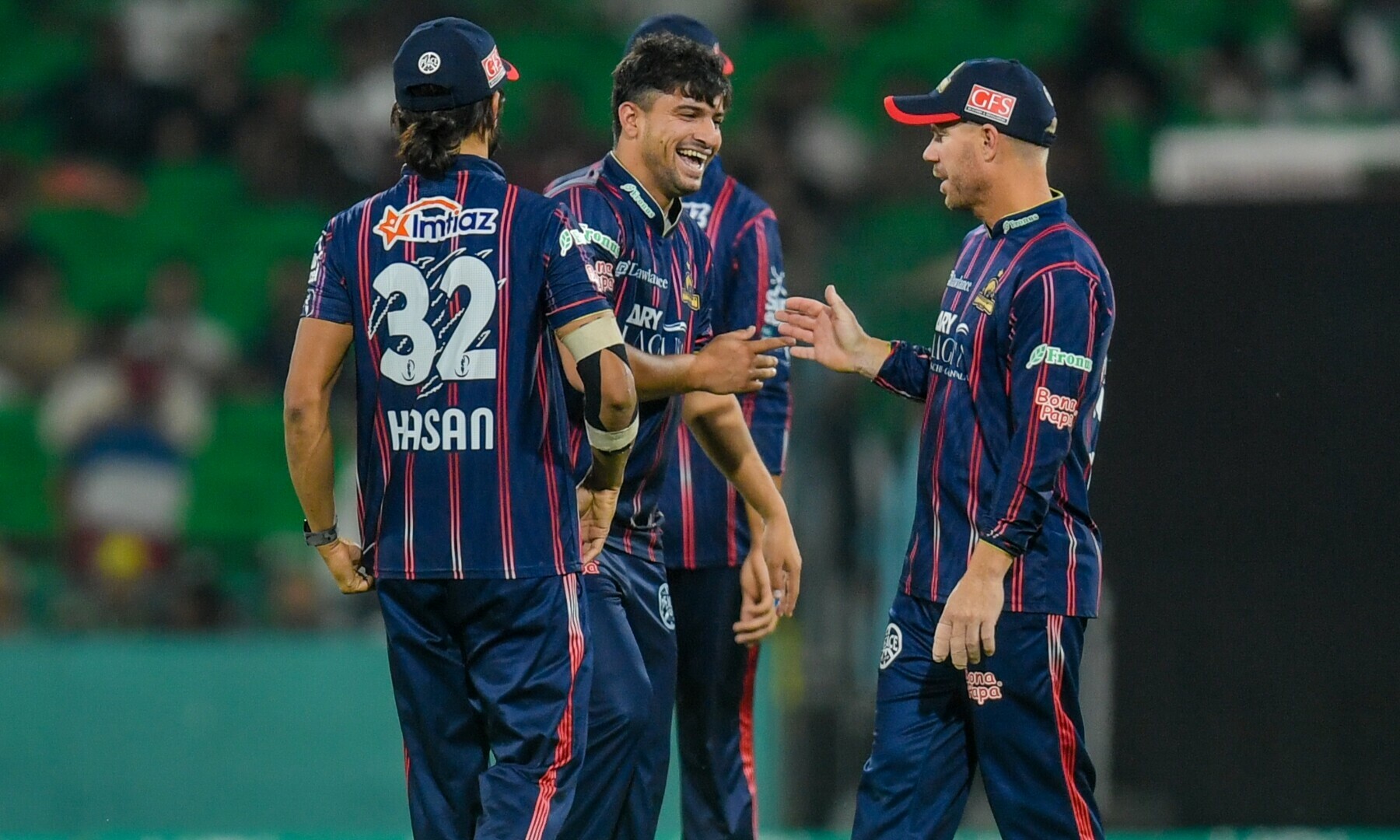
Fawad Ali celebrates with Hassan Ali and teammates after taking a wicket during the PSL X in Lahore in April. — Karachi Kings
He also got to meet the cricketer he idolised growing up, Australian pacer Shaun Tait. “When I got to know that he would be coaching Karachi, I was really excited to get to learn first-hand from him. Now I’m on such friendly terms with him, that I pick his brains all the time for bowling tips.”
Fawad’s journey also brings to the fore one of the most important aspects of the PSL — the financial freedom that the league provides in a country where athletes struggle to make a living, having to rely on the benevolence of donors and sponsors in order to pursue their careers.
Being the eldest in his household, Fawad hopes to build a house for his family, adding, “I would feel really proud if I could provide some relief to my father and brother by contributing towards my household.”
The league is also a springboard for greater cricketing endeavours. “PSL has given me an opportunity to experience the pressures that are associated with international cricket,” says Fawad, “and I hope that I will be able to fulfil my dream of playing for Pakistan.”
THE FRANCHISE CONUNDRUM
The PSL turned 10 this year, and this year could bring about monumental changes in the league going into the second decade of its existence.
PSL X was nothing less than the extravaganza it was expected to be — although interrupted by a four-day conflict between Pakistan and India, before the season completed with its usual furore. However, in terms of significance, the year is essentially just starting to take shape.
A view of fireworks illuminating the stadium during the grand opening ceremony of PSL Season 10 in Rawalpindi on April 11. — APP
When the PCB sold the franchises for a whopping $93 million back in 2015, the ownership was not in perpetuity but for a 10-year term. These contracts are up for renewal this year and, while it is entirely possible that the teams might not end up changing ownership, according to franchise officials, the renewal is dependent on the following conditions:
If the present market value is less than what the franchises are paying currently, there is an automatic 25 per cent increase in the annual fee of these franchises in order to renew their contracts. However, if the new value is more than the existing amount the franchises are paying, the new amount would be the difference in aggregate plus the already determined 25pc bump.
Karachi Kings Team Director Haider Azhar has been involved in the league in various capacities since its inception. He was with Multan Sultans in various capacities as well, winning the championship with Multan in 2021.
Speaking to Eos on the changes expected for this year, Haider says, “This year is a crucial year for the PSL and has to be handled by the board with the sensitivity it deserves.”
Haider explains that current terms create a conundrum. If a franchise is successful in creating a strong brand with a good market value, come the time of renewal, this actually requires franchises to pay more to continue with ownership of their team.
“The overall model of the league needs to be looked at, as it penalises you for developing the brand,” he says.
Speaking on the inclusion of new teams, Haider says: “I’m not at all against new teams coming in. But even in that, you’ll have to see what models are there, because when ownership changes hands multiple times, it damages your product as well as confidence.”
UNDERSTANDING PSL’S RAISON D’ETRE
An example of the type of innovation that the board could turn to, to help expand the league further was the extra fund in this year’s edition that helped with the inclusion of marquee players like David Warner.
As discussions continue between the stakeholders, what must not be lost sight of is how PSL continues to provide a springboard for young cricketers and the opportunity for a stable income in the sport to its participants.
From Hasan Ali in the first season to newcomer Fawad Ali this year, the league continues to be an oasis for cricketers in a country where social mobility is a pipe dream for most and athletes in other sports suffer due to an absolute dearth of monetary support systems.
In light of international developments too, PSL acts like a haven for Pakistani cricketers. As more and more leagues have increased participation from Indian Premier League franchise owners, the number of Pakistani players getting picked for these leagues has shrunk.
As the PSL steps into the second decade of its existence, one thing is for certain — all the decision-makers have to ponder over what route the league will take going forward. There are plenty of external and internal challenges going forward.
The writer is a member of staff
Published in Dawn, EOS, August 10th, 2025
Header image: Lahore Qalandars Batter Sikandar Raza celebrates with his teammates after winning the PSL X final in Lahore on May 25. — X/PSL
Alex McIntyre BBC News, West Midlands Jen Aitken BBC Stoke and Staffordshire political reporter Reform UK Ian Cooper, leader of Staffordshire County Council, was chosen as the authority’s leader in May The leader of a Reform UK-led council says the party needs to prove it’s competent enough to run local authorities. Ian Cooper, leader of…
The BBC’s Damian Grammaticas explains the controversy surrounding China’s mega-embassy plan. Beijing’s plans for the sprawling new embassy have sparked fears its location – near London’s financial district – could pose an espionage risk. Deputy Prime Minister Angela Rayner has now given China two weeks to explain certain aspects of their plans.
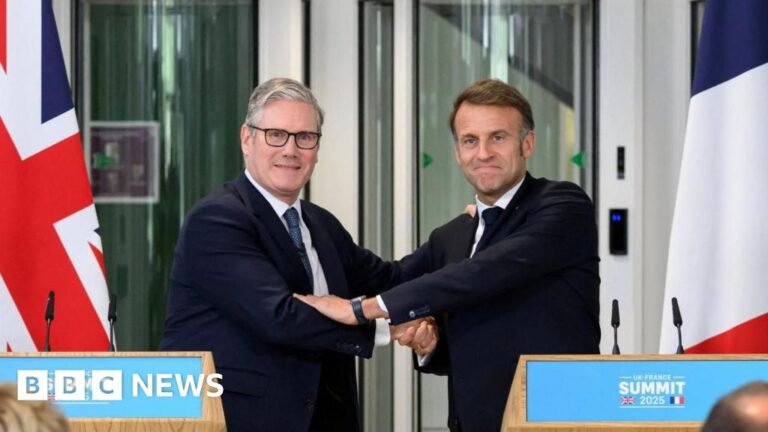
Watching the president of France and the prime minister close up was to see two men under the cosh, behind in the opinion polls and fighting for what they see as the essence of their political creed. It boils down to this – how do Sir Keir Starmer and Emmanuel Macron make the case for…
Lahore, Pakistan — Lahore General Hospital (LGH) has reached a major milestone in healthcare by formally resuming corneal transplant surgeries after nearly ten years, under the leadership of Prof. Dr. Muhammad Farooq Afzal, Principal of the Post Graduate Medical Institute (PGMI) and Ameer-ud-Din Medical College (AMC).The revival of this highly specialized surgical service represents a…