Childrens early development at risk with year-long NHS waits
Nick Triggle,Health correspondentand Elena Bailey,Health reporter Getty Images Tens of thousands of children in England have spent more than a year waiting for NHS community care such as hearing services, speech and language therapy and disability support, the BBC has found. The analysis shows a quarter of the 300,000 children on waiting lists have been…
Nick Triggle,Health correspondentand
Elena Bailey,Health reporter

 Getty Images
Tens of thousands of children in England have spent more than a year waiting for NHS community care such as hearing services, speech and language therapy and disability support, the BBC has found.
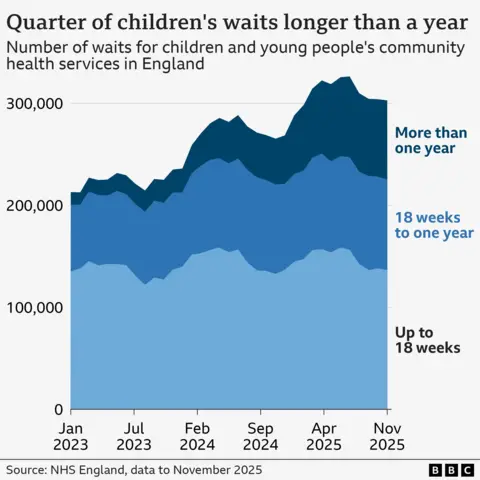
The analysis shows a quarter of the 300,000 children on waiting lists have been waiting more than 12 months.
NHS leaders and doctors say the delays are “catastrophic”, harming not only their health but also development – and are calling for the same priority to be given to tackling these long waits as has been given to the hospital backlog.
The government says the long waits are unacceptable, but under its 10-year plan greater investment in community services will improve access to care.
‘Waiting list after waiting list’
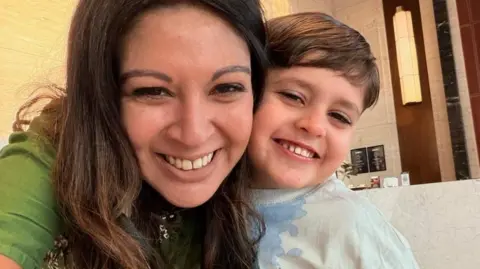
Tiya Currie’s six-year-old son, Arun, struggled to get the support he needs.
He has had difficulties with his speech since he was just a toddler. But when Tiya, 46, from London, tried to get help she faced “waiting list after waiting list”, she said.
“I was completely in the dark and I was tearing my hair out. That was really stressful.”
After two years of waiting, Tiya and her husband felt they had no choice but to use £4,000 of their savings to pay privately for speech therapy and a formal diagnosis, which revealed Arun had developmental language disorder (DLD).
 Other
OtherDLD is a diagnosis given to children who have significant, ongoing difficulties understanding or using spoken language.
Tiya said: “It absolutely crushes me that there are so many people out there who need access to speech and language therapists, but aren’t getting it due to long waiting lists and it not being affordable.”
Arun’s progress has improved significantly with speech therapy and proper school support, but Tiya said the need for better early intervention and resources for children is key.
“I know how stretched NHS services are, but children should be prioritised because they’re still developing and they need that support now, not in years’ time,” she said.
Harmful waits
The community waits for under 18s have got worse over the last three years.
Since the start of 2023, there has been a six-fold rise in children waiting more than a year, with more than 77,500 in England now in that position.
Year-long waits for adults in the community are not common, with just 1% waiting that long compared with 26% of children.
While the figures cover only England, the Royal College of Paediatrics and Child Health (RCPCH) says longer-than-usual waits are also being reported elsewhere in the UK.
Many of the children facing long waits have complex needs, such as learning and physical disabilities. Some of the young children waiting will include those needing autism or ADHD assessments. For older children, mental health services tend to take the lead.
Elliot Howard-Jones, chair of the Robinson Group, which represents specialist community NHS services, said he was really worried about how the delays were affecting children.
“Getting this support is fundamental to their development journey – that’s why waits are so harmful.”
To illustrate the point, he gave the example of a child who struggles with hearing, which leads to them becoming disruptive and disengaged.
“For an adult, waiting is annoying, painful and difficult. But for a child, waiting means your peer group moves on while you don’t. You fall behind and never catch up.”
Howard-Jones said there needed to be greater focus and investment in community services, similar to what has already been happening for hospital treatments – tackling that backlog was at the heart of Labour’s manifesto and NHS trusts are get extra money for making progress.
Chronic underinvestment
His warnings have been echoed by other senior NHS leaders.
Richard Kirby, chair of the NHS Confederation and NHS Providers’ community network, said demand was outstripping capacity.
“Without more help, children will continue to wait longer and fall further behind – that is a situation none of us should accept.”
And Dr Ronny Cheung, from the RCPCH, added: “Chronic underinvestment and a lack of focus on children’s health and services have meant that staff are unable to meet increasing demand.
“Long waits are unacceptable for any patient, but for children and young people the waits can be catastrophic.
“Many treatments need to be given by a specific age or developmental stage to prevent long-lasting complications, and for many children these long waits mean we miss crucial chances to intervene in time.”
Kate Lawson, head of policy at disability charity Sense, said there were many “heartbreaking stories” of families battling to access essential care and therapies, with significant numbers having to resort to paying privately.
“It’s essential that the government addresses this issue to give every child the best start in life,” she added.
The Department of Health and Social Care agreed the waits were unacceptable.
It said it was taking “firm action” by introducing a new target to get community health services to work towards seeing patients within 18 weeks – the same as hospitals are expected to do.
And a spokeswoman added under the government’s 10-year NHS plan there would be greater investment in community services.
“Our vision for neighbourhood health will bring care closer to babies, children and young people, with more staff, better digital tools and services working together so children get the right support in the right place,” she said.