Governor House is a Facilitation Centre for Business Community: Sardar Saleem
LCCI chief says consultation with traders essential for effective policymaking By Farzana Chaudhry — Lahore, Pakistan LAHORE: Punjab Governor Sardar Saleem Haider Khan has said that the Governor House serves as a facilitation centre for the business community and will continue extending full support to the country’s economic stakeholders. Speaking at a meeting at the…
LCCI chief says consultation with traders essential for effective policymaking
By Farzana Chaudhry — Lahore, Pakistan
LAHORE: Punjab Governor Sardar Saleem Haider Khan has said that the Governor House serves as a facilitation centre for the business community and will continue extending full support to the country’s economic stakeholders.
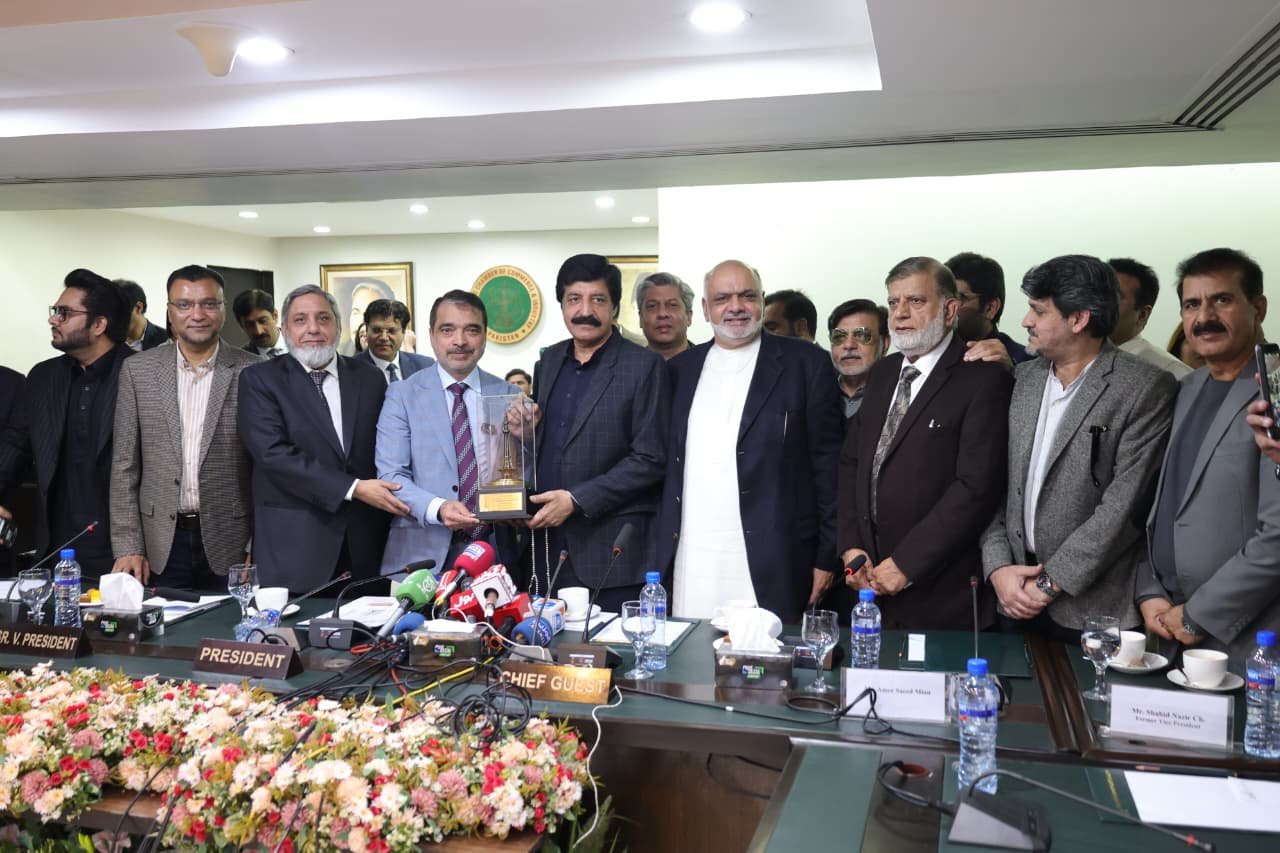
Speaking at a meeting at the Lahore Chamber of Commerce & Industry (LCCI), he stressed that the trust deficit between the government and the business community must end, as policies cannot succeed without stakeholder consultation.
LCCI President Faheem ur Rehman Saigol delivered the welcome address, while Senior Vice President Tanveer Ahmed Sheikh, former SVP Khalid Usman, and several Executive Committee members were also present.
The Governor emphasized that the government should formally involve traders when drafting economic policies. He added that policies made with business input would also help improve tax collection.
He further announced that he will meet the Finance Minister and the PPP Chairman to strongly convey the concerns of the business community.
LCCI President Faheem ur Rehman Saigol said the biggest challenge facing Pakistan is the continuous and steep rise in the cost of doing business. He noted that Pakistan’s electricity, gas, interest rates and taxes are the highest in the region, severely damaging the country’s business competitiveness.
He said Pakistan lags far behind in global ease-of-doing-business rankings. The removal of exporters from the final tax regime has weakened the export sector, while rising federal excise duty and raw material costs are pushing multinational companies out of Pakistan.
Saigol highlighted that the government spends Rs14–18 billion annually on subsidies and grants for loss-making state-owned enterprises—more than the value of the latest IMF tranche. He said tax reforms introduced without consulting traders have harmed businesses.
He recommended shifting focus from cash assistance under the Benazir Income Support Programme to skill development, and called for a new agricultural policy to meet food security needs.
Pointing to Bangladesh’s $40 billion garment exports against Pakistan’s stagnant $17 billion textile exports, he said political stability is essential for economic progress. According to him, Pakistan now needs moral and ethical reforms even more than economic ones, along with a comprehensive 10-year economic plan.
Responding to these concerns, Governor Sardar Saleem Haider said the Benazir Income Support Programme has played an important role in reducing poverty and that skill development initiatives are already underway.
He acknowledged that Pakistan faces economic difficulties because institutions were not reformed in time but expressed optimism that collective efforts can help build a stronger and more respected Pakistan.