Pakistan’s Internet Service Slower Than Global Standards, LCCI President Warns
By Farzana Chaudhry — Lahore, Pakistan LAHORE: President of the Lahore Chamber of Commerce and Industry (LCCI), Faheem-ur-Rehman Saigol, has warned that Pakistan’s internet services have deteriorated significantly in recent years, placing the country at a disadvantage as the rest of the world accelerates in information technology and digital innovation. Speaking during a meeting with…
By Farzana Chaudhry — Lahore, Pakistan
LAHORE: President of the Lahore Chamber of Commerce and Industry (LCCI), Faheem-ur-Rehman Saigol, has warned that Pakistan’s internet services have deteriorated significantly in recent years, placing the country at a disadvantage as the rest of the world accelerates in information technology and digital innovation.
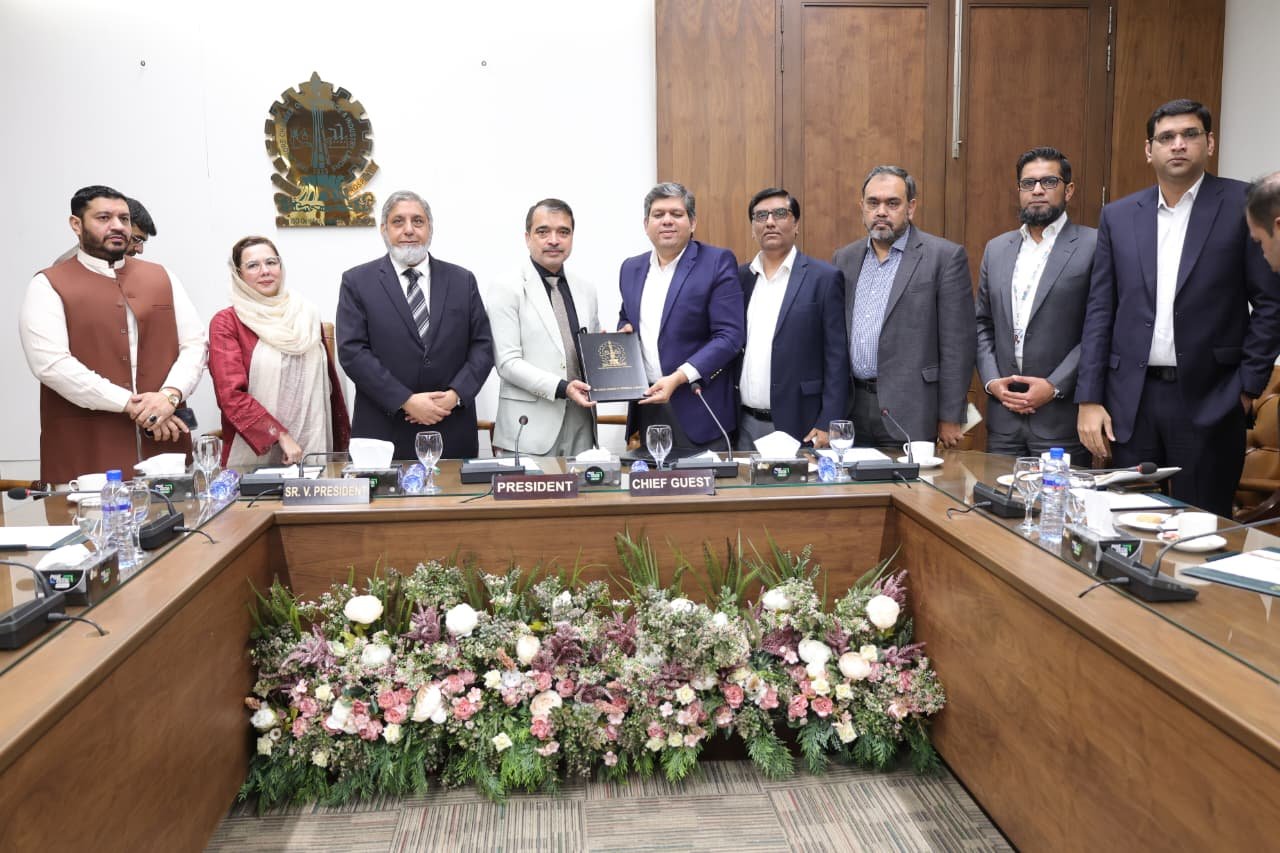
Speaking during a meeting with a delegation of IT professionals at the LCCI, Saigol said Pakistan is rapidly falling behind in the global race for technological advancement despite major opportunities in freelancing and the digital economy. He cautioned that without reliable and high-speed internet infrastructure, the country will struggle to achieve its digital transformation goals.
Senior Vice President Tanveer Ahmed Sheikh, Executive Committee Members Firdous Nisar and Syed Salman Ali, and a delegation led by Atif Mahmood Tahir, including several IT professionals, attended the meeting.
Saigol noted that the Chamber has long been advocating improvements in internet services and the IT sector, emphasizing that technology is among the fastest-growing avenues for attracting foreign investment. He warned that poor connectivity would undermine Pakistan’s IT exports, freelancing earnings, and startup ecosystem.
Multinet CEO Atif Mahmood told the meeting that Pakistan’s technology market has reached nearly USD 20 billion, with the potential to grow to USD 60 billion if the government strengthens digital infrastructure. However, he said no major progress has been made in upgrading Pakistan’s internet systems over the past five years.
He added that the rapid rise of freelancing, the digital economy, and startups is being hindered by outdated infrastructure, insufficient fiber networks, and a shortage of local data centers — factors that have caused Pakistan to fall behind other countries in the region.
Atif Mahmood Tahir stressed that if the government prioritizes the technology sector, accelerates the development of special technology zones, and upgrades internet services to international standards, Pakistan’s digital economy could expand significantly and generate substantial employment opportunities for young people.