
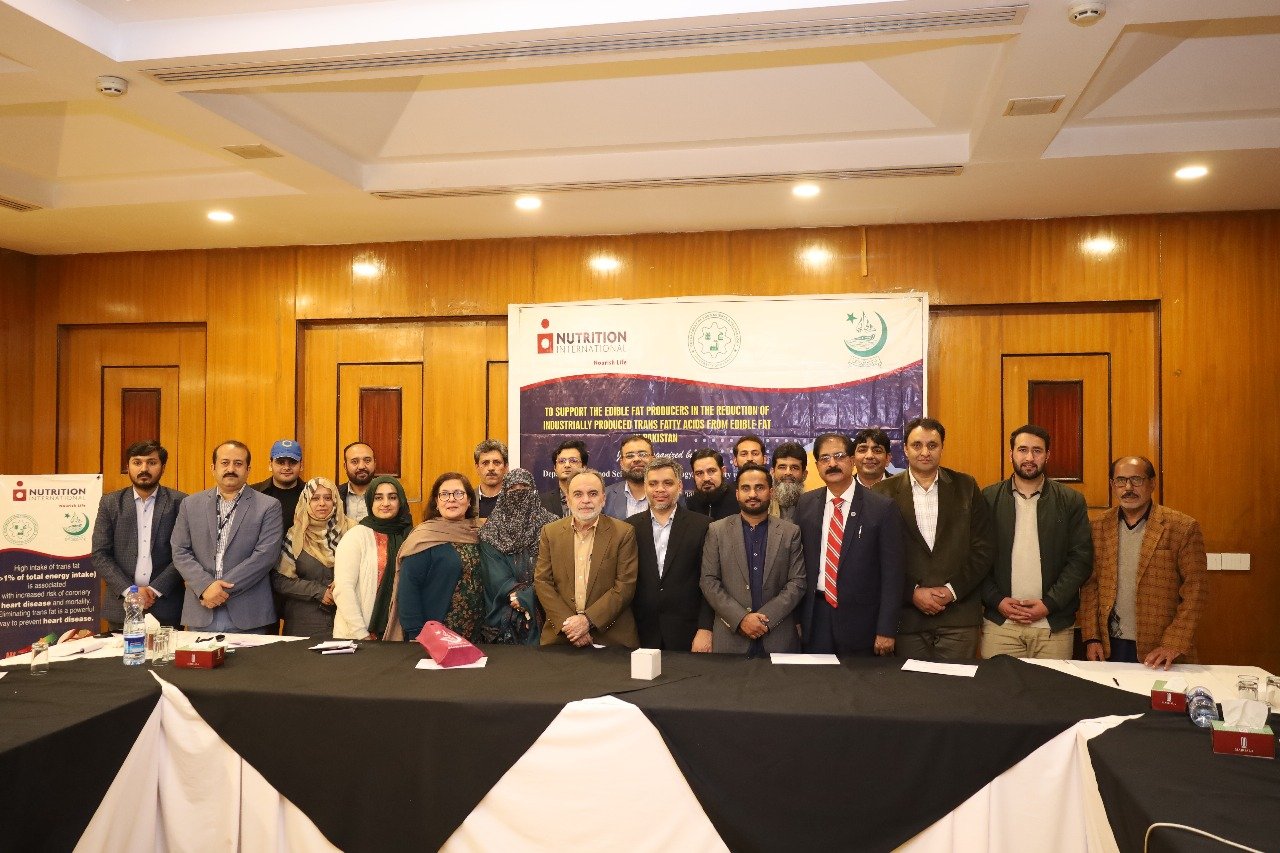
Training Session on iTFA Elimination Held in Islamabad to Curb Rising Heart Disease Rates
Islamabad:A specialized training session focusing on the elimination of industrially produced trans fatty acids (iTFA) from edible fats and oils was held in Islamabad, highlighting the urgent need to address the rising burden of heart disease in Pakistan. The session was organized by the Department of Food Science and Technology, University of Karachi, in collaboration…
Islamabad:
A specialized training session focusing on the elimination of industrially produced trans fatty acids (iTFA) from edible fats and oils was held in Islamabad, highlighting the urgent need to address the rising burden of heart disease in Pakistan.
The session was organized by the Department of Food Science and Technology, University of Karachi, in collaboration with Nutrition International, and took place at a local hotel in Islamabad. It brought together representatives from leading edible fat manufacturing industries, along with officials from the Islamabad Food Authority, AJ&K Food Authority, Gilgit-Baltistan, Balochistan Food Authority, and civil society organizations including PANAH and Heartfile.
Opening the program, Dr. Khawaja Masood Ahmed, a renowned fortification expert, underscored the national importance of reducing iTFA levels to safeguard public health and align Pakistan’s food regulations with World Health Organization (WHO) recommendations.
Technical sessions were conducted by Dr. S. M. Ghufran Saeed, Associate Professor, and Dr. M. Abdul Haq, Chairman of the Department of Food Science and Technology, University of Karachi. They presented evidence-based strategies to achieve the mandated 2 percent iTFA limit, covering processing optimization, product reformulation pathways, and standardized operating procedures (SOPs) that allow industries to shift toward healthier fat profiles without compromising product quality or functionality.
Other team members, including Moin Qureshi, Dr. Seema Ashraf, and Dr. Syed Arsalan Ali, actively contributed to the discussions.
The session was graced by Mr. Abdul Hameed Kiyani, Secretary Food and Director General of the AJ&K Food Authority, as the chief guest. He praised the collaborative initiative and reaffirmed the authority’s commitment to strengthening compliance mechanisms, enhancing surveillance, and supporting the food industry in adopting iTFA-free production techniques.
Concluding the session, Dr. Saba Amjad from Heartfile highlighted the significant health burden associated with trans fat consumption and emphasized the need for multi-sectoral engagement to address non-communicable diseases.
Mr. Sana Ullah Ghumman, General Secretary of PANAH, also attended and reiterated the urgency of eliminating harmful fats from the national food supply. He warned that the rapid rise in non-communicable diseases in Pakistan is alarming and stressed that trans fat consumption is a major contributing factor. He urged the government to enact and enforce legislation to reduce trans fats in order to prevent the loss of precious human lives.
Participants engaged in detailed discussions on regulatory requirements and technical solutions for achieving near-zero trans fat levels. There was unanimous agreement that strict nationwide implementation of the 2 percent iTFA limit is essential to reduce cardiovascular disease risks and ensure safer edible fat consumption.
The training concluded with a collective commitment to intensify capacity-building efforts, harmonize SOPs, and strengthen collaboration between regulators and industry stakeholders to achieve complete iTFA elimination in Pakistan.


