Population Growth, Climate Change Major Threats to Food Security: Rana Tanveer
By Farzana ChaudhryLahore, PakistanLAHORE: Federal Minister for National Food Security and Research Rana Tanveer Hussain has warned that rapid population growth and climate change pose serious challenges to Pakistan’s food security, stressing that failure to increase agricultural production could leave the country unable to meet its future food needs.He was chairing a meeting on the…
By Farzana Chaudhry
Lahore, Pakistan
LAHORE: Federal Minister for National Food Security and Research Rana Tanveer Hussain has warned that rapid population growth and climate change pose serious challenges to Pakistan’s food security, stressing that failure to increase agricultural production could leave the country unable to meet its future food needs.
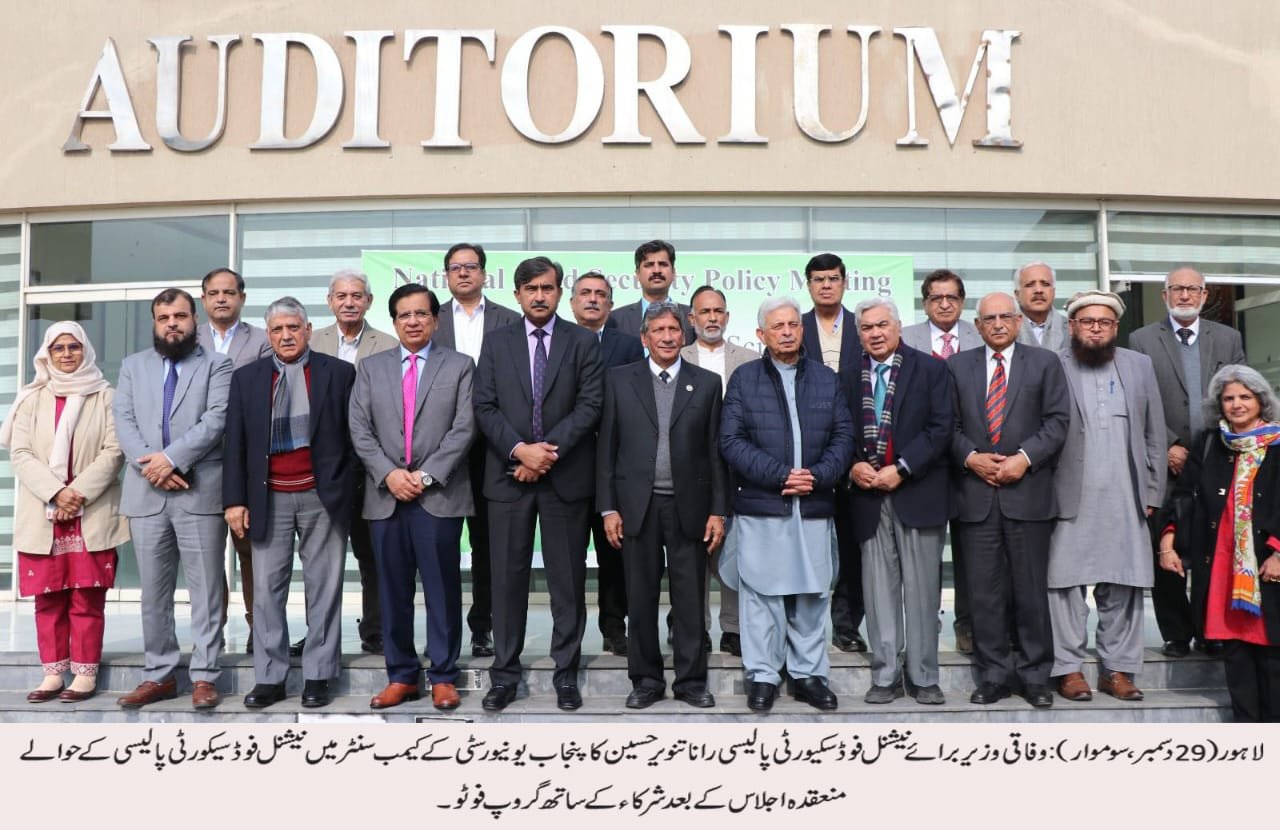
He was chairing a meeting on the National Food Security Policy at the Centre of Excellence in Molecular Biology (CEMB), University of the Punjab. The meeting was attended by Chairman of the Pakistan Academy of Sciences Professor Dr. Kausar Abdullah Malik, Director CEMB Dr. Muaz ur Rehman, along with scientists, food security experts, and policymakers.
Addressing the participants, the minister said Pakistan does not lack talent in any sector, but emphasized that sustained research is critical for development and improvement. He noted that the benefits of research are long-term in nature, and that governments often hesitate to invest due to the absence of immediate results.
Rana Tanveer Hussain highlighted that national security is closely linked to food security, calling for intensified efforts in agricultural and food research. He said climate change is having a particularly severe impact on the agriculture sector, increasing production costs and creating multiple challenges for farmers.
The minister reiterated that protecting agriculture and supporting farmers is a key responsibility of the government. He announced that the government will purchase six million tonnes of wheat from farmers at a support price of Rs. 3,500 per maund.
He further stressed that wheat remains Pakistan’s most essential crop and underlined the need for the country to achieve self-sufficiency in wheat production to ensure long-term food security.