
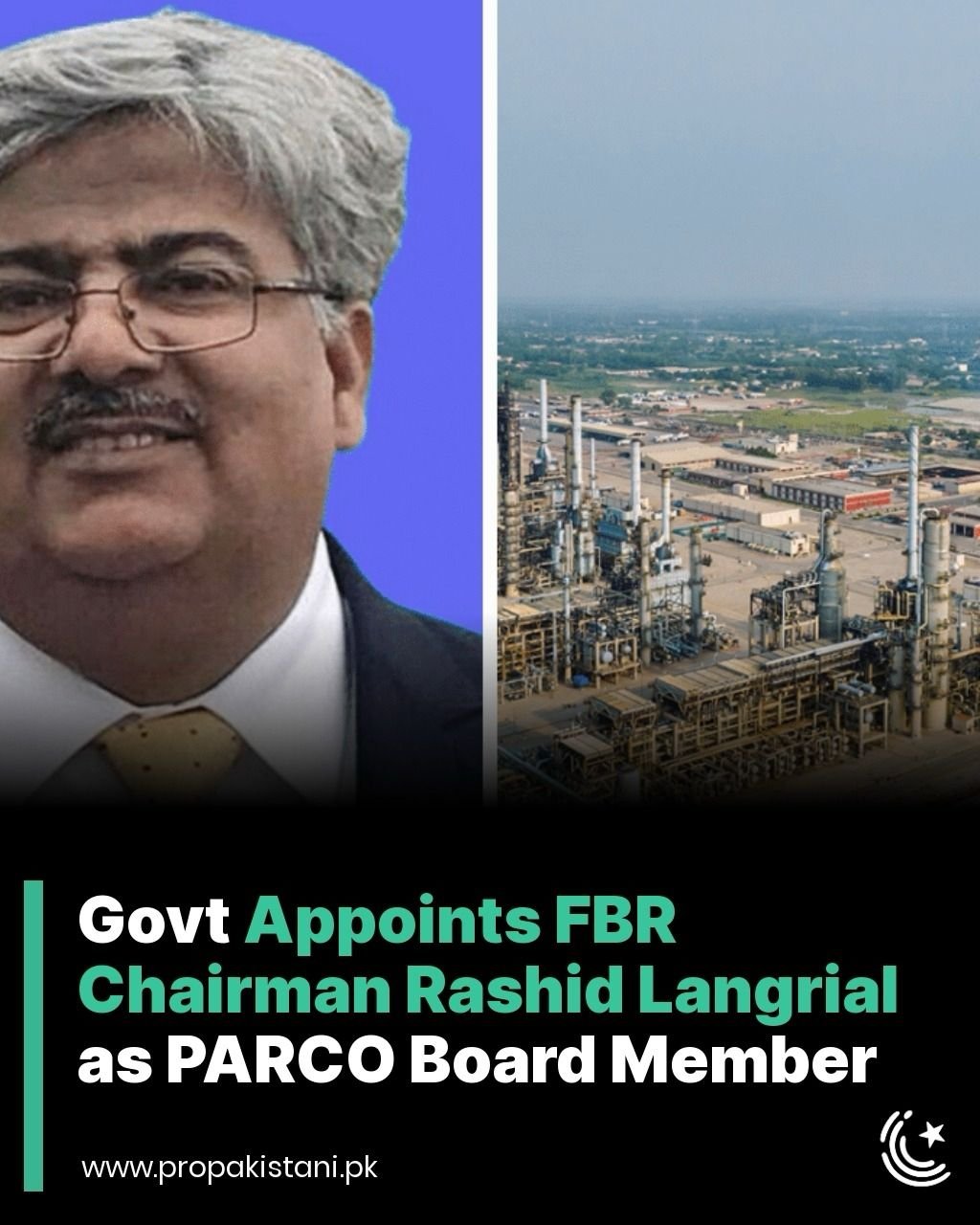
Government Appoints FBR Chairman Rashid Mahmood Langrial as PARCO Board Member
The federal government has approved the appointment of Grade-22 senior officer and Pakistan Administrative Service member Rashid Mahmood Langrial as a member of the Board of Directors of Pak-Arab Refinery Limited (PARCO). His nomination replaces Momin Agha, and the decision has been formally approved by the government.Currently, Rashid Mahmood Langrial also serves as Chairman of…
The federal government has approved the appointment of Grade-22 senior officer and Pakistan Administrative Service member Rashid Mahmood Langrial as a member of the Board of Directors of Pak-Arab Refinery Limited (PARCO). His nomination replaces Momin Agha, and the decision has been formally approved by the government.
Currently, Rashid Mahmood Langrial also serves as Chairman of the Federal Board of Revenue (FBR), a position that holds significant influence in tax and revenue matters. Momin Agha, who was previously Chairman of the PARCO Board, had been removed from his official position.
According to sources, PARCO board members receive fees in dollars for each meeting, and air travel to Dubai and accommodation are also provided for attending board meetings. Business circles are raising questions about potential conflict of interest, given that the FBR Chairman is now part of the board while FBR has several billion rupees worth of tax cases pending against PARCO.
Other members of the PARCO Board include Secretary Finance Imdadullah Bosal, Dr. Jahanzeb, and Ahad Cheema.
The appointment has sparked debate about the intersection of regulatory oversight and corporate governance. Critics argue that having the country’s top tax official on the board of a company facing tax disputes with his own organization creates an inherent conflict that could undermine the integrity of both institutions. Supporters, however, maintain that senior government officials often serve on state-owned enterprise boards to ensure alignment with national economic policies.
PARCO is one of Pakistan’s major oil refineries and plays a crucial role in the country’s energy sector. The company’s board decisions can have significant implications for fuel pricing, supply chain management, and overall energy security in Pakistan.


