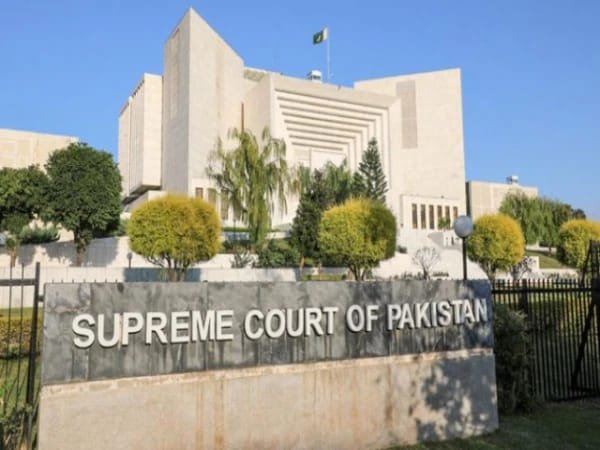
Supreme Court: Second Marriage Without First Wife’s Permission Can Lead to Criminal and Civil Action Husband Ordered to Pay Rs 1.2 Million Mehr; Supreme Court Issues Written Judgment
Islamabad: The Supreme Court has ruled that contracting a second marriage without the permission of the first wife and approval of the Arbitration Council constitutes a violation of the Muslim Family Laws Ordinance, which can subject the husband to criminal and civil proceedings.The Supreme Court has issued a five-page written judgment in this regard, authored…
Islamabad: The Supreme Court has ruled that contracting a second marriage without the permission of the first wife and approval of the Arbitration Council constitutes a violation of the Muslim Family Laws Ordinance, which can subject the husband to criminal and civil proceedings.
The Supreme Court has issued a five-page written judgment in this regard, authored by Justice Musarrat Hilali. In the Naila Javed case, the Supreme Court nullified the decisions of the Family Court and Peshawar High Court, ordering the husband to pay Rs 1.2 million in mehr to the woman.
The judgment stated that under the Dissolution of Marriage Act, if a husband marries a second time without his wife’s consent, the woman is entitled to dissolve the marriage. The court clarified that contracting a second marriage without the permission of the Arbitration Council is a clear violation of Section 6 of the Muslim Family Laws Ordinance.
According to the court, in this case the husband neither obtained written permission from his first wife nor secured approval from the Arbitration Council, which the husband himself admitted. The husband’s act of contracting a second marriage during the proceedings was also deemed a violation of law.
The Supreme Court ruled that courts cannot convert a divorce claim into khula without recording the wife’s statement. Referring to its previous judgments, the court stated that khula is not possible without the woman’s clear and voluntary consent.
The judgment noted that Naila Javed had filed an application to dissolve the marriage on grounds of cruelty and legal basis, but the Family Court, instead of deciding on the allegations of cruelty, dissolved the marriage on the basis of khula and ordered the woman to forfeit her mehr, even though the woman had not requested khula at all.
The court further stated that factors such as the husband’s non-payment of maintenance, character assassination of the woman during cross-examination, and second marriage legally fall under the category of cruelty. In such circumstances, a woman’s refusal to live with her husband is not disobedience but a legitimate right.
The Supreme Court made clear that a husband who contracts a second marriage without the first wife’s permission and Arbitration Council’s approval will face legal consequences, and in such cases the woman has the full right to dissolve the marriage and obtain her financial rights.