Pakistan Lags in Literacy Across South Asia – PBS & World Bank Data
Islamabad, February 1, 2026 – According to the latest Pakistan Social and Living Standards Measurement (PSLM–HEIS) 2024–2025 survey released by the Pakistan Bureau of Statistics (PBS) and reviewed by FAFEN, Pakistan’s overall literacy rate (age 10 years and above) stands at 63%. This marks only a modest 3 percentage point increase since 2018–19 (when it…
Islamabad, February 1, 2026 – According to the latest Pakistan Social and Living Standards Measurement (PSLM–HEIS) 2024–2025 survey released by the Pakistan Bureau of Statistics (PBS) and reviewed by FAFEN, Pakistan’s overall literacy rate (age 10 years and above) stands at 63%. This marks only a modest 3 percentage point increase since 2018–19 (when it was 60%).
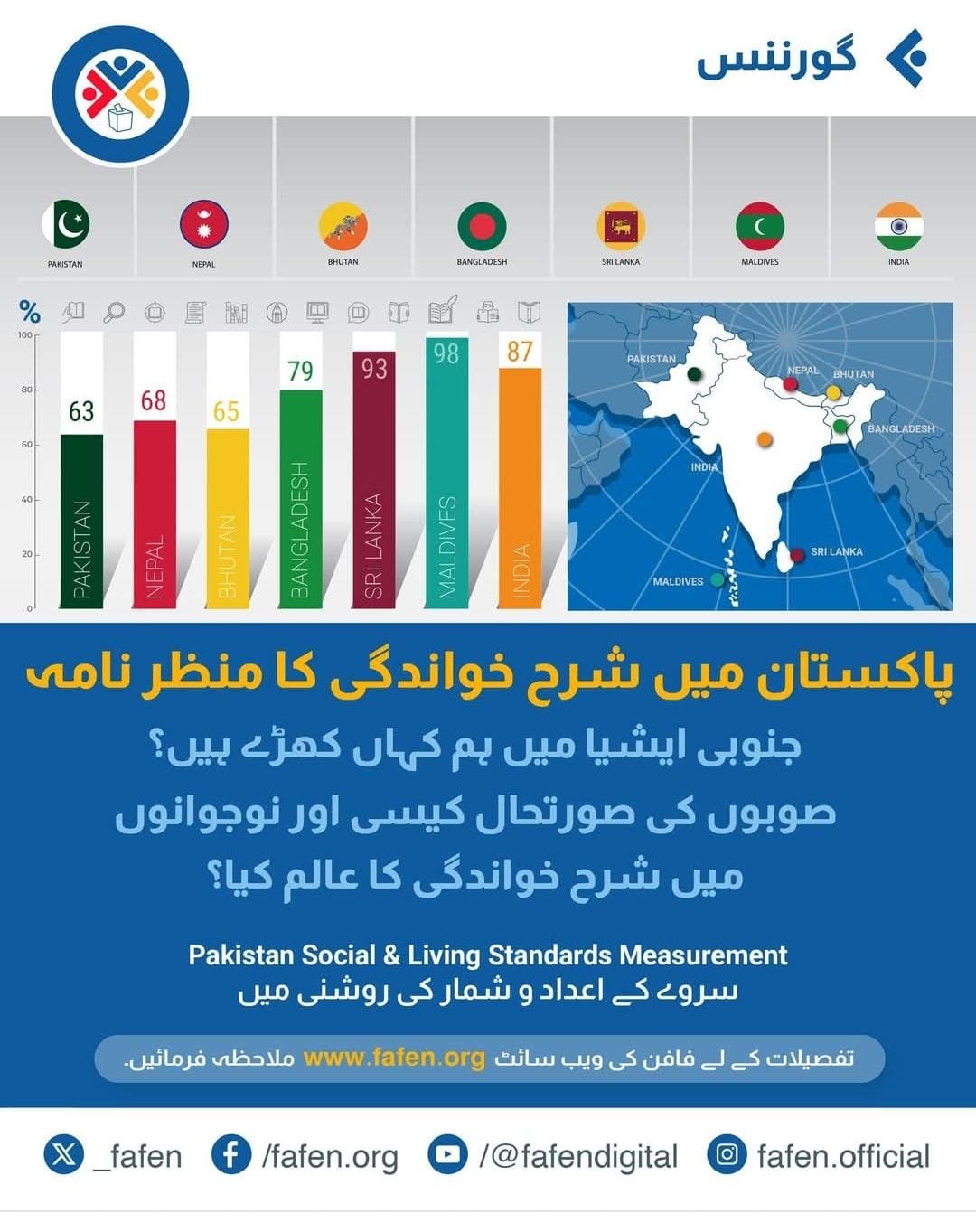
Pakistan continues to record the lowest literacy rate among major South Asian countries, well below the regional average.
South Asia Literacy Comparison (adult literacy rates, latest World Bank / UNESCO-aligned figures):
Maldives: >98% (highest in the region)
Sri Lanka: 93%
India: ~87%
Bangladesh: ~79%
South Asia average: ~78%
Pakistan: 63% (significantly below regional average)
Key national highlights from PBS data:
Gender gap remains wide: Male literacy 73%, female literacy 54%.
Provincial variation:
Punjab: 68% (highest)
Sindh & Khyber Pakhtunkhwa: ~58% each
Balochistan: 49% (lowest)
Age group comparison:
Youth (15–24 years): 77% (improved from 72% in 2018–19)
Overall adult population: closer to 60–63%
Rural areas and especially rural females show slower progress, although recent gains among young rural women have been notable (rising ~9 points in six years in some cohorts).
Constitutional & global commitments
Article 25-A of the Constitution of Pakistan makes free and compulsory education a fundamental right and responsibility of the state for children aged 5–16. Pakistan is also committed to SDG 4 (Quality Education) under the United Nations 2030 Agenda. Despite these obligations, low public investment in education (around 1.9–2% of GDP in recent years) and high numbers of out-of-school children continue to constrain progress.
FAFEN’s review emphasizes that while youth literacy gains offer hope for the future, the overall slow pace of improvement requires urgent policy attention, especially in Balochistan, rural areas, and among girls and women.