Qaiser Sheikh Reaffirms Resolve to Transform Chiniot into Pakistan’s ‘Educational Oxford’
By Muhammad Shahzad | Lahore, PakistanCHINIOT: Federal Minister for the Board of Investment Qaiser Ahmed Sheikh on Sunday reaffirmed his commitment to transforming Chiniot into the “Educational Oxford” of Pakistan, stressing that quality education is the only sustainable pathway to eradicating poverty and strengthening the national economy.Speaking at a ceremony at the Government College University…
By Muhammad Shahzad | Lahore, Pakistan
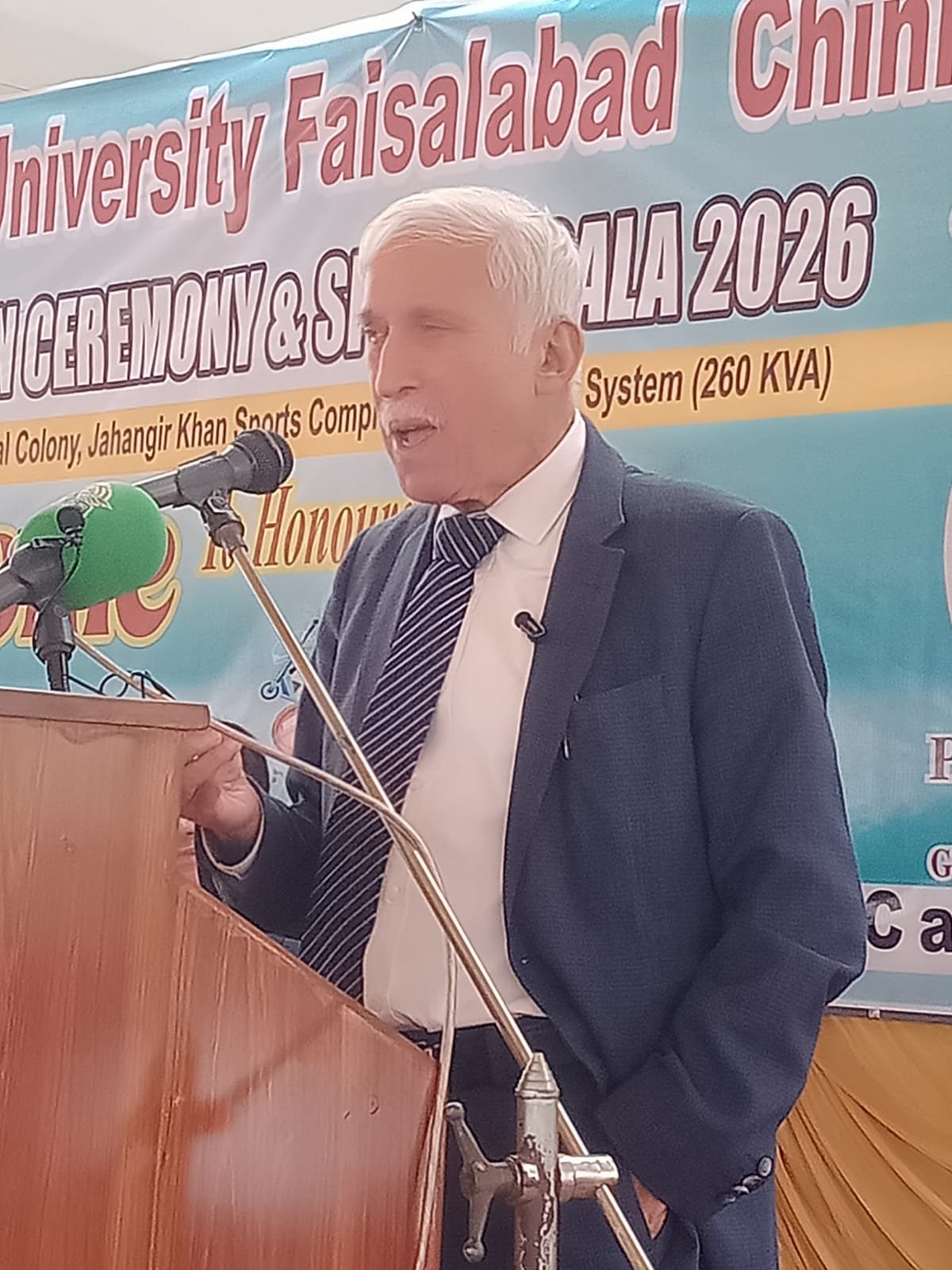
CHINIOT: Federal Minister for the Board of Investment Qaiser Ahmed Sheikh on Sunday reaffirmed his commitment to transforming Chiniot into the “Educational Oxford” of Pakistan, stressing that quality education is the only sustainable pathway to eradicating poverty and strengthening the national economy.
Speaking at a ceremony at the Government College University Faisalabad (GCUF), Chiniot Campus, the minister inaugurated a new girls’ hostel and a sports complex, describing both initiatives as critical to expanding access to higher education and ensuring students’ holistic development.
The girls’ hostel, he said, would enable female students from remote rural areas to pursue higher education in a safe and supportive environment, while the sports complex would provide healthy recreational opportunities essential for character building and balanced personalities.
Vice Chancellor Prof Dr Rauf Azam noted that more than half of the 2,000 students currently enrolled at the campus are women, calling it a significant shift in the region’s social and educational landscape.
Three Decades of Public Service
Addressing the gathering, Sheikh reflected on his 33-year political career representing Chiniot, stating that education has remained his top priority since entering public life. He said he has maintained the same mobile phone number for 33 years, allowing direct access to his constituents, particularly students seeking assistance.
Economic Comparisons and Education Deficit
Highlighting Pakistan’s economic challenges, the minister compared the country’s annual exports of around $32 billion with China’s nearly $5 trillion, attributing China’s success—particularly lifting 700 million people out of poverty—to sustained investment in education.
He warned that with 25 million children currently out of school, Pakistan cannot achieve a sustainable economic growth rate of 7–8 percent without urgently addressing its human capital crisis.
FAST University Chiniot Campus
Sheikh also recalled the establishment of the FAST University Chiniot Campus, saying the project faced skepticism initially but became a reality after land was provided free of cost to the institution.
To ensure financial constraints do not hinder talent, he announced that he would personally cover the tuition fees of any deserving student from Chiniot who secures admission to FAST University on merit.
Criticism of Past Economic Policies
In his capacity as head of the Board of Investment, Sheikh criticized past policies of indiscriminate lending to the wealthy, which he said weakened the economy and pushed the country towards default. He reiterated that Pakistan’s failure to prioritize education has left its youth underutilized, unlike China, which sustained nearly 10 percent growth for 35 years through human capital development.
Healthcare Outreach
During his visit, the minister also attended a medical camp in Kot Miana, where free medical check-ups and medicines were provided. He commended doctors serving in rural areas and said critically ill patients were being referred to major hospitals at no cost.
Reiterating his vision, Sheikh said education remains the most powerful tool to combat poverty, adding that sustained institutional development and personal commitment are essential to transforming Chiniot into a leading centre of learning in Pakistan.