Bangladesh’s Newly Elected Prime Minister Tarique Rahman Takes Oath with Cabinet
Dhaka, Bangladesh – February 17, 2026 – Tarique Rahman, the chairman of the Bangladesh Nationalist Party (BNP), was sworn in as the new Prime Minister of Bangladesh, along with his cabinet, marking a significant political transition following the party’s landslide victory in the recent parliamentary elections.48a35252e733 This is the first elected government since the 2024…
Dhaka, Bangladesh – February 17, 2026 – Tarique Rahman, the chairman of the Bangladesh Nationalist Party (BNP), was sworn in as the new Prime Minister of Bangladesh, along with his cabinet, marking a significant political transition following the party’s landslide victory in the recent parliamentary elections.48a35252e733 This is the first elected government since the 2024 student-led uprising that ousted former Prime Minister Sheikh Hasina.dcd2c3
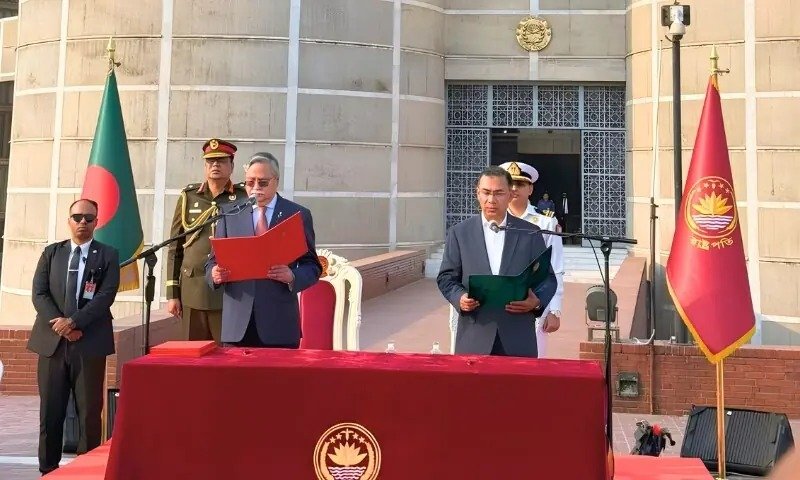
The oath-taking ceremony, administered by President Mohammed Shahabuddin, took place at the South Plaza of the parliament building in Dhaka and was attended by various international dignitaries.36c076 Representing Pakistan was Federal Minister for Planning, Development, and Special Initiatives Ahsan Iqbal, who conveyed congratulations from Prime Minister Shehbaz Sharif and extended an invitation for Rahman to visit Pakistan.e59b998b7ded8e5726 Other notable attendees included India’s Lok Sabha Speaker Om Birla and representatives from the UK, among others.18d9a382b400
Rahman, son of former Prime Minister Khaleda Zia, pledged to faithfully discharge his duties in accordance with the law during the televised event.a481c3 The BNP secured 209 out of 297 seats, with allies like Jamaat-e-Islami winning 68, forming a robust coalition government.51e67f This development signals hopes for economic revival and a move away from the repression of the previous regime, though some parties boycotted the ceremony in protest.b3ea78cc08be
The new administration faces challenges in stabilizing the nation after years of political turmoil, with international observers watching closely for reforms in governance and bilateral relations.