Pakistan PM Sharif Warns Unresolved Conflicts Turning World into ‘Powder Keg’, Calls for Diplomacy at UN Vienna Event
Vienna, February 17 (APP) – Pakistani Prime Minister Muhammad Shehbaz Sharif on Tuesday warned that unresolved political disputes are transforming global situations into a “powder keg,” emphasizing that diplomacy, dialogue, and negotiation are the only means to prevent conflicts. Speaking at a special United Nations event in Vienna titled “Sustainable Development: The Path to Global…
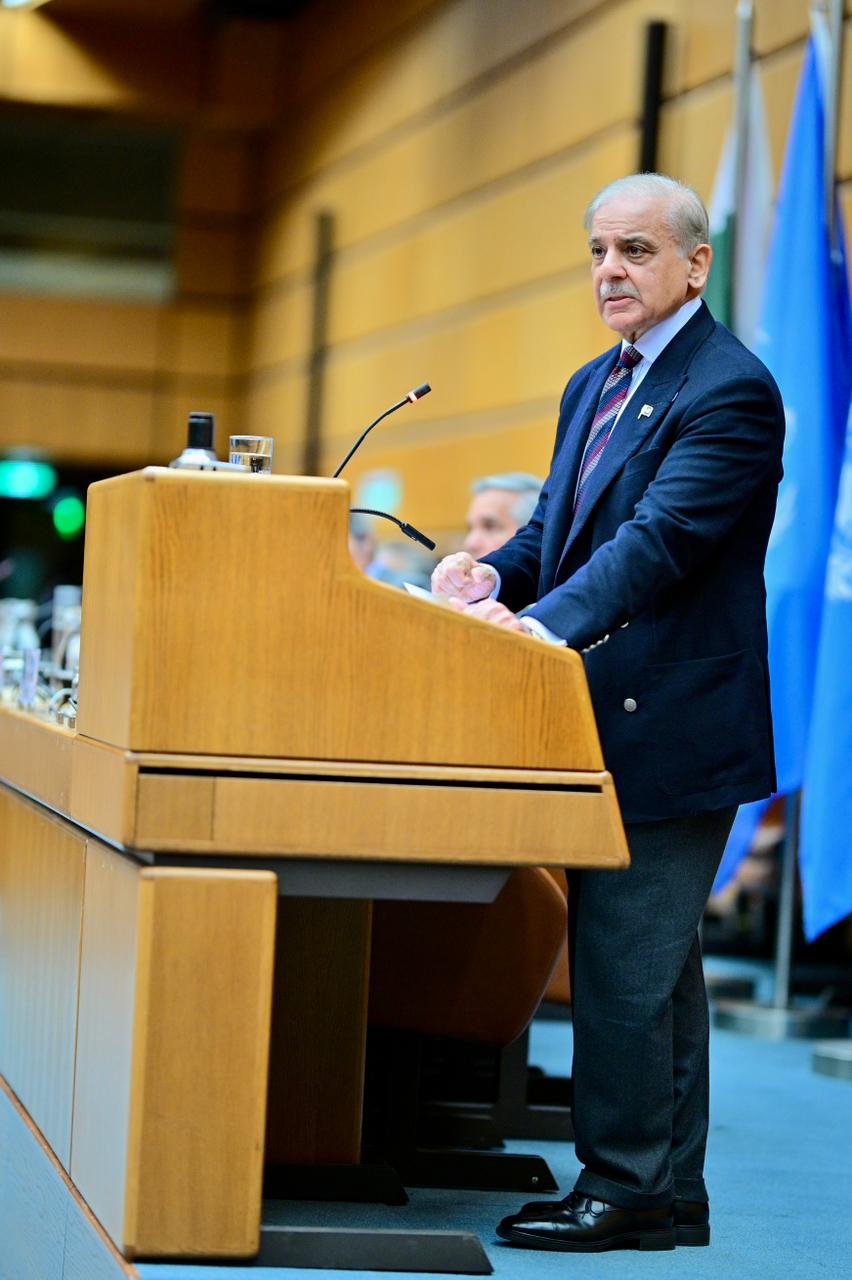
Vienna, February 17 (APP) – Pakistani Prime Minister Muhammad Shehbaz Sharif on Tuesday warned that unresolved political disputes are transforming global situations into a “powder keg,” emphasizing that diplomacy, dialogue, and negotiation are the only means to prevent conflicts. Speaking at a special United Nations event in Vienna titled “Sustainable Development: The Path to Global Peace and Prosperity,” Sharif stressed that sustainable development must be rooted in justice and equity, without which global peace will remain an elusive dream.
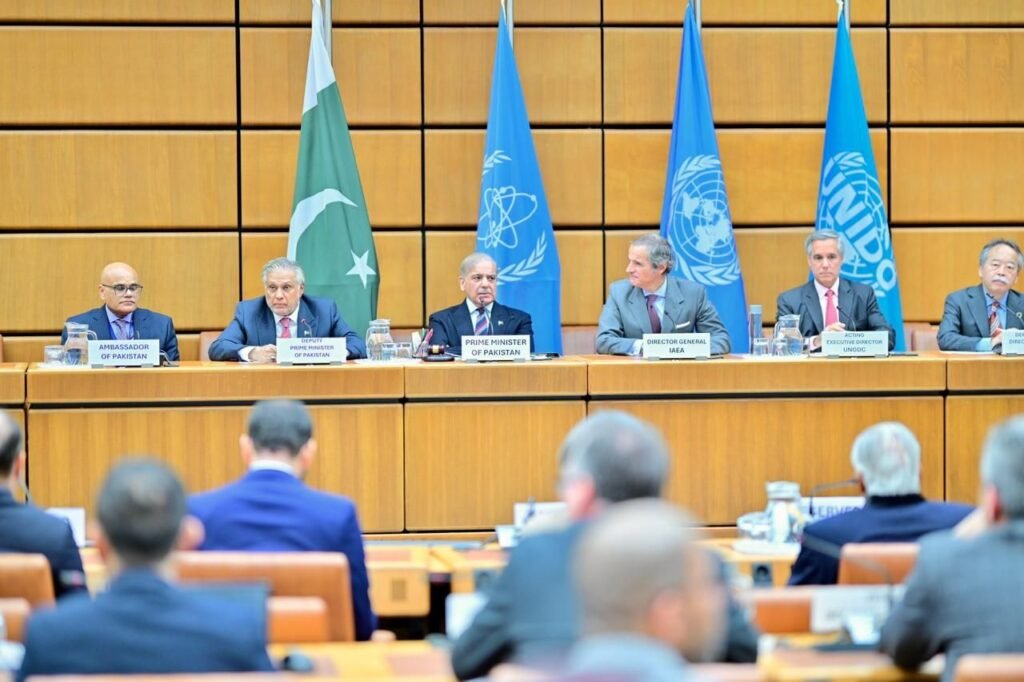
He advocated for a stronger, better-resourced, and reformed United Nations to serve as the central pillar of international cooperation. The event also saw the signing of cooperation agreements between Pakistan and various UN agencies, including the UNIDO Country Partnership Program for Pakistan (2025-2030), the UNODC Country Program for Pakistan, and a collaboration between the Institute of Nuclear Medicine and Oncology Lahore (INMOL) and the IAEA.
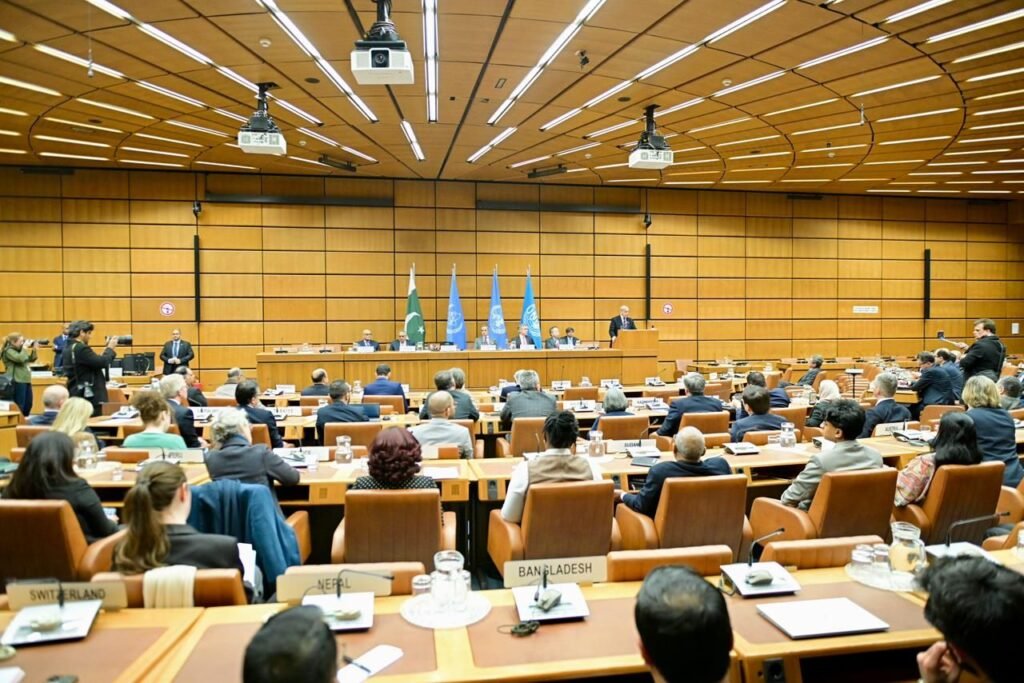
The gathering was attended by Deputy Prime Minister and Foreign Minister Ishaq Dar, directors-general of international organizations in Vienna, and permanent representatives of diplomatic missions.
In his address, Sharif highlighted the profound global crises facing the planet, stating, “We are gathered at a moment of profound global transformation and dire consequences. The world stands at a crossroads, confronting intertwined crises. The greatest fear of our era is not a single threat but a confluence of risks, including geopolitical rivalries and the climate crisis.”
He pointed out that factors like increasing global population depleting limited natural resources, unresolved political disputes exacerbating instability, poverty, debt traps, mass migration, and displacement are making the world a more dangerous place. “Sustainable peace, capable of confronting the crises of our time, has only one path: the path of sustainable development where no one is left behind,” Sharif said.
The Prime Minister underscored that development cannot be deemed sustainable unless it guarantees better lives for millions, urging inclusive policies that ensure social protection and equitable resource distribution to uplift living standards, reduce inequality, and build societies where prosperity is shared and human dignity is upheld.
Sharif noted the uneven burden of global challenges, with developing countries contributing the least to harmful emissions yet bearing the heaviest costs of climate change, debt distress, and economic volatility. Citing Pakistan as an example, he recalled the devastating 2022 floods that claimed thousands of lives, destroyed crops on thousands of acres, and razed millions of homes, followed by even more destructive floods last year. “These disasters go beyond destroying homes, crops, and infrastructure; they hollow out human security at its core,” he said.
Despite these challenges, Sharif affirmed Pakistan’s firm commitment to the Sustainable Development Goals (SDGs), integrating them into national planning with a focus on human development, education, health, food security, and social protection—particularly for women and youth, who form the nation’s largest asset and future. Pakistan’s population largely comprises youth, presenting both an opportunity and a challenge.
The government is strengthening institutions, promoting digital transformation, and expanding regional connectivity to foster shared prosperity. Sharif reiterated Pakistan’s advocacy for sustained dialogue, diplomacy, and multilateralism as the only viable means to resolve disputes, noting that Pakistan has often faced aggression, violations of UN Security Council resolutions, and key agreements. He referenced recent tensions in South Asia that brought the region to the brink of a major nuclear conflict last year, and expressed regret over Pakistan’s neighbor threatening to weaponize the Indus River water-sharing system, which sustains the lives and livelihoods of 240 million Pakistanis.
Sharif called for acknowledging the harsh reality that the multilateral system, built on global peace and cooperation, is under severe strain. “The UN must now be far stronger, adequately resourced, and reformed where necessary to continue functioning as the central pillar of global cooperation,” he urged.
Highlighting Vienna’s unique role in the UN system as home to key pillars like counter-terrorism, anti-narcotics, crime prevention, criminal justice reform, industrial development, responsible nuclear technology, and space agencies, Sharif affirmed Pakistan’s constructive relations with IAEA, UNIDO, UNODC, and other Vienna-based entities, pledging full support for their mandates.
He emphasized the need for capacity building, knowledge sharing, and technology transfer to ensure innovation bridges peace and prosperity rather than exclusion and instability. Emerging technologies like AI and biotechnology must be deployed to benefit all humanity, not just the privileged few. “If we do not bridge the digital divide, it will soon become a sustainable development divide,” Sharif warned.
IAEA Director-General Rafael Mariano Grossi welcomed Sharif, noting the important partnership with Pakistan, which is being expanded, including through the “Rays of Hope” flagship project in cancer treatment. Cooperation extends to environmental protection, food, and agriculture, with plans to strengthen it further.
UNODC Executive Director Ghada Waly described Sharif’s presence as an honor, marking the first visit by a Pakistani Prime Minister to the Vienna International Centre. She praised Pakistan’s active role in multilateralism and the over 50-year partnership in counter-narcotics, border security, and counter-terrorism. UNODC is assisting in developing Pakistan’s first national strategy against organized crime to combat drug smuggling, human trafficking, cybercrime, corruption, and financial crimes.
UNIDO Deputy Director-General Yuko Yasunaga highlighted inclusive and sustainable industrial development as foundational to the global agenda. She noted Pakistan’s significance due to its size, dynamic young population (two-thirds under 30), strategic location, and climate vulnerabilities, exemplified by the 2022 floods. Despite minimal contribution to global greenhouse gas emissions, Pakistan is highly vulnerable. UNIDO aims to expand its portfolio in Pakistan from $60 million to $200 million and fully supports the country’s Five Es Framework.