Rashida Qureshi Welcomes Punjab Child Marriage Restraint Ordinance 2026
By Dr Ansab Ali | lahore , PakistanTOBA TEK SINGH: Rashida Qureshi, spokesperson for the Children Advocacy Network, has welcomed the Punjab Child Marriage Restraint Ordinance 2026, recently promulgated by the Punjab government to curb child marriages, describing it as a significant step forward in strengthening child protection across the province.Under the ordinance, the minimum…
By Dr Ansab Ali | lahore , Pakistan
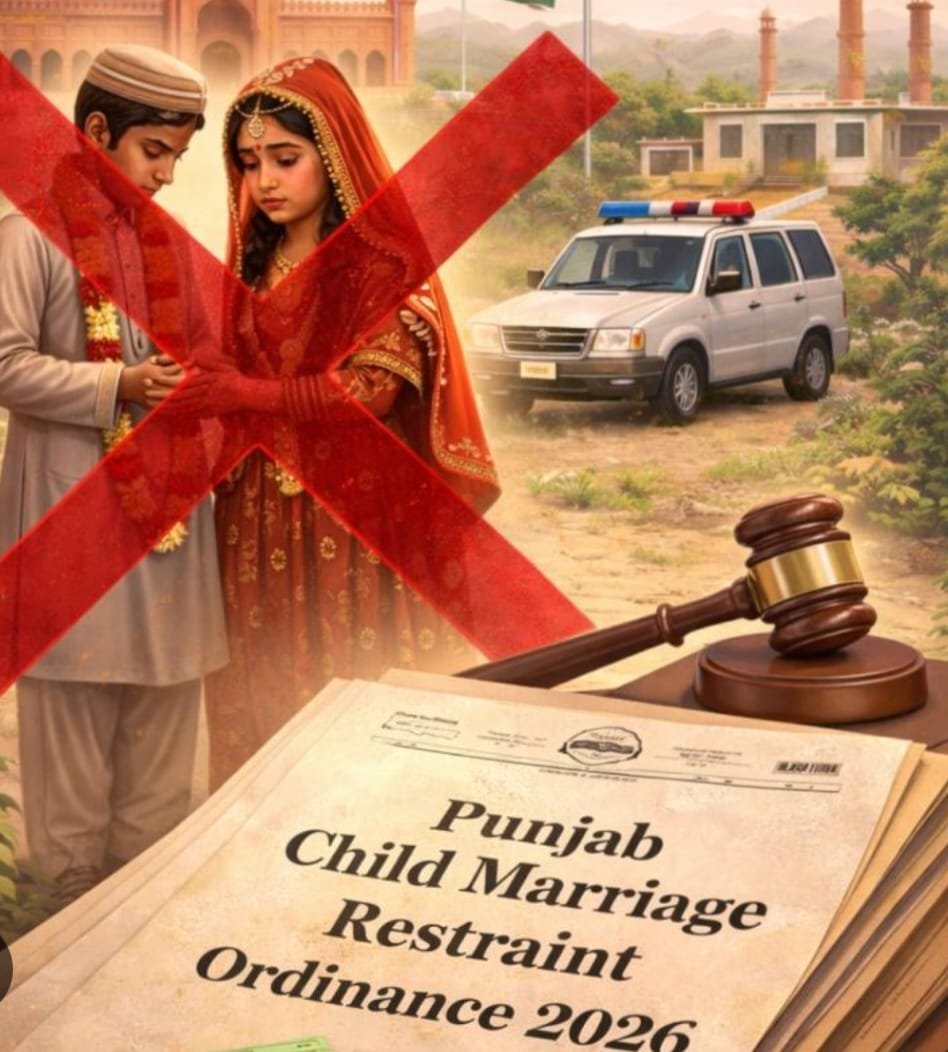
TOBA TEK SINGH: Rashida Qureshi, spokesperson for the Children Advocacy Network, has welcomed the Punjab Child Marriage Restraint Ordinance 2026, recently promulgated by the Punjab government to curb child marriages, describing it as a significant step forward in strengthening child protection across the province.
Under the ordinance, the minimum legal age of marriage has been set at 18 years for both girls and boys. The law also makes child marriage a cognisable, non-bailable, and non-consensual offence, strengthening enforcement mechanisms and accountability.
The ordinance clearly states that all parties involved in a child marriage — including the bridegroom, parents or guardians, facilitators, and marriage registrars — will be held responsible and face strict penalties in case of violation. Any adult who marries, arranges, or assists in the marriage of a child under 18 can face rigorous imprisonment of up to three years along with a fine of at least Rs. 500,000.
Marriage registrars who register underage marriages without fulfilling legal requirements may face imprisonment of up to one year and a fine of Rs. 100,000.
The Children Advocacy Network and its member organizations had long urged the provincial government to raise the minimum marriage age for girls from 16 to 18, citing the harmful social, educational, and health impacts of child marriages, as well as Pakistan’s international obligations regarding child protection.
According to the network’s spokesperson, the ordinance reflects the government’s commitment to strengthening child protection frameworks. Setting a uniform minimum marriage age of 18 sends a clear message that child marriage will not be tolerated.
She further noted that the ordinance is expected to be presented before the Punjab Assembly for formal approval. This process, she said, will provide an opportunity for lawmakers and relevant departments to consider further legal improvements, including clearly defining the legal responsibility of marriage celebrants, mandating the presentation of a National Identity Card or B-Form for age verification, and ensuring comprehensive safeguards for affected children.
The spokesperson emphasized that while the legislation marks an important milestone, its success will ultimately depend on effective implementation, institutional coordination, and sustained public awareness efforts to eliminate child marriage practices in Punjab.