Giant Tortoises Return to Galapagos Island After 150 Years
Floreana Island, Galapagos, February 2026 — In a landmark conservation triumph, giant tortoises have been successfully reintroduced to Floreana Island in Ecuador’s iconic Galapagos archipelago — nearly 150 years after the species disappeared from the island entirely.The reintroduction marks the culmination of decades of painstaking conservation work by Ecuadorian wildlife authorities, international scientists, and environmental…
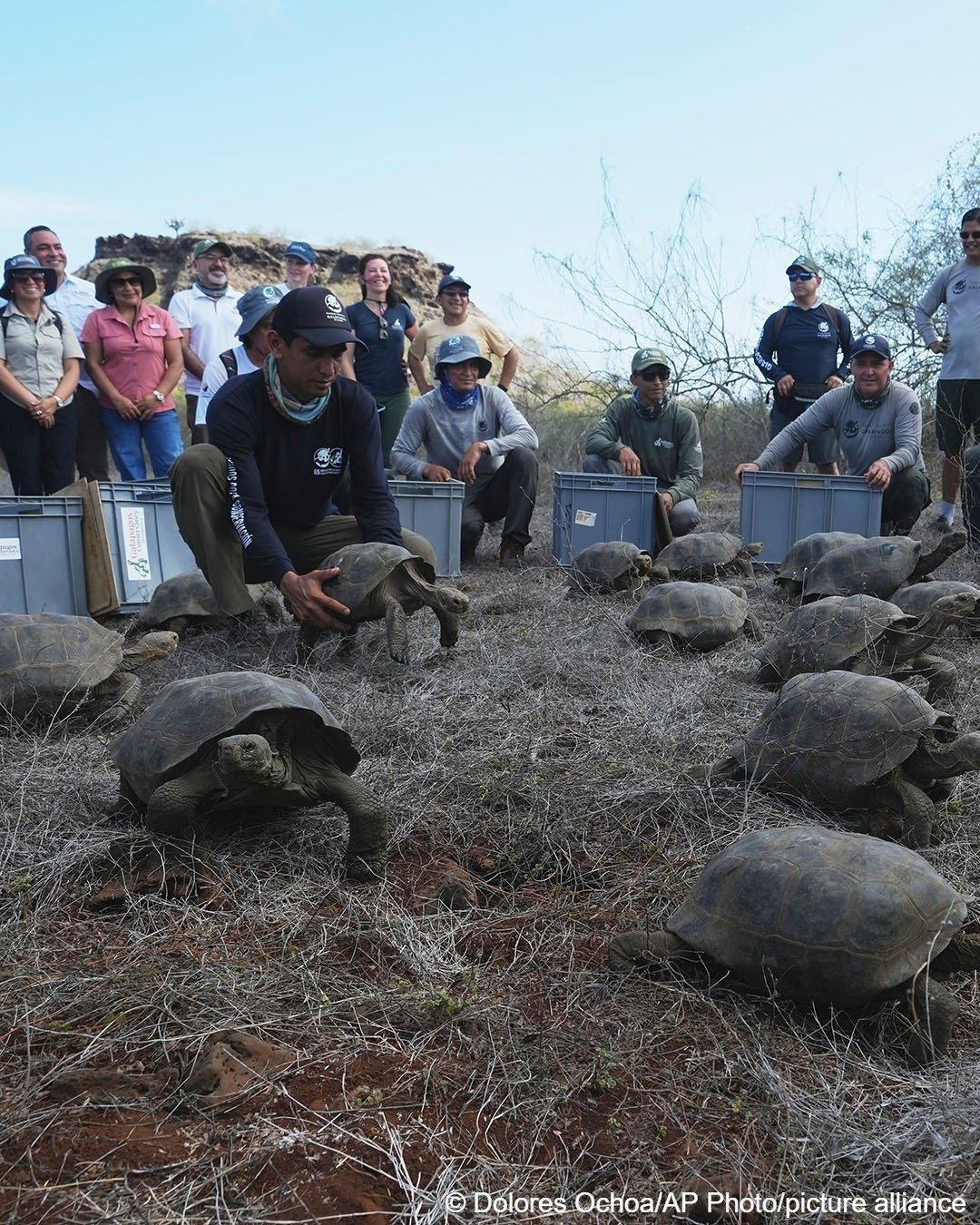
Floreana Island, Galapagos, February 2026 — In a landmark conservation triumph, giant tortoises have been successfully reintroduced to Floreana Island in Ecuador’s iconic Galapagos archipelago — nearly 150 years after the species disappeared from the island entirely.
The reintroduction marks the culmination of decades of painstaking conservation work by Ecuadorian wildlife authorities, international scientists, and environmental organisations dedicated to restoring one of the world’s most unique ecosystems.
Giant tortoises, which can live for over a century and weigh up to 400 kilograms, were once abundant across the Galapagos Islands. However, centuries of hunting by sailors and pirates, combined with the destruction caused by invasive species, led to their extinction on Floreana Island in the 1800s.
The tortoises being reintroduced carry partial ancestry from the original Floreana population, identified through advanced genetic analysis. They were carefully bred and raised at conservation facilities before being transported to their ancestral home.
Conservationists say the return of the giant tortoises is not just symbolic — the animals play a vital ecological role as “ecosystem engineers,” dispersing seeds, grazing vegetation, and helping maintain the delicate balance of the island’s biodiversity.
The Galapagos Islands, a UNESCO World Heritage Site, inspired Charles Darwin’s theory of natural selection during his visit in 1835. The successful reintroduction has been hailed as one of the most significant wildlife restoration efforts in the region’s history.