Merz and Xi Vow Deeper Cooperation as German Chancellor Arrives in China
Beijing, German Chancellor Friedrich Merz held high-level talks with Chinese President Xi Jinping and Premier Li Qiang in Beijing on Wednesday, pledging to forge stronger ties between the world’s second and third largest economies despite significant differences on trade and geopolitics.The visit — Merz’s first trip to China since taking office in May 2025 —…
Beijing,
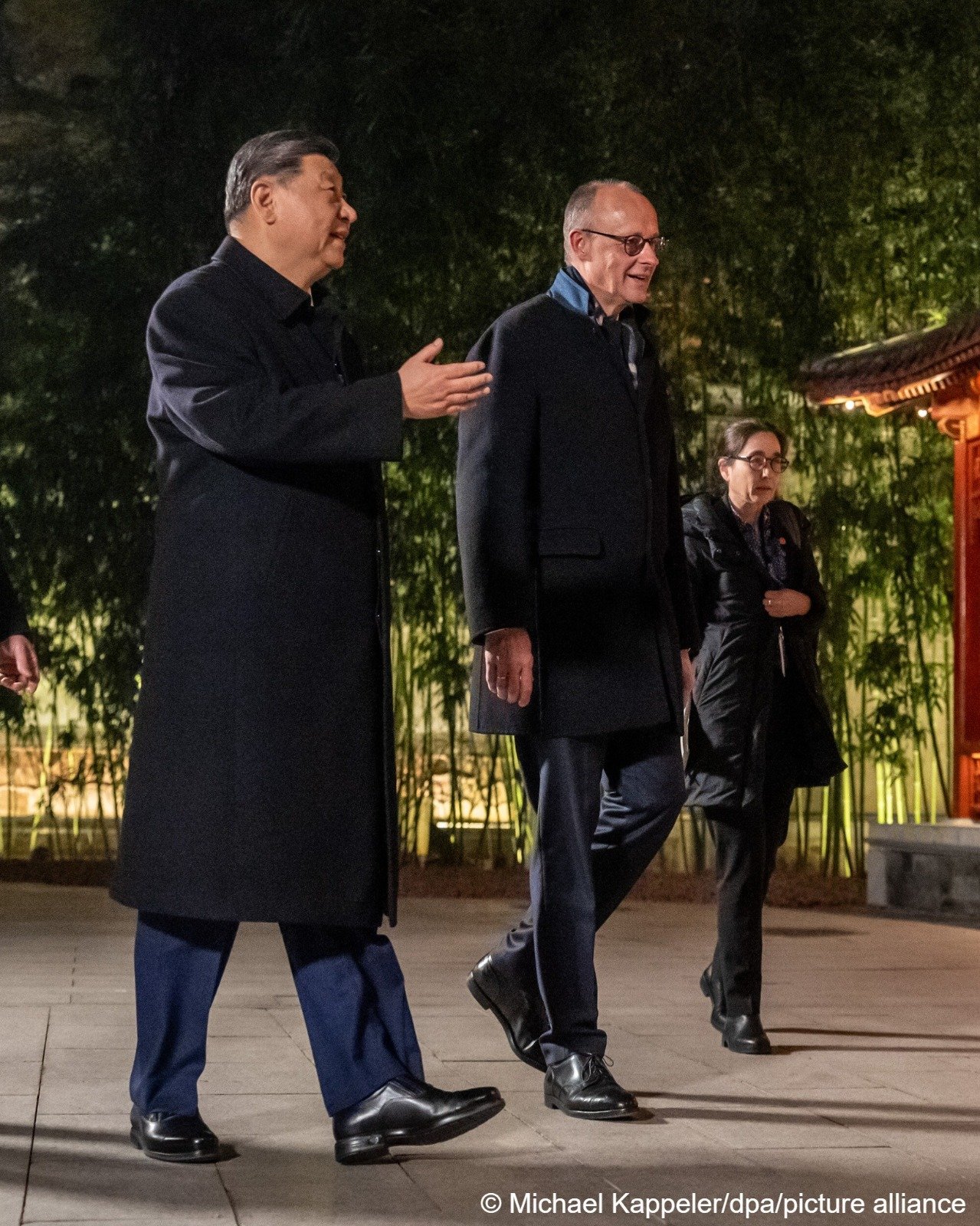
German Chancellor Friedrich Merz held high-level talks with Chinese President Xi Jinping and Premier Li Qiang in Beijing on Wednesday, pledging to forge stronger ties between the world’s second and third largest economies despite significant differences on trade and geopolitics.
The visit — Merz’s first trip to China since taking office in May 2025 — comes at a moment of global turbulence, with US President Donald Trump’s sweeping tariffs rattling traditional alliances and pushing Western leaders toward Beijing. Merz arrived with one of the largest business delegations to visit China in recent years, including executives from BMW, Volkswagen, Mercedes-Benz and Siemens.
During the meeting, Xi told Merz their two countries should be “reliable partners that support each other” and “defenders of free trade,” adding that the more turbulent the world becomes, the more China and Germany need to strengthen strategic communication and mutual trust.
Merz, for his part, expressed cautious optimism. “We are aware that we have differences on a number of issues,” he told reporters after a dinner with Xi. “At the same moment, we realize that we can cooperate in many areas. That will need patience and above all dialogue.”
Ukraine and a Push for Peace
A key agenda item was Russia’s war in Ukraine. Merz told reporters he asked the Chinese government to use its influence to end the war, noting that “signals from Beijing are taken very seriously in Moscow — that goes for words as well as deeds.” Xi responded that China supports a political solution to the conflict, saying “the key is to persist in seeking solutions through dialogue and negotiation,” while stressing that talks must “address the legitimate concerns of all sides” and ensure “equal participation of all parties.”
Trade, Airbus, and Economic Signals
On the economic front, the visit yielded a major commercial announcement. China will order up to 120 additional aircraft from European aviation giant Airbus, Merz confirmed after his meeting with Xi, calling it a demonstration of “how worthwhile such trips can be.”
Merz earlier met with Premier Li Qiang in Beijing’s Great Hall of the People, calling for “fair” cooperation. Representatives from both sides signed agreements and memorandums — including on climate change and food security.
However, Merz also raised structural concerns. Before leaving Berlin, he urged Beijing to help ensure “fair and transparent” rules-based commerce, and said there should be an honest discussion about what to do when “systemic overcapacity and export and access restrictions distort competition.”
A Broader Western Trend
Merz is the latest in a string of Western leaders to visit Beijing in recent months, including UK’s Keir Starmer, France’s Emmanuel Macron, and Canada’s Mark Carney — all amid the fallout from Trump’s tariffs on long-established trade partners.
On Thursday, Merz will travel to Hangzhou — China’s technology hub — to visit Unitree Robotics, one of China’s leading humanoid robot developers, before heading back to Europe. His China trip comes ahead of his third visit to Washington as chancellor.