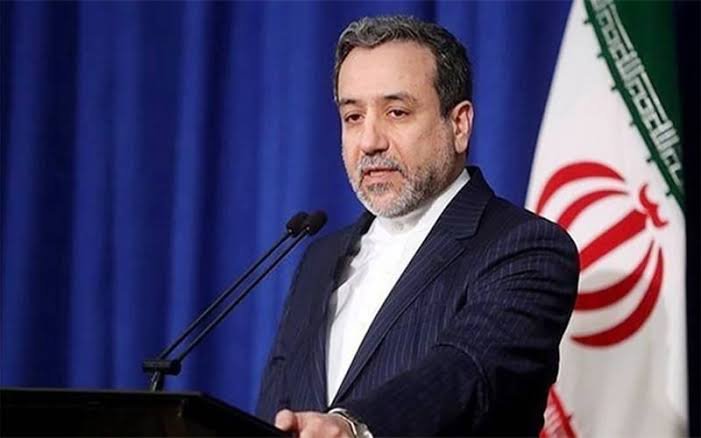
“Bombing Tehran Won’t Dent Our War Capability” — Iranian Foreign Minister
Tehran —Iranian Foreign Minister Abbas Araghchi pushed back defiantly against the ongoing US-Israeli military campaign on Sunday, declaring that sustained bombing of the Iranian capital has done nothing to diminish the country’s combat capabilities.In a post on X, Araghchi said Iran had spent the past two decades carefully studying American military failures in countries to…
Tehran —
Iranian Foreign Minister Abbas Araghchi pushed back defiantly against the ongoing US-Israeli military campaign on Sunday, declaring that sustained bombing of the Iranian capital has done nothing to diminish the country’s combat capabilities.
In a post on X, Araghchi said Iran had spent the past two decades carefully studying American military failures in countries to its east and west — a clear reference to Afghanistan and Iraq — and had integrated those lessons into its own defense doctrine.
“Bombing our capital does not affect our war capability,” Araghchi wrote, insisting that Iran retains full control over the terms and timing of how this conflict ends.
The ‘Mosaic Defense’ Strategy
Central to Araghchi’s confidence is what he described as Iran’s decentralized “Mosaic Defense” strategy. Unlike conventional military doctrines that rely on expensive, high-value weapons systems concentrated in fixed locations, Mosaic Defense is built on a vast network of smaller, low-cost but smart weaponry and autonomous units dispersed across the country.
The core principle is resilience through decentralization: even if an adversary destroys a significant number of units, the remaining cells continue operating independently, making the overall network nearly impossible to fully neutralize. It is a doctrine designed precisely to survive the kind of large-scale precision strikes the United States has been carrying out.
Araghchi’s statement came as CENTCOM confirmed that more than 1,000 targets have been struck across Iran, including the IRGC headquarters and ballistic missile sites. Despite the scale of destruction, Tehran appears intent on signaling to both its own population and the international community that it is neither broken nor ready to negotiate from a position of weakness.
The foreign minister’s remarks mark a significant escalation in Iran’s rhetorical posture and suggest that a swift end to hostilities remains unlikely.