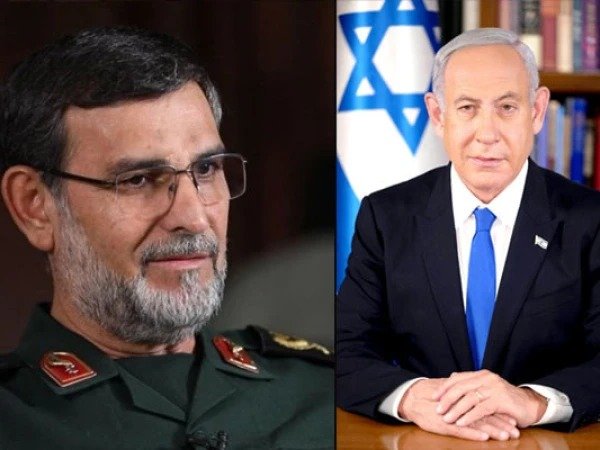
Netanyahu Claims Killing of IRGC Navy Chief Alireza Tangsiri as “Another Example” of US-Israel Cooperation
Tel Aviv/Tehran (March 26, 2026): Israeli Prime Minister Benjamin Netanyahu has announced that Israeli forces eliminated Alireza Tangsiri, the commander of Iran’s Islamic Revolutionary Guard Corps (IRGC) Navy, describing the strike as fresh evidence of close cooperation between Israel and the United States.In a video statement, Netanyahu said: “We are continuing to strike with full…
Tel Aviv/Tehran (March 26, 2026): Israeli Prime Minister Benjamin Netanyahu has announced that Israeli forces eliminated Alireza Tangsiri, the commander of Iran’s Islamic Revolutionary Guard Corps (IRGC) Navy, describing the strike as fresh evidence of close cooperation between Israel and the United States.
In a video statement, Netanyahu said: “We are continuing to strike with full force targets of the Iranian terror regime. Last night, we eliminated the commander of the Islamic Revolutionary Guard Corps’ navy. This individual has a great deal of blood on his hands, and he was also responsible for leading the closure of the Strait of Hormuz.”
Israeli Defense Minister Israel Katz confirmed that Tangsiri, along with other senior naval commanders, was killed in an overnight strike in the southern Iranian port city of Bandar Abbas. According to Israeli sources, Tangsiri was directly involved in laying naval mines and disrupting commercial shipping in the strategic Strait of Hormuz.
Iran’s IRGC has not yet issued an official confirmation or denial of the claim. No immediate comment has come from Iranian authorities or state media.
The development comes amid escalating military exchanges between Israel and Iran. Netanyahu emphasized that the operation represents “yet another example of the cooperation between us and our ally, the United States, in pursuit of our shared war objectives.”
Analysts note that the reported elimination of a senior IRGC naval figure could significantly impact Iran’s maritime capabilities, particularly its ability to threaten one of the world’s most critical oil chokepoints.
This incident adds to a series of high-profile targeted operations in the ongoing regional conflict.