UN Secretary-General Warns Middle East on Brink of Wider War with Global Catastrophic Consequences
New York, April 3, 2026 — United Nations Secretary-General António Guterres has issued a stark warning that the escalating conflict in the Middle East is pushing the region to the edge of a wider war that could engulf the entire area and have dramatic impacts worldwide.Speaking to reporters at UN headquarters on April 2, 2026,…
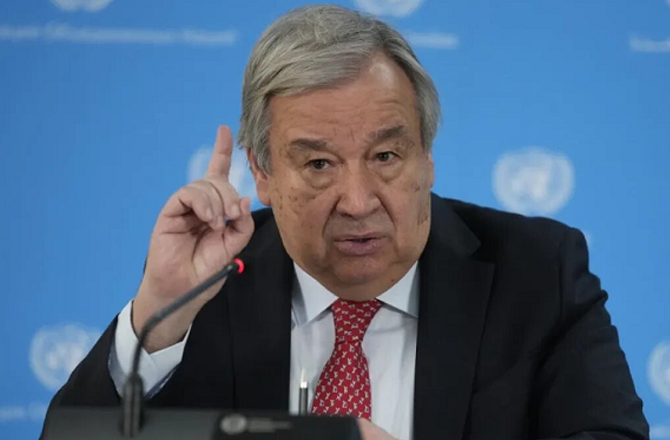
New York, April 3, 2026 — United Nations Secretary-General António Guterres has issued a stark warning that the escalating conflict in the Middle East is pushing the region to the edge of a wider war that could engulf the entire area and have dramatic impacts worldwide.
Speaking to reporters at UN headquarters on April 2, 2026, as the crisis entered its second month, Guterres said: “We are on the edge of a wider war that would engulf the whole Middle East with dramatic impacts around the globe.”
He highlighted the growing human suffering, increasing devastation, and indiscriminate attacks on civilians and civilian infrastructure. “Every day this war continues, human suffering grows. The scale of devastation grows,” he stated.
Guterres directly addressed the key parties involved, urging immediate de-escalation and a return to diplomacy.
“My message is clear. To the United States and Israel, it is high time to stop the war that is inflicting immense human suffering and already triggering devastating economic consequences,” he said.
“To Iran: Stop attacking your neighbours. The Security Council has condemned these attacks and reaffirmed the need to respect navigational rights and freedoms along critical maritime routes, including the Strait of Hormuz.”
The UN chief warned that any further escalation would only worsen the situation, emphasizing that conflicts do not end on their own. “They end when leaders choose dialogue over destruction. That choice still exists and must be made — now.”
He also pointed to the global repercussions, noting that disruption in the Strait of Hormuz would severely affect the world’s poorest and most vulnerable populations through rising food and energy costs.