Keir Starmer Resigns, Andy Burnham Becomes New Prime Minister
LONDON — Britain has witnessed another major political shift. On Monday, Keir Starmer travelled to Buckingham Palace to tender his resignation to King Charles III. The King subsequently invited Andy Burnham to form a new government, and Burnham was formally sworn in as the new Prime Minister of the United Kingdom.Before submitting his resignation, Starmer…
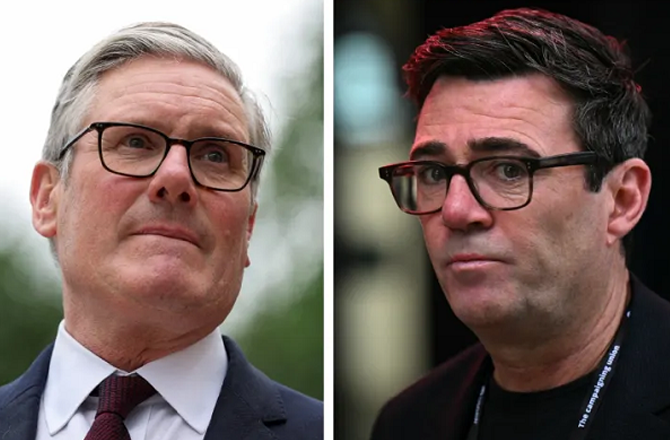
LONDON — Britain has witnessed another major political shift. On Monday, Keir Starmer travelled to Buckingham Palace to tender his resignation to King Charles III. The King subsequently invited Andy Burnham to form a new government, and Burnham was formally sworn in as the new Prime Minister of the United Kingdom.
Before submitting his resignation, Starmer delivered his final speech outside 10 Downing Street, declaring: “My job is done.” Reflecting on his government’s achievements, he noted that he had rebuilt the Labour Party following its historic defeat in 2019 and led it to a decisive victory in the 2024 general election.
Starmer had announced last month that he would step down as Labour leader, amid mounting pressure within the party over poor performance in local elections and a sustained decline in public popularity. His government also faced sharp criticism over economic difficulties, unpopular welfare reforms, and the appointment of Peter Mandelson as British Ambassador to Washington.
Andy Burnham, 56, the former Mayor of Greater Manchester, has become Britain’s seventh Prime Minister in the past decade. He was elected unopposed as Labour leader, having recently secured a decisive win in the Macclesfield by-election that returned him to the House of Commons and made him eligible for the leadership.
In his first speech as Prime Minister, Burnham pledged that his government would focus on restoring public trust, driving economic recovery, easing the cost of living, reforming public services, and devolving power from Westminster to the country’s cities and regions. Political analysts note that Burnham now faces significant challenges, including sluggish economic growth, strained public services, rising inflation, and the growing popularity of Reform UK.