
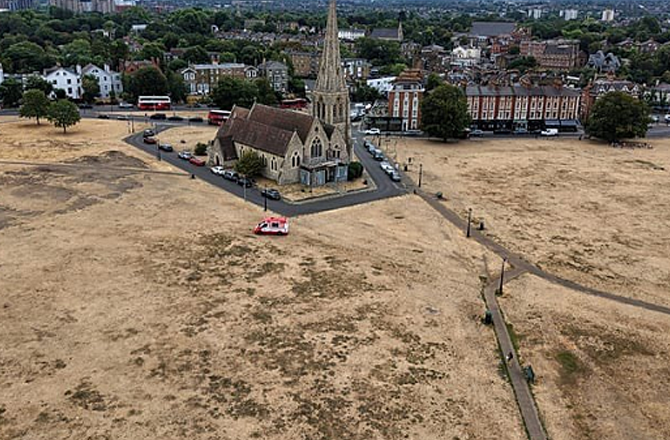
UK two-thirds in drought; July the driest month in nearly 190 years
Two-thirds of the UK is now affected by drought after July became the driest month in nearly 190 years, authorities said. On Monday the national drought group added parts of the East Midlands, Lincolnshire and Northamptonshire, Kent and East Sussex, and the Solent and South Downs to its drought list—bringing roughly half of England and…
Two-thirds of the UK is now affected by drought after July became the driest month in nearly 190 years, authorities said. On Monday the national drought group added parts of the East Midlands, Lincolnshire and Northamptonshire, Kent and East Sussex, and the Solent and South Downs to its drought list—bringing roughly half of England and all of Wales into drought status.
The group said that with last week’s additions some 71.3% of the country is now in “acute” drought — a rapid-onset condition caused by the combination of very low rainfall and prolonged high temperatures. Around 45 million people live in affected areas, and more than 27 million face restrictions on water use.
Tony Grayling, chair of the National Drought Group, warned that drought conditions are worsening and will continue to do so until there is sustained, significant rainfall. He stressed the negative impact on agriculture and the long-term environmental damage that can follow. Water minister Emma Hardy said the government is increasing support for farmers—making it easier to build on-farm irrigation storage—and implementing long-term changes in the water sector to cut leaks and deliver new reservoirs and water-transfer projects.
Health alerts have been upgraded nationwide ahead of a hotter week, with temperatures in the south-east forecast to reach up to 36°C on Thursday. The UK Health Security Agency reported 2,877 excess deaths during May–June heatwaves, roughly double the 1,504 excess deaths recorded in the summer of 2025. The agency warned that extreme heat could significantly affect the health and social care system.
Forecasters say most of England and Wales will see little or no rain through much of the week, though the first notable rainfall in many areas may arrive on Sunday as a weak Atlantic low brings showers. Officials and water companies are pursuing measures to secure long-term water supply, including new reservoirs and transfers.


