Moderna and Merck’s Cancer Vaccine Achieves First Major Breakthrough After 100 Years of Failure
Late-Stage Trial of Personalized mRNA Cancer Vaccine Succeeds, Experts Call It the Dawn of a New Era in Cancer TreatmentWashington: A personalized mRNA cancer vaccine jointly developed by Moderna and Merck has succeeded in a late-stage trial, offering fresh hope in the fight against cancer. Experts say the breakthrough could mark the beginning of a…
Late-Stage Trial of Personalized mRNA Cancer Vaccine Succeeds, Experts Call It the Dawn of a New Era in Cancer Treatment
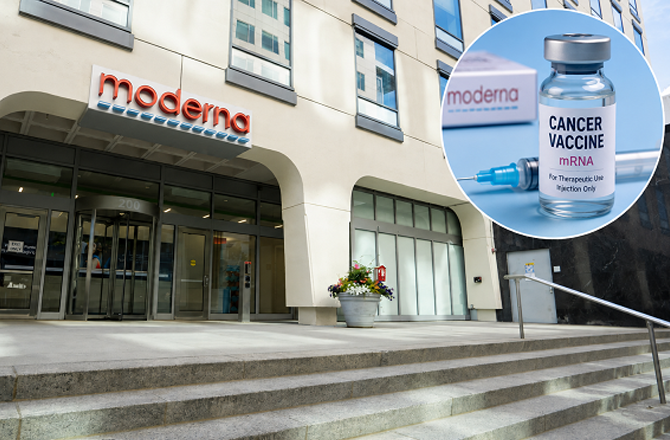
Washington: A personalized mRNA cancer vaccine jointly developed by Moderna and Merck has succeeded in a late-stage trial, offering fresh hope in the fight against cancer. Experts say the breakthrough could mark the beginning of a new era of therapies that train the immune system to fight a patient’s own specific cancer.
Moderna CEO Stéphane Bancel was attending a friend’s birthday celebration at a Lebanese restaurant on the night of August 13 when he received the phone call informing him that the mRNA cancer vaccine, developed in partnership with Merck, had hit its target. It marks the first success for a therapeutic cancer vaccine in a late-stage trial after more than a century of failed attempts.
In a trial involving more than 1,000 patients with early-stage melanoma, the vaccine significantly reduced the likelihood of tumor recurrence or spread to other parts of the body. Full trial details have yet to be released, but Wall Street is already projecting billions of dollars in potential sales from the vaccine.
Bancel compared the news to the moment in late 2020 when Moderna announced results from its COVID-19 vaccine trial, saying: “This was the moment we had worked so hard for.” Dr. Dean Li, president of Merck Research Laboratories, had a similar reaction, saying: “It wasn’t a ‘hallelujah’ moment — we immediately got to work.”
A Decade in the Making
The breakthrough is the result of nearly a decade of effort by the two companies. When the partnership was announced in 2016, Merck paid an initial $200 million, followed by an additional $250 million in 2022. The collaboration was built around Merck’s blockbuster drug Keytruda, a powerful checkpoint inhibitor.
The vaccine, called intismeran autogene, targets specific genetic mutations found in a patient’s tumor to train the immune system to attack cancer cells. Earlier cancer vaccines targeted only one or two mutations and failed, whereas this new approach targets dozens of mutations simultaneously. It is used in combination with Keytruda, which activates the immune system’s T cells.
What Comes Next
The vaccine is expected to receive US approval as early as next year. Merck faces the expiration of Keytruda’s patent later this decade, while for Moderna, the vaccine could serve as a critical lifeline amid declining demand for COVID vaccines. US Health Secretary Robert F. Kennedy Jr. has criticized mRNA vaccines for infectious diseases without evidence and cut $500 million worth of related projects. Despite this, Moderna’s stock — down roughly 90% from its pandemic-era peak — has surged more than 130% since the trial results were announced.
According to analysts, vaccine sales could exceed $1 billion by 2030 and $3 billion by 2035. The companies now aim to test the approach against cancers with relatively fewer genetic mutations, including lung, kidney, and pancreatic cancer.