Indonesia: Volcanic Ash Disrupts 5 Airports, Operations Suspended, Hundreds of Flights Cancelled
JakartaIndonesia suspended operations at five airports on Sunday, including Jakarta’s main international airport, after an ash cloud from the Anak Krakatoa volcano spread across the region, disrupting hundreds of flights.A powerful eruption on Saturday sent out lava, with the sound heard nearly 700 kilometers away. Two more eruptions were recorded on Sunday. The ash also…
Jakarta
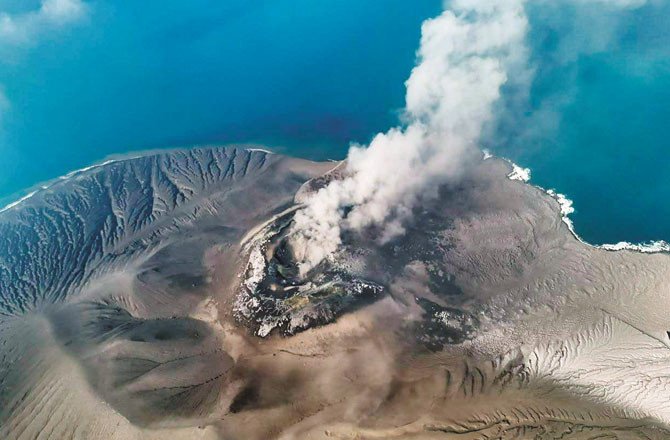
Indonesia suspended operations at five airports on Sunday, including Jakarta’s main international airport, after an ash cloud from the Anak Krakatoa volcano spread across the region, disrupting hundreds of flights.
A powerful eruption on Saturday sent out lava, with the sound heard nearly 700 kilometers away. Two more eruptions were recorded on Sunday. The ash also disrupted some school activities and fishing operations.
Authorities suspended flight operations after ash was detected in the airspace around Soekarno-Hatta International Airport near Jakarta. According to airport operator Angkasa Pura, the decision affected 301 flights, including 58 international flights. Singapore Airlines announced the cancellation of all flights to and from Jakarta on Sunday, while Australian carrier Qantas also reported multiple flight disruptions and cancellations.
The Transportation Ministry confirmed the spread of volcanic ash around Soekarno-Hatta airport in its latest assessment. According to the meteorological agency, the ash reached an altitude of 6,000 meters toward Java and 15,000 meters toward Sumatra, with effects also observed in parts of Banten province.
Several schools cancelled activities on Saturday due to the ash, as students and residents complained of eye irritation. Fishermen also cancelled their trips to sea. The National Disaster Management Agency (BNPB) announced it would begin weather modification operations on Sunday to induce rainfall, which may include cloud seeding.
Experts note that volcanic ash poses serious dangers to aircraft, as it can melt and fuse onto the hot interior components of jet engines, damaging turbine blades, disrupting fuel and air systems, and scratching pilots’ windscreens.