“If you stop them, investment will go to China”: Trump defends data centers
OHIO: US President Donald Trump has stepped up his campaign against opposition to large AI data centers, saying America must not fall behind China in the global race for artificial intelligence.Speaking at a campaign rally in Vandalia, Ohio, on October 3, Trump said: “A lot of money can be made for Ohio. You can’t just…
OHIO: US President Donald Trump has stepped up his campaign against opposition to large AI data centers, saying America must not fall behind China in the global race for artificial intelligence.
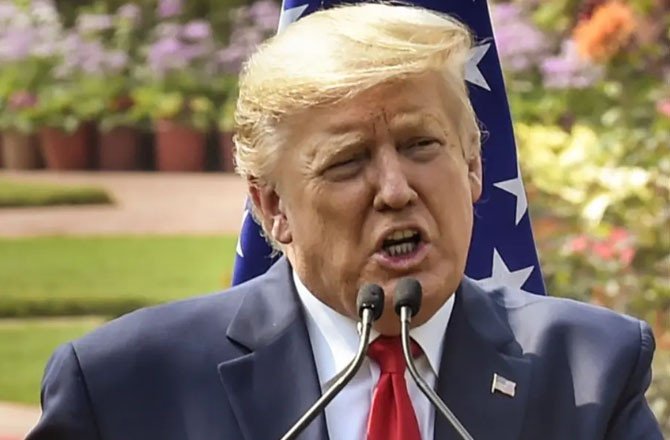
Speaking at a campaign rally in Vandalia, Ohio, on October 3, Trump said: “A lot of money can be made for Ohio. You can’t just shut them down, they’ll go to China.” He described data centers as a source of revenue and investment for the local economy. According to the report, the audience reaction to his defence of data centers was relatively muted compared with other parts of his speech.
The remarks come as local opposition grows across the US to the rapid build-out of data centers. Critics say the surge in power demand could strain electricity grids, water resources, the environment and, in some areas, household bills.
The issue has become prominent in Ohio’s electoral politics. In the November midterms, Republican Senator Jon Husted faces Democratic candidate and former senator Sherrod Brown. Husted has been criticised for his past role in bringing data centers to the state, and Brown’s campaign has used the issue against him. Husted introduced the Ratepayer Protection Act to address electricity costs linked to data centers, aiming to encourage state regulators to require large power users, including data centers, to bear the added costs of generation, transmission lines and other infrastructure. The House passed the bill on September 16 by 417 votes to 3, but on September 30 it received 57 votes in the Senate against 43, short of the 60 needed to advance. Republicans called it an effort to shield consumers from added costs, while several Democrats said it was not strong enough to hold large power users accountable.
Public opinion paints a different picture from Trump’s stance. An Economist/YouGov poll found only 24 percent of Americans consider new data centers a good thing, while 47 percent call them bad. Sixty-one percent oppose a new data center in their own community, and 62 percent said a local data center could raise their electricity bills. A Pew Research Center survey from August 2026 found 50 percent say data centers are mostly bad for household energy costs and 54 percent say they are mostly bad for the environment, while just 4 percent say they are mostly good on both counts.
Amazon, Microsoft, Google, Meta and Oracle are estimated to spend more than $560 billion combined on AI infrastructure in 2026. In September, the Trump administration unveiled a roughly $2 billion plan to strengthen the national grid, targeting over 23 gigawatts of added capacity through 31 projects across 26 states. Local opponents’ core question is who will bear the added costs of power, water, land and infrastructure relative to the economic gains from the AI industry.