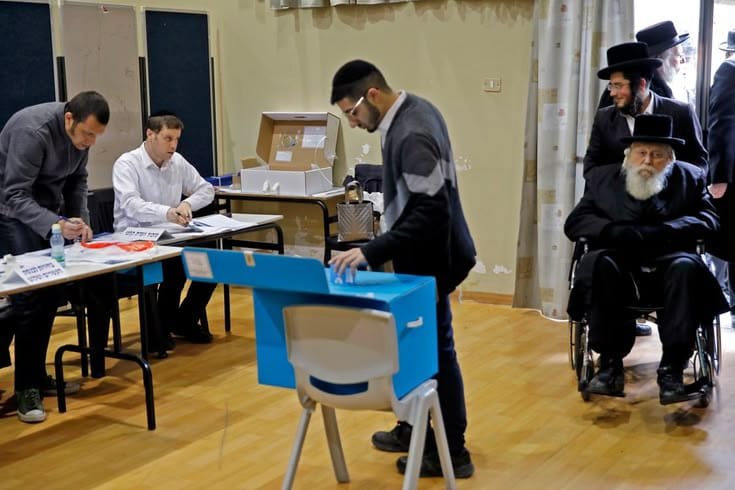
Israel election: Initial survey gives Eisenkot bloc 52 seats, Netanyahu bloc 50; neither reaches majority
TEL AVIV — An initial exit survey by Israel’s Channel 12 projected 52 seats for the opposition bloc led by former military chief Gadi Eisenkot and 50 seats for Prime Minister Benjamin Netanyahu’s bloc, leaving neither camp with a majority in the 120-seat Knesset. Arab-led parties were projected to win 18 seats, their strongest-ever showing.A…
TEL AVIV — An initial exit survey by Israel’s Channel 12 projected 52 seats for the opposition bloc led by former military chief Gadi Eisenkot and 50 seats for Prime Minister Benjamin Netanyahu’s bloc, leaving neither camp with a majority in the 120-seat Knesset. Arab-led parties were projected to win 18 seats, their strongest-ever showing.
A governing coalition in Israel needs at least 61 of the Knesset’s 120 seats. Based on the initial survey, both Netanyahu’s right-wing and religious bloc and Eisenkot’s centrist opposition bloc remain short of that threshold, meaning no clear winner has emerged.
Channel 12 projected Netanyahu’s Likud party as the largest single party with 24 seats, while Eisenkot’s Yashar party was expected to win 22 seats.
The Joint List and Ra’am, the two Arab-majority parties, were projected to secure 18 seats combined. Netanyahu has ruled out partnering with Arab parties, while Eisenkot may need their support to assemble a governing majority.
Officials stressed that these are early projections rather than official results. Vote counting is continuing, with formal results expected to be published about a week after election day.