Barcelona: Exhibition uses AI to raise awareness about dementia
BARCELONA: An exhibition has been organised in Barcelona, Spain, to raise public awareness about dementia and Alzheimer’s disease through artificial intelligence (AI). The exhibition showcases AI-powered tools that help reconstruct people’s personal memories and turn them into visual images. The central project is “Synthetic Memories,” developed by Barcelona-based creative studio Domestic Data Streamers. Participants describe…
BARCELONA: An exhibition has been organised in Barcelona, Spain, to raise public awareness about dementia and Alzheimer’s disease through artificial intelligence (AI). The exhibition showcases AI-powered tools that help reconstruct people’s personal memories and turn them into visual images.
The central project is “Synthetic Memories,” developed by Barcelona-based creative studio Domestic Data Streamers. Participants describe memories orally or in writing, which generative AI models then convert into images, offering a new way to preserve personal stories and help people with memory loss reconnect with their past.
The project began in 2023 in residential care homes for older people in Spain, where the studio worked with social workers and neurotherapists. During a one-hour session, an interviewer and an AI prompter guide participants through their memories, while the project stresses that it is not a treatment but a tool to support memory therapy.
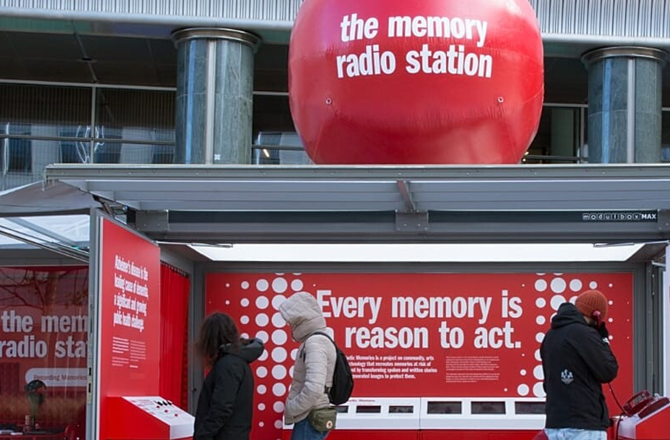
The exhibition, “The Memory Radio Station,” is travelling across Europe after being launched in partnership with pharmaceutical company Eli Lilly. It aims to bring conversations about memory loss and Alzheimer’s disease into public spaces; in November, it is being held at the European Parliament in Brussels.
Belgian Member of the European Parliament Hilde Vautmans also took part and shared childhood memories of her father. She recalled visiting a cattle market in Sint-Truiden, Belgium, with her father, where she would try to buy cows and weigh them.
Alzheimer’s disease is the most common form of dementia and is associated with progressive decline in memory, thinking and communication. More than 12 million people in Europe live with dementia, a figure projected to rise to 20 million by 2050, while Alzheimer’s accounts for roughly 60 to 80 percent of cases.
Experts say early and accurate diagnosis can lead to lower anxiety, greater independence and access to appropriate treatment and care. However, a survey of 681 people across 12 European countries found that fewer than half knew Alzheimer’s was the most common form of dementia, while many viewed it as an inevitable part of ageing