
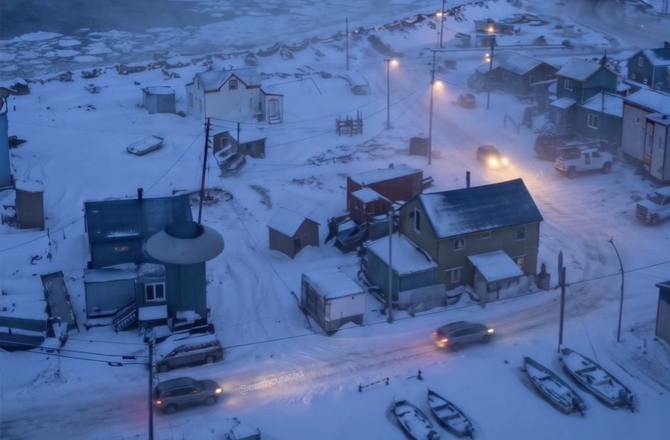
Sun Sets for the Last Time in 2026 in America’s Northernmost City, Won’t Rise for 65 Days
UTQIAGVIK, Alaska: The sun has set for the final time in 2026 in Utqiagvik, the northernmost community in the United States, and residents will not see it rise for about 65 days. The phenomenon, seen in polar regions, is known as the “polar night.” The town, formerly known as Barrow, saw its last sunset of…
UTQIAGVIK, Alaska: The sun has set for the final time in 2026 in Utqiagvik, the northernmost community in the United States, and residents will not see it rise for about 65 days. The phenomenon, seen in polar regions, is known as the “polar night.”
The town, formerly known as Barrow, saw its last sunset of the year at about 1:42 pm local time on November 18. The sun had risen only about an hour earlier, giving residents roughly 60 minutes of sunlight that day. From November 19 to January 22, the sun will stay below the horizon, returning on January 23, 2027, at about 1:03 pm local time. At first it will be visible for just over an hour, with daylight lengthening gradually as spring approaches. The city sits on the Arctic Ocean coast, roughly 320 miles north of the Arctic Circle.
The polar night is caused by the tilt of Earth’s axis, about 23.5 degrees. During winter in the Northern Hemisphere, the north polar region tilts away from the sun, keeping it below the horizon for an extended period. The farther north a location, the longer the sun stays away. It does not mean total darkness, however: around midday, the sun’s proximity to the horizon produces “civil twilight.” According to the US Naval Observatory, around the winter solstice in December, about three hours of deep blue or pink light are visible, while moonlight, stars and occasional northern lights illuminate the area the rest of the time.
Utqiagvik has a population of about 5,000, many of them from the indigenous Inupiat community, whose ancestors have lived in the region for thousands of years. Despite the long darkness and bitter cold, schools stay open, businesses operate, and residents continue hunting and social activities. In summer, the town experiences the opposite phenomenon, the “midnight sun,” when the sun remains above the horizon for more than two months.


